

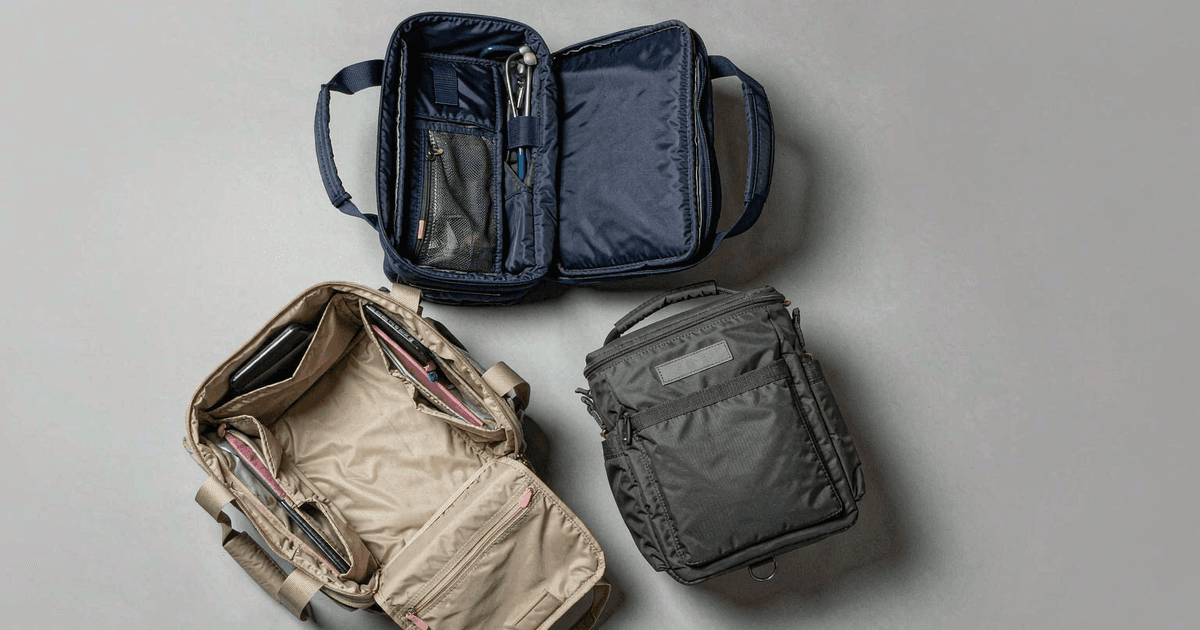
A nurse tote bag gets bought twice. Once by the person who carries it, and once by the institution that issues it. The two buyers ask different questions, and a specification that answers only one of them usually comes back for revision.
The individual buyer wants a bag that fits one shift. The institutional buyer wants a bag that fits a purchase order: one specification, many units, a logo on each one, a delivery date that lines up with a uniform rollout or a new clinic opening.
Both are real. Most projects that stall have answered one and ignored the other.
This guide is written for the institutional side, because that is where custom manufacturing actually happens. It covers how a nursing routine turns into a bag specification, where the decisions sit, and what a supplier cannot decide on the buyer's behalf.
A Nurse Bag Is Specified Around a Working Day
Start with the shift, not with a list of items.
Two people with the same job title can need different bags. One works twelve-hour hospital shifts with no fixed desk to leave anything at. Another works four days a week in an outpatient clinic with a locker and a station. A third drives between home visits and carries equipment in and out of a vehicle several times a day.
Each of those routines produces a different bag.
|
Routine |
What it demands |
|
Long hospital shifts, no fixed station |
Enough organised volume for a full shift, plus secure closure for moving between wards |
|
Fixed clinic station with a locker |
A smaller, lighter bag focused on what is carried between rooms |
|
Home visits by vehicle |
Quick in-and-out access, a shape that sits upright in a footwell or seat, and space for hand-held equipment |
|
Multiple sites in one week |
Compartments that keep the same items in the same place as the bag moves between locations |
A buyer who can describe the routine gets to a usable sample faster. A buyer who opens with "we need a nursing bag" usually receives something technically correct that fails on the second round for reasons nobody wrote down.
The same principle runs through the wider medical and first aid bag design requirements we publish: the bag's job comes before the pocket count.
Who the bag is issued to matters as much as what goes in it
A bag issued to one department for shared use is handled differently from a bag issued to each individual.
Shared bags get treated roughly, because nobody owns them. Individual bags get looked after, but they also need to be identifiable, which usually means a name area, a colour, or a number.
Decide that early. It affects the closure, the external identification method, and how the units are packed.
Four Working Patterns and the Design Each One Pushes Toward
Once the routine is written down, most of the specification follows from it. The four patterns below cover the majority of institutional nursing-bag projects that reach a factory.
Twelve-hour shifts in a large facility
The bag becomes a mobile base. It has to hold everything for the shift, and it has to survive being put down on the floor, swung onto a chair, and moved between rooms several times.
Design pressure: organised volume, a stable base so it stands when set down, and a closure that will not fall open when the bag is carried at an angle. Handle and shoulder strap are both likely, because the same person carries it in different ways across one day.
Fixed-station outpatient or clinic work
Less volume, more frequency. The bag is opened and closed several times an hour.
Design pressure: fast access. A wide top opening or a shaped lid earns its place here. A bag that needs two hands and a table to open will be left open, or left somewhere.
Home health visits
The bag travels by vehicle and is carried on short walks between the car and a front door. It often needs to sit on the floor or a counter while in use.
Design pressure: quick pick-up, a shape that stays upright, and a handle arrangement that works when the hands are already full. Exterior pockets are useful here, because the bag is frequently opened while standing.
Roving between sites
The same items move between buildings, and a lost item is a real problem.
Design pressure: repeatable internal layout. When the same tool returns to the same pocket every time, a missing item is visible immediately. This is where a fixed internal layout with defined positions beats a large open compartment.
A single specification can sometimes serve two of these patterns with a size or closure change. Trying to serve all four with one design is where a project usually goes sideways.
Where the Stethoscope and Hand-Held Tools Go
Ask any nurse what damages things in a bag and the stethoscope comes up early. Tubing kinks, the head gets pressed against hard objects, and earpieces get bent out of shape.
Three approaches come up in projects, and each has a different cost and handling profile.
A dedicated pocket with padding is simple and light, and it works if the pocket is sized to the instrument rather than to a generic accessory. The risk is a pocket that fits one model and not the next.
Elastic retention inside a compartment holds position and lets the user see what is there. It depends on getting the elastic tension and the pocket depth right for the actual item, which is a sample-round question rather than a drawing question.
A separate rigid case gives a defined shape and works when the instrument needs more protection than fabric alone provides. Some projects pair a soft bag for daily items with a small case for the instrument. Our notes on EVA stethoscope case design cover what that route involves.
Hand-held tools are a different problem. Scissors, penlights, forceps, thermometers and pen-type devices are all small, all different shapes, and all easy to lose at the bottom of a bag.
A useful rule from sample reviews: if an item is used on every patient, it should not share a compartment with items that are used weekly. Frequency, not category, is the organising principle, and the next section takes that further.
Group Items by How Often They Are Reached, Not by What They Are
Most first drafts of a nursing bag brief group contents the way a catalogue does: diagnostic tools in one section, dressings in another, personal items in a third.
That grouping is logical. It is not always usable.
A bag gets used in a sequence. Something is needed immediately, something is needed during the appointment, and something is needed once at the end of the shift. Those three groups want different positions in the bag, and the difference matters more than what the items are.
A workable split:
- Immediate reach: items used on most patients. These belong where the bag can be opened and the item taken without moving anything else.
- During the visit: items used sometimes. A middle compartment or an organised main section works.
- Shift-level or backup: items needed once per shift. These can sit at the bottom or in a zipped inner section.
The practical test is a simple one. Load the sample, open it the way it will be opened in use, and try to reach one item from each group without disturbing the others. If reaching an immediate item means moving three shift-level items, the layout will be reworked in the field anyway, which is worse than reworking it in a sample round.
There is a second reason to avoid over-dividing. Every divider takes up space and reduces what a compartment can hold. A bag that looks thoroughly organised on a flat drawing can become difficult to close once loaded, because the zipper line has to travel around a fuller shape than the drawing allowed for.
Carrying Load Through a Long Shift
A nursing bag is usually carried for longer than a shopping bag and loaded more heavily than a handbag. The carrying arrangement therefore deserves a decision rather than a default.
The shoulder strap is the most common answer, and the one with the most variables. Strap width, padding, and where the attachment points sit on the bag body all change how it feels after an hour. A narrow webbing strap that works on a light bag becomes uncomfortable on a loaded one. Our guide to webbing straps for bags covers how width and construction affect the carry.
Hand carry is reliable and easy to inspect, but it occupies a hand. Where a project involves doors, keys or equipment, this becomes a real constraint.
Most institutional projects end up using both, and that is fine, provided the handle and strap are reviewed together rather than added separately.
Whatever the arrangement, the attachment points are a structural decision. A strap sewn onto a lightweight panel pulls the fabric out of shape once the bag is loaded, and the panel itself may need reinforcement. The load paths that need box-stitching or bar-tacks rather than a single seam are covered in our note on bag stitching reinforcement.
Two things a factory cannot decide for a buyer: how heavy the bag will be in daily use, and how far it will be carried. Both belong in the brief, because both change the answer.
Opening Direction When One Hand Is Already Full
This is the design detail most often settled by accident.
A nurse reaching for a bag is frequently holding something, standing, and in a hurry. The opening has to work in that position, not on a table in a meeting room.
Three common directions and what each one costs:
A top opening with a straight zipper is easy to hold and open with one hand. Contents are stacked rather than laid out, so whichever item sits on top is the one that comes out first. Good for a bag with a defined item order.
A wide or full opening makes contents visible and reachable at once. It needs two hands and a surface to lie on, which suits a fixed station and not a corridor.
A shaped or partial opening is a compromise. Part of the bag opens clear while the shell keeps its shape, so the bag can be opened while standing. It needs a sample review, because how far an opening travels before the sides collapse depends on the structure.
Whichever direction is chosen, agree how the zipper travels before the first sample. A zipper path that has to turn a tight radius will feel stiff, and one that crosses a loaded pocket will catch. Our notes on zipper selection for functional bags go through the options.
Fabric, Lining and the Wear of Daily Use
For a bag that is handled every working day, the outer fabric is chosen for how it wears and how it is cleaned, in roughly that order.
Polyester in the 600D range is the common starting point for this product family. It takes printing and coating, it comes in a range of weights, and it suits a bag that will be set down on floors and counters. Oxford fabric is the frequent alternative where the bag has to look more substantial. Nylon appears where weight and abrasion resistance both matter.
None of these are stock commitments. Availability, weight band, finish and hand feel get confirmed per project, and the fabric choice interacts with the branding method rather than standing alone.
Inside, lining colour does more work than most briefs expect. A light or mid-tone lining makes small dark items visible in a shallow, shadowed compartment. A dark lining hides marks but makes small items harder to find. Our breakdown of bag lining materials covers how the choice affects both appearance and how the bag feels when opened.
One boundary worth stating early, because it comes up in almost every clinical enquiry.
A fabric surface can be specified, and its cleaning instructions can be discussed with the buyer. What we do not do is claim that a fabric is antibacterial, antimicrobial, or that it has passed a disinfection protocol. Those are performance statements that require evidence we do not have, and a supplier who writes them into a catalogue entry creates a claim the buyer then has to defend. If your project needs a defined surface property, treat it as a separate workstream with its own test method.
Buying at Institution Level: Logo, Colour and Packing
Institutional orders introduce three specification layers that a single-unit buyer never has to think about.
Logo application comes first. A departmental logo is usually small, and a small panel is a harder branding surface than a large one. Fine type, tight registration and multi-colour artwork lose definition faster at reduced size than most brand guides expect. The practical methods on this scale are screen printing, rubber patches, woven labels and simple embroidery. The artwork often needs a simplified lockup for the bag size, and that decision belongs to the brand owner rather than the print supplier. Our notes on logo placement and application on custom bags cover how the panel and material decide the method.
Colour works as a system. Where several departments, shifts or sites are issued bags, colour becomes functional rather than decorative. It lets a bag be identified from across a room. If colour coding is part of the plan, settle it before sampling rather than after, because a colour change on one panel can affect material availability and the minimum quantity for that colour.
Packing for distribution matters because an institutional order is not delivered to one desk. It arrives at a receiving point and gets split. Individual polybags plus a carton with a clear carton label is the usual baseline. If the bags are pre-sorted by department or by name, that sorting has to be agreed as part of the packing instruction, not improvised at the warehouse. Where the same product serves more than one channel, the packing should be designed as separate versions from the start.
Turn the Working Day Into an RFQ
A supplier can price a defined bag. It cannot price a job title. Before requesting a quotation, turn the working routine into the following decisions.
|
RFQ field |
What the buyer should provide |
Why it changes the bag |
|
User group and setting |
Department, individual or shared issue, fixed site or mobile use |
Changes identification, handling and access priorities |
|
Representative contents |
Item list, approximate dimensions and expected loaded weight |
Sets the bag size, pocket depth, retention and carrying structure |
|
Reach order |
What is used immediately, sometimes and only as backup |
Decides pocket position and opening direction |
|
Device and document area |
Whether a tablet, laptop, folders or records travel in the bag |
May require a defined sleeve or a separate closed compartment rather than a general pocket |
|
Internal layout |
Fixed pockets, removable dividers, elastic loops or an open compartment |
Changes flexibility, usable volume and how the sample is reviewed |
|
Carrying method |
Hand carry, shoulder carry or both, plus typical carry distance |
Changes handle, strap, attachment points and reinforcement |
|
Base and opening |
Whether the loaded bag must stand upright and whether it is opened while standing |
Changes bottom structure, side support and zipper path |
|
Cleaning direction |
The buyer's cleaning method and any material restrictions |
Guides surface and lining evaluation without turning an untested fabric into a hygiene claim |
|
Identification and artwork |
Logo file, name field, department colour, label or number |
Changes panel layout, branding method and variant count |
|
Quantity and variants |
Total quantity plus the number of colours, names or department versions |
Affects material planning, artwork setup, sorting and packing |
|
Packing and delivery point |
Unit packing, carton labels, barcode or department sorting |
Determines what must be approved before bulk packing |
|
Approval references |
Drawings, specification sheet, reference bag, photos and written revision record |
Keeps the approved sample and the final production instructions aligned |
Three of these fields deserve extra attention because they are often hidden inside a generic request for "more pockets."
First, fixed and removable organisation solve different problems. Fixed pockets make one layout repeatable. Removable or hook-and-loop dividers let departments adjust a shared interior, but their attachment, thickness and loaded fit still need sample review. More flexibility also adds components and can reduce usable space.
Second, a device or document area should not be assumed from the word "nurse." If the team carries a tablet, laptop, folders or records, provide the dimensions and say whether that area needs to be closed and separated from the main compartment. The factory can then evaluate a sleeve or compartment around the actual object instead of copying a generic laptop pocket.
Third, "easy to clean" is not a complete material requirement. State how the buyer expects the surface to be cleaned and what substances or methods must be avoided. Material compatibility and any performance claim need their own project evidence; a smooth lining alone does not prove resistance to a cleaning chemical or a clinical protocol.
If these fields are not final, mark them as open decisions rather than filling them with catalogue defaults. That gives the sample a clear job: answer the remaining design questions instead of pretending they were already settled.
What the First Sample Has to Prove
A sample that arrives empty answers a small question. The question that matters is whether the bag works when it is loaded with the items it was designed for.
The useful sequence in a nursing-bag sample review:
- Load it with representative items. Not approximations. The actual stethoscope, the actual scissors, the actual device.
- Check the reach order. Take an immediate-use item out without moving anything else. If that fails, the layout changes.
- Open and close it loaded. A bag that closes easily when empty can resist a full main compartment, because the zipper line has to travel around the loaded shape.
- Check the strap and handle under load. Put the bag on a shoulder with the contents in, and see where it pulls.
- Check the small items. Elastic loops that are too loose release the item, and ones that are too tight make it hard to put back. Both usually show up only with the real item.
- Check identification. A name area or colour cue that becomes hidden once the bag is loaded is not doing its job.
Mark each issue against the part of the brief it belongs to, so the revision request names a component rather than describing a general dissatisfaction.
What the sample cannot do is prove a clinical, regulatory or protection outcome. It shows structure, fit, access, closure, workmanship, appearance and packing. Anything beyond that needs its own defined requirements. Our sample approval checklist for custom bags covers the wider sign-off sequence.
What a Nurse Bag Cannot Claim
This section exists because the product sits next to a regulated environment without being a regulated product.
A sewn nurse or nursing tote bag is an organisation and carrying product. That is a real category with a real job. It is also a narrower claim than the packaging language on many catalogues suggests.
The bag supports size, volume, compartment layout, internal retention, carrying method, material direction, branding, packing and identification. These are all things a project can be specified against and a sample can be checked against.
Without separate evidence, it cannot support a claim that it is medical-grade, sterile, antibacterial, certified for medical use, approved by a regulator, compliant with a clinical standard, or able to protect equipment to a defined level. It also cannot be presented as a substitute for a clinical procedure or a facility policy.
There is a practical reason for drawing that line, beyond caution. A distributor who writes "hospital-grade" into a catalogue entry creates a claim that has to be evidenced, and an ordinary sewn bag cannot evidence it. Buyers who need a bag to sit inside a regulated programme are best served by treating the bag specification and the compliance path as two separate workstreams, and keeping the bag specification about the bag.
How Pengtour Reviews a Nurse Bag Project
Pengtour works on selected medical and nursing bag projects for overseas B2B buyers. When a project is eligible, the review covers the intended contents and their handling routine, the compartment layout, the opening and carrying arrangement, the material and lining direction, the hardware, the branding route and the packing.
Possible formats for this family include hand-carry totes, shoulder bags, zippered organisers, compartmented work bags and larger-capacity configurations. These are described as options subject to project review rather than as standard catalogue items. Final feasibility depends on the dimensions, the contents, the materials, the hardware and the outcome of an engineering review.
Two boundaries are worth stating plainly. Pengtour does not define clinical contents, clinical procedures or a market's regulatory position; those are buyer-confirmed. And an ordinary sewn bag is not a medical device and does not carry a medical-device approval.
If your team is specifying a bag for clinical staff, send the working routine, the categories of items carried, the approximate volume, the carrying preference, the target market and the artwork, together with any reference bag or photographs you already have. The project can be reviewed around the actual working day instead of a generic category name.
You can see the wider sewn range under custom functional bags, look at how custom soft bag development runs from first requirement to approved sample, and send the details for a quote when the brief is ready.
FAQ
What is the difference between a nurse tote bag and a nurse work bag?
The two terms are used loosely, and most projects treat them as the same product. Where buyers draw a distinction, a tote usually means an open or lightly structured hand-carry bag, while a work bag tends to mean a more structured bag with a defined opening, a shoulder strap and organised internal compartments. Neither term is standardised, so the useful move is to describe the carry and the opening rather than rely on the label. Send a reference or a photograph and the specification follows the object, not the name.
Do you produce a rolling or wheeled version?
Wheeled configurations are a different structure from a carry bag, with a frame, a telescopic handle and a base assembly. Whether a specific wheeled project is workable depends on the dimensions, the load, the frame design and the hardware, and it needs a project review rather than a general answer. If the working routine involves long distances between a vehicle and a building, a wheeled option can be worth evaluating alongside a lighter carry design.
Can the logo go on the strap or the zipper puller rather than the front panel?
Small and non-flat surfaces are possible with some methods and awkward with others. A woven label or a small rubber patch is generally easier to place on a strap than a printed mark, because the strap flexes and curves. Zipper pullers are usually treated as a separate purchased component rather than a decoration surface, and any branding there is confirmed as its own item. Panel, strap and puller are three different problems, so list them separately in the brief.
How many pieces does an institution normally order?
MOQ depends on the material, the structure, the size and the project requirements. Projects using common black materials may use approximately 500 pieces as a reference, while lower quantities can be evaluated. Colour coding across several departments is a separate question from quantity, because each distinct colour carries its own setup and minimum. Giving the total quantity and the variant count together gets a more useful answer than giving the total alone.
Can we send you a reference bag to match?
Yes, and it is usually the fastest route. A physical reference shows the structure, the materials, the hardware and the proportions in a way that photographs cannot, and it gives the development team something concrete to work from. Where a reference bag is a competitor product, it is used to understand the construction requirement, not to copy branding or protected design elements.
Key Takeaways
- Specify from the working day. The shift length, the location and the way the bag is carried decide more than a contents list does.
- Group contents by how often they are reached, not by what they are. Immediate-use items should not sit behind shift-level items.
- The stethoscope and hand-held tools need a decision of their own. Padded pocket, elastic retention or a separate case, each with a different cost and handling profile.
- Opening direction is a daily-use decision. A design that needs two hands and a table will be used wrong in practice.
- Strap, handle and attachment points are structural. A strap on an unreinforced panel deforms under load.
- Colour coding and packing are specification layers, not afterthoughts. Both are cheaper to agree before sampling.
- Load the sample before approving it. Layout problems rarely appear on a drawing and almost always appear in the hand.
- A sewn nurse bag organises and carries. It cannot be described as medical-grade, sterile, certified, or as a replacement for a clinical procedure.