

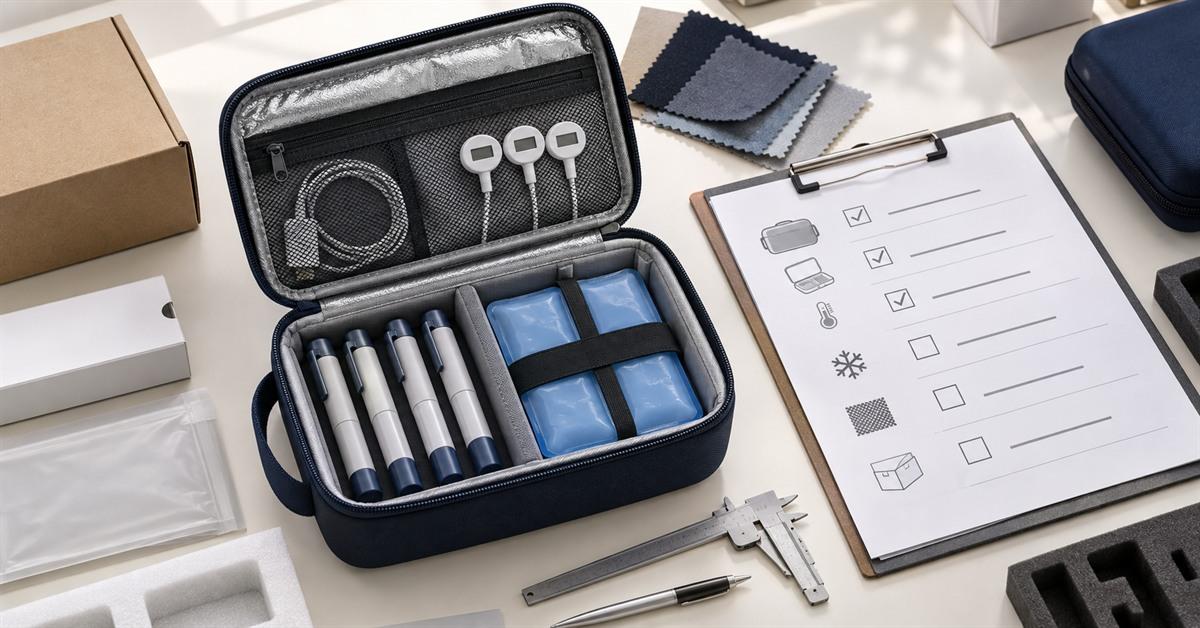
Briefly: Our approval package separates the sample box from the temperature test data. The first page records the physical sample, including its shape, seams, zipper, lining, markings, and surface treatment. The second page records the loaded test data, including the sample number, version number, load quantity, number of gel packs, probe location, and data log file.
A single "approval" stamp can cause problems later. The buyer might be referring to the colors and logos appearing fine, while the engineer might be referring to the load test passing. The production team could then mistakenly believe that the inserts and gel packs are finalized. To avoid this confusion, we note the final decision on every document.
A clearer handover process is needed for insulin refrigerated bag samples. I am currently handling this case and reconstructing the necessary documentation for testing. Our current Pengtour testing protocol applies to opened and used insulin, stored at temperatures below the buyer-specified -30°C label limit. For unopened medications, testing begins with their current label and storage conditions.
Why are there two sample approval forms?
I start by filling out the appearance inspection form with the box closed. First, I check the color, logo, and outer shell shape. Then I open the box and inspect the zippers, stitching, lining, and finish. The inspection results are written next to the inspected items, so even if there's an "OK" at the bottom, it won't obscure any areas that need modification.
The second verification item pertains to the loaded samples. It covers the sample kit version, pen or vial, gel pack, separator, packaging method, chamber condition, factory probe diagram, and test results.
By examining these two decisions separately, we can answer a fundamental production question: What exactly did the buyer approve?
Will anyone else be able to rebuild the insulin refrigerated bag testing device next week?
A usable approval document should allow colleagues to rebuild the equipment when the original operator is unavailable. The "two ice packs" instruction does not specify the ice pack dimensions or preparation method. The "keep cold for 12 hours" instruction does not specify the load capacity, limits, or time calculation method.
As I filled out the records, I kept the opened samples within reach. Starting from the left side of the box, I recorded the name, quantity, size, and weight of each pen or vial, as well as its condition at the time of filling. The recording lines for the gel packs were filled in based on the gel packs on the table: type, finished product size, net fill volume, freezing settings, and preparation time. Then, before removing anything, I marked the positions of the dividers and fittings on the drawing with a pencil.
Below the load record, I documented the environmental settings and target range, followed by the probe location and recording interval. The same line also records whether the housing remained closed. The revision number indicates the housing, liner, insulation material, inserts, zippers, and spacing used on the test bench. The original filename and duration rules are located next to the results for easy reference by reviewers.
Place the setup photo and loading diagram under the same sample number. The arrows in the photo are useful; memory is not a testing method.
Our insulin cooler bag cooling time test guide includes a complete reference setup. The test used two 75g soft-pack insulins, cooled at -18°C for 4 hours, and four simulated insulin pens were set up, with air pressure measured on the left, middle, and right sides. This article uses the same sample record, not a second temperature test.
The charts are for reference only. The key to metrological traceability lies in its supporting documentation. In our project documentation, we retain the instrument ID for the individual factory recorder, all necessary calibration certificates, chamber references, duration rules, and original exported files.
Where should sensors be installed during the quality control process of pharmaceutical refrigerated boxes?
Select the factory probe diagram from the loaded drawings. Dots next to the coolant may indicate low-temperature areas, while dots further away may indicate high-temperature areas. If the probe tip may come into contact with components, that contact area needs to be inspected separately. If the housing needs to be opened during use, please include the opening plan in the method.
Do not rename the air data after testing. The UK National Health Service (NHS) Specialist Pharmacy Service distinguishes between air sensors and load sensors placed in representative products. The three probes of the independent factory data logger tell us about changes in air within the pillbox, not changes in insulin levels or water levels inside a simulated pen casing.
The acceptance form has two temperature lines. One shows which point first reaches 30°C, and the other shows the lowest temperature and its location. This lower temperature value is not an option: FDA guidelines state that frozen insulin should not be used. CDC travel guidelines also advise travelers not to place insulin directly on ice.
What should I mark on the graph before the buyer signs?
I first located the lowest reading and inquired about its location and time. Then, I examined the start and end points used to calculate the duration. Neither the "lowest temperature" nor the "12-hour cold snap" could be interpreted until the sensor location and calculation rules were available.
On the audit copy, I circled the first and last timestamps that exceeded the agreed limits and wrote the worst reading next to them. Next, I compared the two ends of the load with the chamber records. Blank spaces in the records will be displayed as blank. The original CSV file is kept in the sample folder; the chart screenshots are only from the audit copy.
How can I obtain approval for custom insulin refrigerated bag samples?
"Temperature test passed" is not sufficient as a condition for approval. I must first clarify the case revision and the exact load. Taking the current Pengtour reference case as an example, the table then lists two 75-gram gel packs, prepared at -18°C for four hours, the test chamber setup, and the positions of the left, middle, and right air probes. The results row shows the first probe to reach 30°C and the lowest reading in this test.
The purchasing, engineering, and production departments now all use the same sample number. If the layout of the packaging or pen changes, the old curves will still be retained in the old layout.
If the sample does not reach the agreed endpoint, the observed results should be recorded in a table before anyone alters the sample box. Corrections may include adjusting the sample bag position, partitions, sample box depth, or gel pack specifications. A new revision should be made for the modified sample. Then, the relevant loading checks and temperature tests should be repeated, and the changes noted on the drawings.
When we need to understand the reasons for failed results, I prefer to make only one effective improvement at a time. For example, a sample might yield a better curve if it incorporates a different gel pack, a thicker insulation layer, and a different payload, but this doesn't tell us exactly which improvement was effective. By documenting each improvement, buyers can clearly see which factors changed before approving the next sample.
What approved details must be entered into the production documentation?
Before the samples leave my desk, I check the drawings and bill of materials against the actual components used in testing. A production line can't rely on descriptions like "using two ice packs." It needs the ice pack model, size, net fill weight, and quantity. Divider labels need to include material, finished thickness, and location. The dimensions of the cavity, rings, sleeves, or dividers containing the medication also need to be specified.
The drawings should also control the depth of the finished packaging box and the spacing between the medicine and the packaging box. Packaging instructions must be consistent with the packaging method used in the test. Actual materials and structure should be clearly indicated, rather than using vague descriptions such as "foam" or "silver lining."
When should the load be checked again after structural changes?
Changing the print color will not change the load. However, changing the insert, cartridge depth, payload, or gel pack supplier may change the load. After any of these changes occur, reload the modified cartridge and compare the nearest and farthest pen tip positions to the signed drawing. If the positions have changed, the project manager should note whether a comparison run on the new version is required. The original curve remains in the settings that generated it.
Pengtour can review the cabinet structure, coolant separation, internal layout, sensor interfaces, and sample records. First, please review the travel insulin cooler design overview , compare it with the gel pack placement guidelines , and request an OEM sample with loading details .
source
- FDA: Information on insulin storage and emergency product switching
- U.S. Centers for Disease Control and Prevention: Travel Tips for People with Diabetes
- NHS Specialist Pharmacy Services in the UK: Use of Temperature Sensors in Medicine Storage Areas
- National Institute of Standards and Technology (NIST): Metrological Traceability – Frequently Asked Questions and Policies