

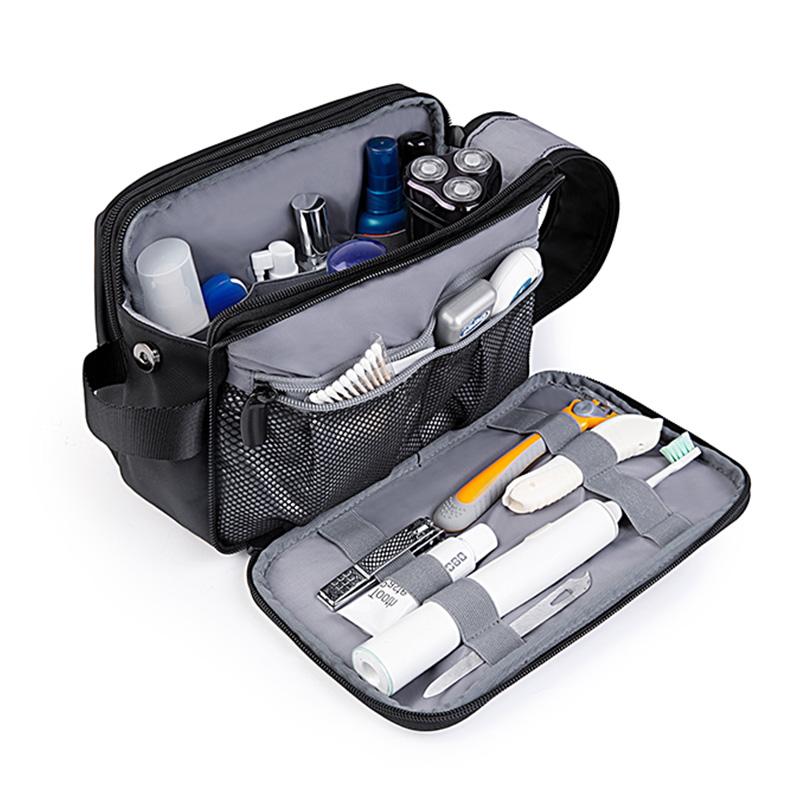
A custom men's toiletry bag should not begin with a catalogue shape. It should begin with the program that will sell or distribute it.
A grooming brand, a hotel amenity supplier, a travel retailer and a corporate gift buyer may all ask for a toiletry bag. They are not asking for the same product. The contents, display method, packing route and acceptable unit cost pull the design in different directions.
This guide shows how to turn that commercial use case into a brief a manufacturer can quote, sample and revise. It focuses on six decisions: format, contents, interior layout, materials, branding and sample approval.
Start With the Sales Program, Not the Bag Style
Write down where the finished bag will go before choosing pockets or fabric.
|
Program |
What usually drives the brief |
What the buyer should define first |
|
Retail grooming line |
Shelf appearance, perceived value and repeatable size |
Target customer, retail pack and price position |
|
Hotel or amenity kit |
Fit around a fixed set of bottles or accessories |
Item list, item dimensions and packing method |
|
Corporate gift |
Branding area, presentation and delivery date |
Logo file, event date, quantity and unit packing |
|
Travel-accessory range |
Packed size, access and compatibility with the wider collection |
User scenario, contents, folded size and colour system |
|
Subscription or gift set |
One bag carrying a changing product bundle |
Maximum item set, insert card and fulfilment sequence |
This distinction matters because the bag is only one part of the offer. A premium retail line may need a clean front panel and a structured shape. An amenity kit may care more about exact bottle fit and fast packing. A gift program may accept a simpler interior if the logo and individual presentation are right.
The category page for custom toiletry bags and travel organizers shows the product family. This article deals with the work that comes before selecting or developing one of those formats.
Choose a Format Around Access and Packing
Three formats cover many commercial projects, but each solves a different problem.
Compact zippered pouch
A compact pouch works when the contents are limited and the bag must fit inside luggage, a gift box or another kit. The shape is easy to understand and can leave a useful front panel for branding.
The trade-off is visibility. Contents sit behind one opening, so small items can fall below larger bottles. If quick access matters, add a shallow pocket, elastic organization or a divider only where the actual contents justify it.
Boxy or self-standing bag
A boxy form gives a clearer retail silhouette and can stand on a counter when its structure and loading support that use. A wide opening can make contents easier to see.
The sample needs to answer two practical questions: does the bag keep the intended shape when empty, and does it still close when loaded? Added structure also affects seam bulk, packing volume and cost.
Hanging organizer
A hanging bag uses vertical space and can expose several pockets at once. It suits hotel, travel and grooming programs where counter space is limited.
It also creates a distinct load path. The hook or hanging point, top connection, folding seams, loaded pockets and zipper ends all need review with representative contents. A hook is not proof of a fixed load capacity. The carried items, weight distribution, material layers and attachment area are reviewed first; reinforcement can then be evaluated through sampling and any required project-specific testing.
Pengtour can evaluate compact pouches, boxy or self-standing forms, wide openings, internal pockets, mesh or elastic organization, hanging hooks, handles and removable sections. These are options for project review, not a standard feature list for every bag.
Size the Bag Around Real Contents
Do not approve a toiletry bag from outside dimensions alone.
Start with a travel toiletries list to separate daily, optional, and destination-specific items, then confirm which actual products belong in this project. Record the approximate dimensions and quantities of those real contents. If bottles or grooming tools already exist, use the real items during development or provide accurate references. These contents, sizes, and quantities should determine the bag development inputs rather than a universal capacity or size standard.
A practical content map can use four groups:
- Tall containers that affect usable height and zipper clearance
- Small daily-use items that become difficult to find in one open compartment
- Hard or edged items that may press against other contents
- Items that the buyer wants separated for organization or presentation
Then describe the access order. The item used first should not sit behind three backup items. A removable section can help a multi-use program, but it also adds attachment points and takes up interior space. Fixed pockets make one layout repeatable; a simpler open compartment gives the user more freedom.
The useful size is the loaded size. A sample can look spacious when empty and become difficult to close once the contents push into the zipper path. Review the opening, corners and pockets with the actual load in place.
Treat Lining and Spill Control as Separate Decisions
Outer fabric, inner lining and spill control are related, but they are not the same requirement.
Material directions for a custom sewn-bag project may include Oxford fabric, polyester, nylon, matte PU, PVC and other coated or laminated fabrics. Availability, weight, finish, colour and suitability still have to be confirmed for the individual project.
The lining decision should start with the contents and cleaning expectation. A light lining can make small dark items easier to see. A smooth surface may be easier to wipe during normal use. Mesh improves visibility and ventilation, while an opaque pocket hides the contents. These are design observations, not performance guarantees.
A stitched toiletry bag should not be called leakproof merely because the lining is coated. Liquid can move through needle holes, seams, zipper paths or an open pocket. If the project has a defined spill-control requirement, write down the liquid, contact time, acceptable result and test method. Then review a proposed construction against that requirement.
Our guide to bag lining material choice explains how to turn a material request into a sample question without assuming a fixed waterproof result.
Build the Logo Into the Material Plan
Logo application is not a finishing decision to leave until the sample is almost done. The panel, fabric and artwork decide which method is practical.
Pengtour can evaluate silk screen printing, heat transfer printing, embossing, debossing, rubber badges, metal plates, embroidery, woven labels and UV printing for eligible projects. The final route depends on the material, logo detail, placement, size and the approved appearance.
A simple mark on a flat polyester panel raises a different production question from fine embroidery on a small curved pocket. A metal plate adds weight and fixing points. Debossing needs a surface that can hold the impression. A woven label can work where printing would lose definition.
Ask for the logo to be shown on the assembled sample rather than approving it from a loose material swatch. Check its scale, position, contrast, alignment and what happens when the bag is filled. If the program also needs a hang tag, barcode, insert card or gift box, include those items in the same approval record.
Review Stress Points From the Loaded Bag
A toiletry bag does not have one universal reinforcement specification.
The likely stress points change with the format. A compact pouch may need attention around the handle and zipper ends. A hanging organizer adds a hook connection, top handle, folding seams and loaded pocket attachments. A boxy bag may put more stress around corners and the opening.
Start with carried items, expected loaded weight, carrying method and weight distribution. Then review webbing, hardware, material layers and attachment areas. The logic is:
carried items and use action → weight distribution → stress points → reinforcement options → loaded-sample check → project testing, if required
This is why a fixed stitch count or one named stitch pattern cannot guarantee a load result. The wider bag stitching and reinforcement guide explains what buyers should provide before a construction decision is made.
Turn the Idea Into an RFQ a Factory Can Price
A useful request for quotation contains decisions, not adjectives.
|
RFQ field |
What to provide |
Why it changes the quote or sample |
|
Program and market |
Retail, hotel, gift, travel range or kit |
Sets presentation, packing and approval priorities |
|
Target user and use |
Who uses it, where and how often |
Guides format, access and carrying details |
|
Contents |
Item list, quantities and dimensions |
Determines size, pocket depth and loaded shape |
|
Format |
Pouch, boxy bag, hanging organizer or reference |
Defines pattern complexity and component count |
|
Interior |
Main compartment, pockets, mesh, elastic or removable section |
Changes labour, usable volume and sample checks |
|
Material direction |
Desired look, touch, colour and cleaning expectation |
Guides material proposals without assuming performance |
|
Branding |
Artwork, size, placement and preferred method |
Affects panel design, setup and approval |
|
Quantity and variants |
Total units plus colours, sizes and logo versions |
Affects material planning and minimum quantities |
|
Packaging |
Polybag, insert, label, barcode, gift box or kit packing |
Adds components and packing work |
|
Approval requirements |
Deadline, sample questions and any defined test |
Sets the development plan and evidence needed |
MOQ depends on material, structure, size and project requirements. Projects using common black materials may use approximately 500 pieces as a reference, while lower quantities can be evaluated. The final MOQ belongs in the quotation for the selected design and material plan.
Regular custom sampling typically takes approximately 7 to 15 days after requirements are sufficiently confirmed. Material availability, tooling, pattern work and complexity may change that schedule. Mass-production lead time is confirmed separately for each project after the product, quantity, approvals and order requirements are clear.
If you need the broader sequence beyond this product family, the custom bag manufacturing process explains how a brief moves through development and production.
Make the First Sample Answer Specific Questions
The first sample is more than a visual prototype. Give it a job.
- Load the intended contents. Confirm that required items fit without forcing the zipper or hiding daily-use items.
- Use the opening as intended. Hang it, stand it on a counter or pack it into the planned kit.
- Check access order. Remove frequent-use items without emptying the rest of the bag.
- Review attachment areas. Look at the handle, hook, pocket openings, zipper ends and removable-section connections under the intended load.
- Check the assembled branding. Review position, scale, alignment and appearance on the finished bag.
- Review packing. Put the bag into its polybag, gift box or amenity kit and check labels, inserts and packed volume.
- Record open decisions. Separate cosmetic changes from structure, material, function and packaging changes.
Photos and videos can help communicate a revision, but they do not replace a physical reference when fit, hand feel or loaded shape matters. Keep the approved sample, written specification and revision record aligned before bulk production.
How Pengtour Reviews a Custom Toiletry Bag Project
Pengtour's sewn-bag range includes toiletry bags for selected OEM and ODM projects. A project review may cover size, shape, opening, internal layout, materials, colour, logo, zippers, handles, pockets, dividers, hardware, packaging and sample requirements.
The review starts with the program and representative contents. From there, the team can evaluate a compact zippered pouch, boxy or self-standing form, wide-opening bag, hanging organizer or a related custom direction. Final feasibility depends on the actual design, materials, hardware and approval requirements.
Quality review may compare materials, dimensions, appearance, stitching, zippers, handles, pockets, internal structures, logo, fit, function and packaging with the approved project requirements. It does not turn an ordinary stitched bag into a certified waterproof or fixed-load product. Any defined performance requirement needs its own agreed method and evidence.
For a new project, review the custom soft bag development options, then send your contents, target format, artwork and quantity for a quote.
FAQ
What is the difference between a Dopp kit and a toiletry bag?
A Dopp kit usually refers to a compact zippered grooming pouch, often with a simple main compartment and a boxy shape. Toiletry bag is the wider category and can include compact pouches, hanging organizers, multi-compartment travel bags and amenity-kit packaging. For a factory brief, the name matters less than the opening, shape, contents and internal layout.
Can a toiletry bag be developed from a reference photo?
A photo can establish a direction, but it does not close the specification. Add target dimensions, intended contents, material direction, logo file, quantity and packaging. Details hidden in the photo, such as lining, seam construction, pocket depth and hardware attachment, still need confirmation during development.
Can different colours or logos be combined in one order?
They can be evaluated, but each colour, artwork version or packaging version affects material planning, setup, sorting and minimum quantities. Send the total quantity and the split by variant. The quotation should state which parts are shared and which are treated as separate versions.
What should a buyer ask before paying a sample fee or deposit?
Ask what the quoted price includes, which materials and logo method are assumed, what starts the sample schedule, how revisions are handled, which sample will control bulk production, what packing is included and which terms remain open. Payment terms, freight terms and any third-party inspection should be written into the quotation or order documents rather than assumed from a general website statement.
Key Takeaways
- Start with the retail, hotel, gift or travel program. The same bag name can hide four different briefs.
- Size from actual contents and access order, not outside dimensions alone.
- Choose pouch, boxy or hanging construction according to use and packing, then test the loaded sample.
- A coated lining does not make a stitched bag leakproof. Define any spill-control requirement separately.
- Match the logo method to the material, panel and artwork before the sample is finished.
- Quote with quantity and variant splits together. Colours, logos and packaging versions affect planning.
- Keep the approved sample, written specification and revision record aligned before bulk production.