

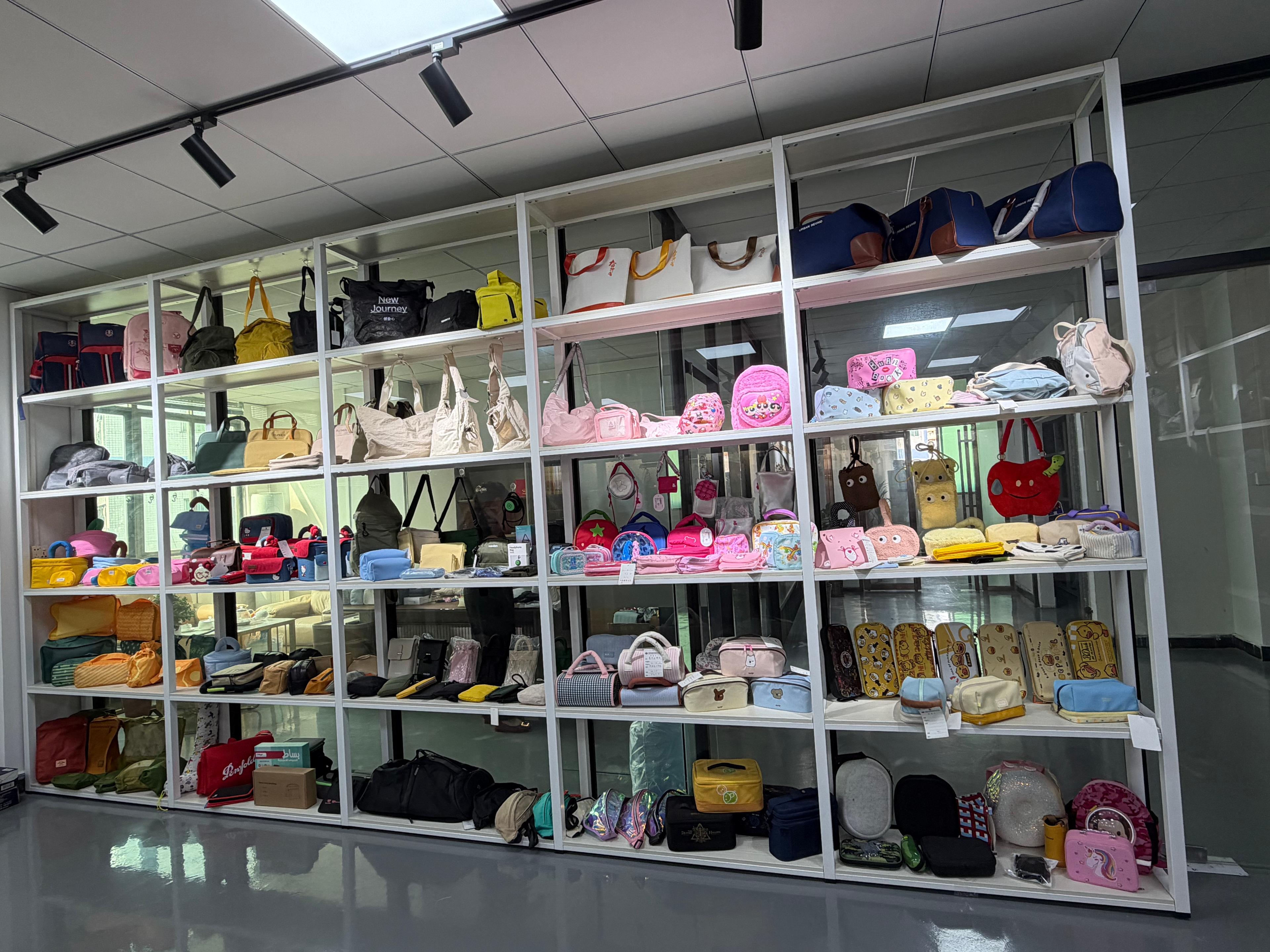
Successful custom bag manufacturing requires a precise alignment of exact engineering specifications, material performance benchmarks, and structured quality control protocols. To successfully scale from a design draft to a mass-produced functional bag without costly product defects, B2B procurement teams must establish a rigorous blueprint that bridges the gap between creative design and assembly-line realities.
🚀 Quick Reference: The Custom Bag Manufacturing Checklist
-
Blueprint Readiness: Always secure a fully realized Bill of Materials (BOM) and dimensioned vector files before initiating factory contact.
-
Material Calibration: Select the correct fabric denier (e.g., 600D vs. 1680D) and backing coatings (PU vs. PVC) based on the bag’s intended load and environmental exposure.
-
Prototype Validation: Audit the structural prototype for curved zipper tracking, sewing density (SPI), and structural rigidity under peak load conditions.
-
Stitching Reinforcement: Enforce mandatory X-box bartack stitching and heavy-duty bonded nylon threads at all major load-bearing stress points.
-
Compliance Framework: Ensure all raw material inputs are batch-tested against international chemical safety and mechanical durability standards.
Step 1: Defining the Purpose & Tech Pack of Your Functional Bag
When navigating the complexities of custom bag manufacturing, B2B buyers often struggle to bridge the gap between a design concept and a market-ready product. A loose sketch, a generic mood board, or a basic retail reference sample is rarely sufficient to guarantee production accuracy across a multi-tiered industrial assembly line. To eliminate manufacturing errors, mitigate material waste, and secure accurate cost evaluations from the very first quotation, every professional procurement project must begin with a formalized tech pack.
Before finalizing a tech pack, buyers comparing rigid and flexible formats can review Pengtour's molded EVA case vs sewn carrying bag guide.
What Is a Bag Tech Pack and Why Does Your Factory Need It?
A bag tech pack acts as the definitive contract blueprint and technical constitution between your brand's development team and the production floor. Without a structured, multi-page technical document, a factory's engineering team is forced to make subjective assumptions regarding seam allowances, internal dimensions, and reinforcement placement. These assumptions inevitably lead to costly structural deviations during mass production.
A comprehensive, production-ready tech pack must include detailed multi-angle vector illustrations (showing front, back, profile, and exploded interior views), a fully populated Bill of Materials (BOM) listing every fabric, thread, and hardware supplier, precise dimensional tolerances (specifying acceptable variances down to +1mm~-1mm), exact logo printing coordinates with Pantone matching codes, and definitive hardware specifications.
By detailing every component—down to the exact thread type and zipper pull weight—sourcing managers can establish clear accountability. This technical document allows the factory's engineering team to calculate accurate material yield metrics, establish accurate production timelines, and minimize structural misinterpretations during the initial prototyping stage.
Industry-Specific Requirements for Functional and Utility Bags
Functional bag production demands specific structural adaptations depending on the targeted B2B market application. Sourcing managers must look past basic aesthetics and engineer these specialized mechanical requirements before launching a project:
-
Custom Medical Bags: These specialized packs demand complete focus on hygiene compliance, internal layout compartmentalization, and rapid access. Interior compartments require antimicrobial, non-toxic lining fabrics that resist chemical fluids and tolerate intensive sanitization protocols. Structural rigidity must be maintained using internal reinforced support frames to shield delicate diagnostic tools or fragile medication vials from external impacts.
-
Custom Cosmetic Bags Bulk Orders: In the high-volume beauty and cosmetics sector, interior containment is the primary engineering concern. Linings must feature liquid-proof, wipe-clean, or oil-resistant coatings (such as TPU laminations or heavy PVC backings) to fully contain internal product leaks. Externally, the aesthetic presentation must remain flawless, requiring precision stitching along hidden seams and smooth zipper action across compact curves.
-
Custom Pet Carriers: Animal transport bags prioritize structural load-bearing integrity and high-airflow ventilation. The outer shells must utilize high-denier, claw-resistant fabrics combined with reinforced mesh window structures. To ensure pet safety, interior bases must resist bending under concentrated weight, requiring the integration of rigid internal stabilizing inserts rather than basic foam layers.
-
Custom Sports Bags: Engineered for heavy athletic gear, team travel, and rough environmental exposure, these bags require extensive wear resistance. Key features include independent wet/dry separation compartments with specialized ventilation eyelets, heavy-duty moisture-wicking materials, and robust base panels designed to survive continuous abrasion against locker room and outdoor surfaces.
To browse specialized options tailored to these demanding applications, procurement teams can review our technical specifications on our dedicated [custom functional bags product page].
Step 2: Selecting High-Performance Fabrics and Hardware for Your Utility Bag Custom
The structural durability and target price point of a utility bag custom project are fundamentally governed by the selection of its fabrics and structural hardware. Procurement managers must avoid choosing materials based solely on visual appeal; choices must be guided by technical performance metrics like tensile strength, abrasion resistance, and chemical compliance.
Outer Materials: Demystifying Fabric Denier (D) and Durability
The term "Denier" (D) measures the linear mass density of a fabric’s yarn, calculated as the weight in grams of 9,000 meters of the fiber. In industrial bag production, selecting the correct denier determines the product's ultimate tear threshold and operational lifespan.
-
Nylon (Polyamide): Renowned for its superior tensile strength and elastic recovery properties. Fabrics like 500D or 1000D Cordura nylon offer elite resistance to punctures and surface abrasion, making them the standard choice for tactical gear, high-end medical packs, and premium outdoor travel bags.
-
Polyester (Polyester): Provides excellent dimensional stability, natural UV resistance, and crisp color fastness. Standard 600D polyester woven with a water-resistant backing serves as an exceptionally versatile and cost-effective material for volume-driven commercial applications, such as cosmetic organizers, gym bags, and custom promotional packs.
Beyond the raw yarn type, the internal backing coating dictates the bag’s environmental performance. Polyurethane (PU) coatings offer flexible, lightweight water resistance while allowing the fabric to breathe. In contrast, Polyvinyl Chloride (PVC) backings deliver total waterproofing and immense structural stiffness, though they add significant weight and require careful monitoring to ensure international environmental compliance.
For a deeper material-selection view of 600D, 900D, and 1680D Oxford fabric in sewn functional bags, review our Oxford fabric selection guide for custom functional bags.
Heavy-Duty Hardware: Ensuring Zipper Longevity on Curved Tracks
Zippers and buckles represent the primary failure points in utility bag deployments. When a functional bag features intricate 90-degree curves or specialized multi-panel shapes, the zipper track experiences continuous outward lateral stress from the compressed internal padding. Cheap, generic hardware will split, teeth will deform, and the zipper slider will derail under repeated industrial use.
To guarantee operational longevity, hardware selection must align with proven mechanical performance limits. For high-stress applications, implementing YKK heavy-duty fastening specifications ensures that track geometries, zipper teeth dimensions, and metal alloy sliders are engineered to withstand continuous lateral tension.
For perimeter closures on padded cases, size #8 or #10 heavy-gauge nylon coil zippers are preferred due to their inherent flexibility around tight radii. For load-bearing strap configurations, hardware must include impact-molded polyoxymethylene (POM) buckles or cast zinc-alloy clasps capable of resisting stress fractures under extreme temperatures and heavy dynamic tension.
Step 3: The Bag Sampling Process – Turning Blueprint into Prototype
The transition from a two-dimensional tech pack to a three-dimensional product occurs during the physical bag sampling process. This phase serves as an operational test run to catch pattern defects, design flaws, and assembly bottlenecks before investing capital into high-volume mass production tooling.
Engineering Analysis: Crafting a 12.5-Inch Padded Circular Bag
To understand the absolute necessity of rigorous prototyping, consider the complex engineering analysis required for a specialized B2B procurement request, such as a custom 12.5-inch diameter, 2.5-inch deep padded circular protection bag containing 5mm EPE foam insulation.
From an assembly perspective, a perfectly circular pattern introduces significant geometric challenges compared to standard square or rectangular paneling. A circle with a 12.5-inch diameter possesses a continuous outer perimeter of approximately 39.27 inches. The side gusset panel, which holds the zipper track, must match this length with a tolerance of less than 1mm.
During the stitching phase, the factory's engineering team must contend with the natural spring-back force of the 5mm expanded polyethylene (EPE) foam. EPE foam possesses structural memory; when compressed and curved along a tight 39.27-inch circular track, it exerts continuous outward pressure against the outer polyester or nylon shell. If an inexperienced assembler attempts to stitch the perimeter manually without specialized tooling, the fabric will bunch up, creating visible puckering along the zipper line and pulling the final bag into an asymmetrical, warped oval shape.
To overcome this, our engineering department implements a strict prototyping workflow:
-
Step 1: Precision Pattern Drafting – The paper pattern is graded with a built-in 2mm contraction allowance to compensate for fabric pull during radial stitching.
-
Step 2: Specialized Manufacturing Tooling – The assembly line utilizes a custom circular positioning jig and a synchronized walking-foot sewing machine. This specialized setup feeds the outer fabric, the 5mm EPE foam, and the inner polyester lining at identical speeds under unified pressure.
-
Step 3: Tension Stabilization – The sewing tension is mechanically calibrated to ensure the long-distance zipper tape remains perfectly flat, eliminating "wavy" teeth tracking and ensuring a smooth glide across the entire circumference.
From Prototype Approval to Golden Sample Consensus
The final phase of prototyping requires the creation of a "Golden Sample"—the definitive aesthetic and structural standard for mass production. Once the physical prototype undergoes structural adjustments, two identical finalized samples are produced. The procurement team retains one sample for incoming quality inspections, while the factory seals the second sample on the production floor to serve as the unchangeable benchmark for assembly-line workers.
No mass production lines should be initiated until this physical consensus is signed off by both parties. To learn more about our end-to-end development timelines and collaborative prototyping workflows, please explore our comprehensive overview on our [bag customization solutions page].
Step 4: Mass Production and Heavy-Duty Stitching Craftsmanship
Once the prototype is validated, the project advances to the mass production floor. Here, the true quality of a custom bag manufacturing partner is revealed through their stitching craftsmanship, machine discipline, and structural reinforcement strategies.
The Stitching Line: Stitch Density and Load-Bearing Reinforcements
The structural longevity of any high-capacity functional bag is directly determined by its stitch density, measured in Stitches Per Inch (SPI). Industrial bag manufacturing dictates a strict adherence to a 7–8 SPI standard. If the stitch density falls below 6 SPI, the thread lacks the holding power to secure the seams under tension, causing visible seam gaping and fabric fraying. Conversely, if the density exceeds 9 SPI, the needle punctures the fabric too frequently, slicing the underlying synthetic yarns and creating a perforated tear line that splits easily under pressure.
Standard straight stitching is entirely insufficient for securing handles, shoulder straps, or interior dividing walls. All major load-bearing stress points must be reinforced using a specialized industrial X-box bartack stitching pattern. This reinforcement method involves laying down a heavy perimeter box configuration over the webbing strap, followed by two intersecting diagonal stitch passes that form an internal "X" inside the boundary. This geometric layout ensures that tension forces are distributed evenly across the multi-layer fabric backing grid rather than concentrating on a single row of threads.
To verify the mechanical boundaries of these reinforced seams, our workshop relies on international testing protocols. We design and test handle attachments to meet or exceed ASTM textile tensile and abrasion standards, subjecting critical seams to rigorous pull-strength validation.
Internal Structural Engineering: Replacing Foam with Rigid Plastics
A common failure point in functional organizer bags (such as multi-tier cosmetics kits or industrial tool bags) is the internal partition walls. Under the weight of heavy components, standard inner foam dividers rapidly experience material fatigue, causing the internal layout to sag and collapse.
To eliminate this structural defect, advanced manufacturing replaces standard inner foam layers with rigid plastic internal stabilizing panels. We implement 3mm high-density Polyethylene (PE) or Polypropylene (PP) solid boards wrapped inside a reinforced fabric sleeve. These rigid plastic cores distribute heavy vertical loads evenly across the bag’s perimeter frame, ensuring the bag maintains its crisp, professional appearance and structural protection throughout years of continuous field use.
Step 5: Quality Control and Global Compliance Testing with a Custom Bag Manufacturer
High-volume manufacturing demands strict adherence to rigorous quality assurance protocols to prevent defective batches from reaching your distribution centers. Partnering with an experienced custom bag manufacturer ensures that quality gates are integrated into every stage of the assembly line.
For a practical project-specific review of materials, dimensions, stitching, hardware, branding, and packaging, use Pengtour's custom bag quality control checklist.
Factory In-Line Inspection: AQL 2.5 Standards and Load Testing
Quality control must never be treated as a final, superficial check. Our facility enforces a strict three-tier inspection system structured around international Acceptable Quality Limit (AQL) 2.5 defect tolerances for major defects:
-
Phase 1: Pre-Production Inspection (PPI) – Every incoming lot of raw fabric, zipper reels, webbings, and plastic hardware is tested before cutting. Fabrics undergo color-fastness testing and water-repellency verification.
-
Phase 2: In-Line Inspection (DPI) – As panels move through the sewing lines, quality supervisors inspect stitch counts, seam allowances, and internal alignment. Any panel tracking outside of strict tolerances is pulled immediately to protect the batch integrity.
-
Phase 3: Final Random Inspection (FRI) – Finished bags are selected at random by independent inspectors. These samples are subjected to heavy-duty load testing, where bags are packed to maximum capacity (e.g., a 15kg load for a pet carrier or heavy sports pack) and placed into a dynamic drop tester to complete 5,000 continuous shock cycles.
To read about our facility certifications, factory floor layout, and past client audit reports, please visit our [about our manufacturing factory page].
Meeting Chemical Safety Standards for International Shipping
For international brands distributing products across North America and Europe, chemical safety compliance is an absolute legal necessity. Raw textiles, PVC backings, metal zipper teeth, and printed logo inks can contain hidden heavy metals or restricted plasticizers that face immediate seizure at international customs borders.
To eliminate compliance risks, our material procurement lines are fully traceable. All material inputs are thoroughly batch-tested against EU REACH compliance guidelines (Regulation EC No 1907/2006) to ensure they are free from Substances of Very High Concern (SVHC). Simultaneously, for goods bound for the United States, materials undergo laboratory verification to meet California Proposition 65 standards, guaranteeing that all lead, cadmium, and phthalate levels fall safely below legally restricted parts-per-million (ppm) thresholds.
Step 6: Formulating the Perfect Functional Bag Specification Matrix
To assist procurement teams in aligning their specific application needs with the correct industrial materials and reinforcement methods, our engineering department has established this functional manufacturing matrix:
Functional Bag Manufacturing Specification Matrix
| Targeted Bag Category | Recommended Outer Fabric | Primary Technical Performance Requirement | Recommended Internal Lining & Coating | Mandatory Stitching Reinforcement |
| Custom Medical Bags | 1000D Ballistic Nylon | Maximum puncture resistance & rigid structural shield | 420D Antimicrobial TPU laminated water-resistant lining | Double-bound interior seams; reinforced aluminum support frame |
| Custom Cosmetic Bags | 600D Diamond Weave Polyester | Lightweight, structural elegance & crisp logo presentation | High-gloss, oil-resistant wipe-clean PVC film backing | Hidden internal piping; reverse-coil zipper tracks |
| Custom Pet Carriers | 1680D Dual-Strand Oxford Cloth | Extreme claw-scratch resistance & structural breathability | 0.8mm Heavy rubber-coated anti-scratch high-airflow mesh | X-box bartack stitching at all shoulder harness anchors |
| Custom Sports Bags | 840D Ripstop Nylon | High tensile tear threshold & wet/dry interior separation | 210D Pu-coated moisture-wicking lining with ventilation eyelets | High-density cross-stitched base panels; size #10 zipper tracks |
FAQ: Critical Answers for Bag Sourcing Managers
Q1: What is the typical MOQ when ordering a custom cosmetic bags bulk batch?
A: For high-volume categories like a custom cosmetic bags bulk production run, our standard minimum order quantity (MOQ) typically ranges from 1,000 to 2,000 units per colorway. This limit is governed by the commercial dye house minimums required to produce custom fabric runs. For highly specialized functional packs using stock fabric colors (such as medical or sports bags), we can accommodate flexible initial test orders between 200 and 500 units.
Q2: What load-bearing reinforcements are mandatory for a custom pet carrier or heavy custom sports bags?
A: For both a custom pet carrier and heavy custom sports bags, standard surface stitching is completely unacceptable. Sourcing guidelines mandate that handle webbings must wrap entirely around the bottom circumference of the bag's internal frame, turning the base fabric into a structural hammock. All upper handle junctions must feature double-layer fabric backing patches, use 210D/3 bonded nylon thread, and receive heavy-density X-box mechanical bartacking to survive dynamic drop testing up to 15kg.
Q3: Do you have specialized certification for manufacturing a custom medical bag?
A: Yes. Production lines handling a custom medical bag operate under strict factory standards. Our facilities maintain up-to-date ISO 9001 quality management certifications and are fully audited against BSCI social compliance guidelines. Raw materials utilized for medical deployment are supplied with verified material safety data sheets (MSDS) to confirm compliance with international non-toxic and fluid-resistant standards.
Q4: Can you manufacture bags based on a physical reference sample instead of a vector CAD drawing?
A: Absolutely. If your product engineering team does not possess a finalized 2D vector tech pack, our sample room can perform full reverse-engineering from an existing physical sample. Our pattern masters will meticulously deconstruct the sample’s gusset panels, stitch paths, and internal padding components to generate a digital tech pack and blueprint for your corporate approval before releasing the pattern to the cutting floor.
Ready to Bring Your Design to Life? Partner with a Trusted Factory
Navigating the technical landscape of mass fabric production requires an experienced production partner who understands precise industrial execution. Whether you are scaling an initial small-batch deployment of 200–500 specialized protection cases or organizing a large-scale commercial bag project, our engineering team is prepared to analyze your custom requirements.
Please visit our [contact us / inquiry page] to submit your initial design draft, material preferences, and target dimensions. Our technical staff will deliver a comprehensive structural evaluation and accurate manufacturing quotation within 24 business hours.
When your material, dimensions, and target quantity are ready, use our submit your bag requirements page to request a manufacturing review and quotation.