

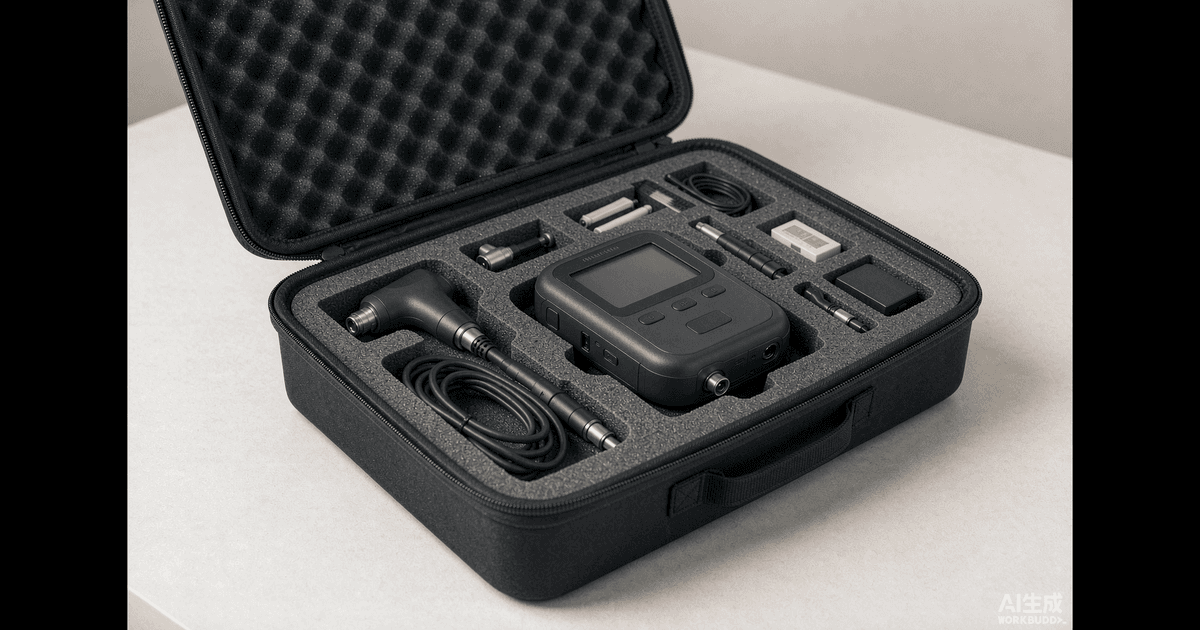
A medical device EVA case prototype starts with the device information, not with a catalogue shell. Before sampling, the buyer should send the device dimensions, weight, photos or drawings, complete accessory list, version information, required access sequence and any known pressure or contact restrictions. The supplier can then review the shell, insert, internal layout and closure as one connected project.
This handoff matters because a case can fit the main device and still fail the buyer's real task. An accessory may have no removal clearance. A connector may sit against a hard support. A foam insert may hide a label or make the lid difficult to close. A sample can look acceptable on a table but need revision once the complete load is inside.
This guide is for medical device brands, product teams, sourcing managers and procurement professionals preparing an RFQ or prototype request. It focuses on the information needed before sampling and the records needed before approval. It does not turn an ordinary fit review into a medical, regulatory or transport-performance claim.
What to Send Before an EVA Case Prototype Review
The first supplier conversation should include enough information to distinguish the device from its carrying conditions. The useful starting package may contain the following.
Device Dimensions and Weight
Send the overall length, width and height of the device, along with the weight of the device in the condition in which it will be placed in the case. If removable parts change the size or weight, list those states separately.
Do not send only a retail product name or a catalogue photograph. A supplier needs to know which surfaces define the envelope, which controls or connectors extend beyond the main body, and whether the device will be placed into the case with a cover, probe, cable or other attached item.
If the device has irregular surfaces, include measurements at the widest, tallest and most sensitive areas. Mark handles, screens, buttons, ports, vents, lenses, wheels, feet or other features that affect the cavity or the way a user removes the product.
Photos, Drawings, CAD Files or a Physical Sample
A supplier may review photos, 2D drawings, 3D files or a physical sample as part of requirement collection. The best input depends on the project. A dimensioned drawing can define controlled surfaces. A 3D file can help communicate the overall form. Photos show the real product condition and accessory relationship. A physical sample can reveal details that are hard to show in a file.
For a digital handoff, identify the file name, revision and date. For a physical sample, identify the model, version and whether it represents the final production device or an engineering sample. This makes later comments easier to trace.
For projects using CAD or other digital references, a separate guide to 3D model inputs for EVA case design can help the buyer prepare the design discussion. The file itself is not a substitute for confirming the actual device and its accessories.
Complete Accessory and BOM List
List every item that must travel in the case. Include the quantity, approximate dimensions, weight when relevant, preferred orientation and whether the item is fixed, removable or optional.
The list may include:
- power supply or charger;
- cables and adapters;
- probes, sensors or detachable heads;
- controller, remote or display accessory;
- tools needed for setup;
- cleaning or maintenance items specified by the buyer;
- printed instructions or labels;
- spare components included in the sales package.
A bill of materials or accessory list should show which version of each item belongs to the sample. If the accessory list changes after the cavity or foam insert is prepared, the first sample may no longer represent the intended load.
Freeze the Device and Accessory Version
Prototype work becomes difficult to review when the product keeps changing without a visible version record. Before sampling, create a simple reference sheet for the device and its load.
Record the Version and Change Status
At minimum, note:
- device model and revision;
- accessory or BOM revision;
- drawing, CAD or Tech Pack revision;
- date of the information package;
- sample quantity and sample purpose;
- items that are final, provisional or still under review;
- the person responsible for approving changes.
This does not mean every medical device project uses the same document format. It means the supplier and buyer should be able to tell which information controlled the sample.
If the device is still changing, mark the open points clearly. A provisional connector position, revised battery, new handle or changed cable length may alter the insert, cavity, pocket, strap or closure. The supplier can review the impact, but the buyer should not treat the earlier sample as a final reference after the load has changed.
Mark Pressure, Contact and Removal Restrictions
The buyer should identify areas that must not be pressed, rubbed or covered. These may include screens, buttons, connectors, vents, lenses, calibration surfaces, labels or delicate external parts. Also identify areas that can accept support, straps or controlled contact if the product design allows it.
Describe the removal action as well. Does the user lift the device vertically, pull it by a handle, remove an accessory first or open a retaining flap before lifting the main unit? The answer affects cavity depth, finger clearance, strap position and the order of the internal layout.
A useful mark-up can separate:
- no-contact or no-pressure zones;
- areas requiring clearance for fingers or a tool;
- support surfaces;
- removable components;
- cable exit or connector access points;
- areas that may be covered only after a project-specific review.
The purpose is to give the case designer a practical map. It is not a promise that a certain foam shape or material will satisfy every device requirement without sampling.
Describe the Case Structure You Need
A medical device case request should describe the job of each component. "EVA case with foam" is a starting category, not a complete construction brief.
Shell and Closure
State whether the case is expected to use a molded or formed EVA shell, a sewn carrying construction, or a structure that needs further review. Note the preferred opening direction, carrying method, handle position, zipper route and any access that must remain available while the device is stored.
The case may also need a lining, edge treatment, label, logo or packaging arrangement. These details can influence the available internal space and the closing line. They should be discussed together with the device and insert rather than added after the cavity is fixed.
For the wider product context, see Pengtour's custom EVA medical case guide. This article is narrower: it deals with the buyer's prototype input and approval handoff.
Foam Insert, Molded Support or Flexible Retention
The internal support can take different forms depending on the device, accessories, opening sequence and project requirements. Possible directions may include an EVA or PE foam insert, a raised support structure, elastic straps, mesh or fabric pockets, dividers, or removable components.
A foam insert is not automatically the best answer for every device. The supplier should review whether the load needs a shaped cavity, layered support, removable sections, flexible retention or a combination of these. The choice depends on the device geometry, accessory arrangement, closure, handling and other project conditions.
Send the intended insert logic with the device information:
- which surfaces should be supported;
- which areas need clearance;
- which items must be separated;
- which accessories need individual cavities;
- whether cables should be held, routed or stored separately;
- whether a user should remove the accessory before the main device;
- whether the insert should be removable for a different load.
For general dimensions, edge clearance and fit-review questions, use the related EVA case fit and clearance review. The prototype brief should add device-specific contact and access information instead of copying a generic clearance value.
Pockets, Straps, Dividers and Labels
A case can use pockets, elastic straps, fabric dividers, molded supports or other internal features when the project requires them. Describe what each feature must hold and what the user must be able to see or remove.
For example, a cable pocket may need to prevent loose movement without covering the device cavity. An elastic strap may hold an accessory but must not cross a screen or connector. A divider may separate a power supply from the device but should not block the lifting path. These are sample questions, not fixed universal solutions.
Also identify logo placement, labels, instructions and packaging requirements before sampling if they affect the outside surface or internal space. A logo location can interact with a panel seam, handle or molded area. A retail package or shipping arrangement can change the acceptable closed profile.
Define the First Sample Type and Review Conditions
"Please make a sample" is incomplete unless the buyer and supplier agree what the sample is intended to prove. The first sample may focus on overall form, cavity fit, internal layout, loaded access, appearance or a combination of these.
State the Sample Purpose
Write the sample purpose in one sentence, such as:
- to check the overall shell shape and device fit;
- to check the cavity and accessory layout before final insert refinement;
- to review the loaded open and closed condition;
- to review logo, lining, zipper and packaging direction;
- to confirm a revised layout after an earlier sample comment.
A buyer may need more than one sample state or revision. The exact sample count, method, tooling route, materials and timing depend on the confirmed project requirements. Do not treat another supplier's sample quantity or lead time as a Pengtour commitment.
Use the Real Load or Accurate Substitutes
An empty case is useful for checking shape and basic construction. It cannot answer every loaded-use question. When the real device is unavailable, the buyer and supplier should agree how to represent its size, weight, surfaces and accessories for the review.
The review package should identify whether it uses:
- the production-intent device;
- an engineering sample;
- a physical reference unit;
- size-accurate substitutes;
- a digital or drawing-based layout only.
This distinction matters when the buyer later approves fit, removal clearance or closure behavior. The record should say what was actually reviewed.
Review Fit, Access and Closure Before Approval
The first sample review should follow the user's handling sequence. Start with the empty condition, then load the device and accessories, then open, remove, replace and close the case as intended.
Check Device Fit and Removal Clearance
Review whether the device sits in the intended orientation and whether the insert or support contacts the areas identified in the brief. Check the space needed for fingers, handles, cables and removable parts.
Ask:
- Does the device enter the cavity without forcing it?
- Can the user remove it in the intended direction?
- Are connectors, screens, buttons or labels covered unintentionally?
- Do straps, pockets or dividers interfere with the removal path?
- Does the device shift when the case is handled in the ordinary project scenario?
- Does the accessory sequence still make sense after loading?
A custom EVA case sample approval checklist can support the broader review. For a medical device project, add the device-specific no-contact zones, accessory versions and removal sequence to that checklist.
Check Opening and Closure Behavior
Review the opening angle or position required for access, along with the zipper route, closure resistance and any point where the lid, lining, insert or accessory presses into the closing line.
Record observations such as:
- the zipper path changes when the loaded case is closed;
- the lining enters the slider path;
- a rigid accessory sits against a closure point;
- the insert makes the lid rise or pull out of alignment;
- the handle or strap interferes with access;
- the case needs excessive force to close in the planned load condition.
These observations help define a revision. They do not establish a fixed zipper life, impact result, water resistance result, load rating or transport qualification. If a project requires a formal test, define the method, sample construction, conditions and acceptance criteria separately.
Check the Complete Layout and Package
The review should include the elements the buyer expects to approve: shell shape, visible deformation, device fit, opening, closure, lining, foam insert or molded support, pockets, straps, dividers, accessory layout, logo, color coordination, labels and packaging.
The exact list can be shortened or expanded by project. The important point is to identify what the sample was meant to demonstrate before the buyer signs approval.
Record Comments, Revisions and Written Approval
A useful sample comment does more than say "please improve the fit." It identifies the observed condition, affected component, requested change and reference version.
A simple comment record can include:
|
Field |
Example input |
|
Sample version |
Prototype A, revision 1 |
|
Device/BOM version |
Device R2, accessory list B |
|
Observation |
Cable pocket covers the connector removal path |
|
Affected component |
Pocket position and cavity edge |
|
Requested change |
Move pocket away from the marked no-contact zone |
|
Evidence |
Annotated photo, drawing or video |
|
Owner |
Buyer or supplier reviewer |
|
Next reference |
Revised drawing and Prototype B |
|
Approval status |
Open, revised, conditionally accepted or approved |
The exact status words can be chosen by the project team. What matters is that an approved sample is not separated from the final confirmed specification package. Pengtour's first-party EVA sample approval evidence supports recording buyer comments, affected components, sample versions, updated documents, photos, videos, drawings, Tech Pack files, packaging files and written approvals.
Before mass production preparation, resolve conflicts between the physical sample and the latest specification. If the sample shows one pocket location but the current drawing shows another, the buyer and supplier should confirm in writing which version controls. Do not assume that the newest photo, the old drawing or an informal message automatically settles the conflict.
Keep Fit Review Separate From Formal Testing
A prototype review can answer practical development questions: does the device fit, can the user access it, does the layout match the intended load, does the case close as planned, and are the visible construction and packaging details aligned with the brief?
It does not automatically prove medical-grade status, sterility, clinical suitability, regulatory compliance, impact protection, drop performance, transport performance, waterproofing, chemical resistance, fixed load capacity or long-term closure life. Those requirements need their own project documents, test method, sample construction, conditions and acceptance criteria when they apply.
This boundary protects both sides of the project. The buyer gets a clearer approval record, and the supplier is not asked to treat an ordinary fit sample as evidence for a claim that was never defined or tested.
How Pengtour Supports Medical EVA Case Projects
Pengtour's EVA case process can begin with requirement review and the buyer's product information. Depending on the project, useful inputs may include dimensions, weight, photos, 2D drawings, 3D files, a physical reference sample, accessory details and packaging requirements.
The project team can then evaluate the structure direction, material selection, pattern or mold development, internal layout, foam insert or molded support, logo position, sample development, sample adjustment, inspection and packaging. The exact route depends on the device, case structure, materials, quantity and buyer requirements.
For buyers comparing product routes, the custom EVA protective case range and custom medical bag and case range provide the relevant starting points. A medical equipment project may need a molded EVA case, a sewn bag, or a structure review before the route is fixed.
When the device files, accessory list, intended load and review conditions are ready, the buyer can request custom EVA case development or request a project-specific quote. Final feasibility, materials, tooling or pattern route, sample plan and commercial terms remain project-specific.
FAQ
Can I request a medical device case prototype with only product photos?
Photos can start a requirement discussion, especially when they show all sides of the device and its accessories. For a more reliable fit review, add dimensions, weight, a drawing or CAD file, and a physical reference when available. The supplier should know which source represents the current device version before the cavity or insert is confirmed.
Does every medical device EVA case need a foam insert?
No. A project may use a foam insert, molded support, elastic retention, pockets, dividers or a combination of features. The choice depends on the device geometry, accessory list, access sequence, closure and project requirements. The first sample should confirm whether the chosen layout supports the intended handling task.
Can an approved fit sample prove that the case is safe for transport?
No. Fit, access and ordinary loaded-use review are separate from formal transport, drop, shock, water, chemical or other performance testing. If transport protection is required, define the test method, conditions, sample construction and acceptance criteria in the project documents before relying on the result.
What if the approved sample and the latest drawing do not match?
Pause the mass-production handoff and record the conflict. Identify the sample version, drawing or Tech Pack revision, affected component and requested decision. The buyer and supplier should confirm in writing which sample and specification package control production and inspection.
Should I send the device before asking for a quotation?
Send the best available input package before requesting a project-specific quote: device dimensions and weight, photos or drawings, accessory list, version information, preferred case route, internal layout requirements and packaging direction. If some information is not final, mark it as provisional so the supplier can identify the points that may change feasibility, sample work or commercial terms.