

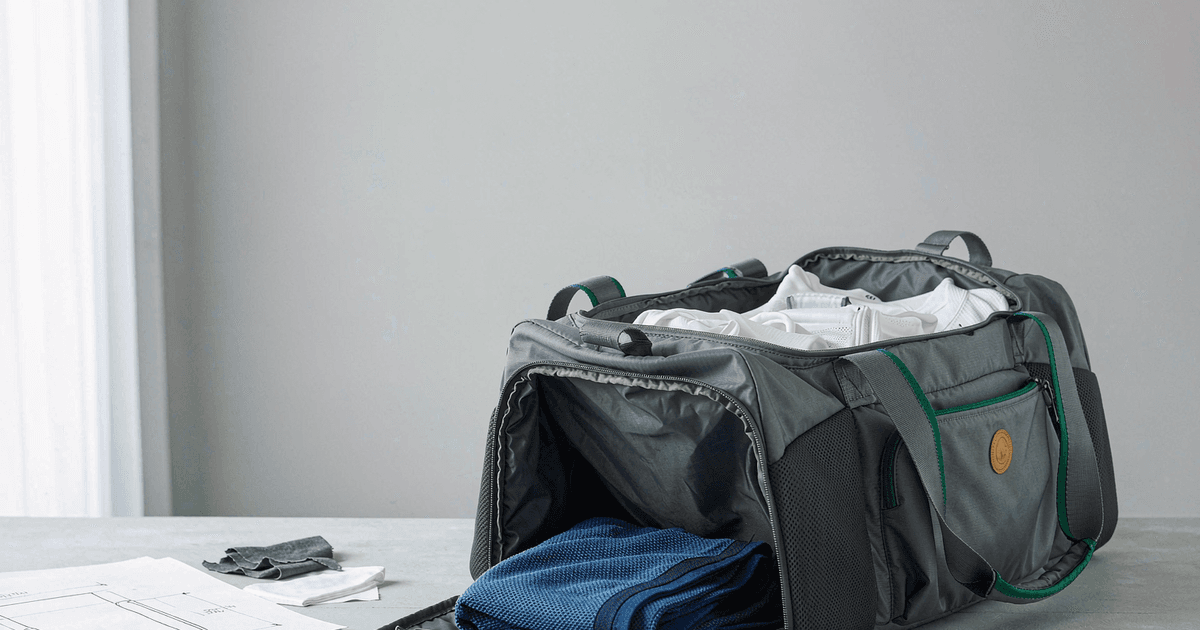
A wet pocket sounds like one feature. In a product brief, it is at least seven decisions.
The buyer has to define what goes inside, how wet it may be, where the pocket sits, how much volume it needs, how it closes, what separates it from the main compartment, and what the first sample must prove. Without those answers, a supplier can add a lined pocket and still deliver the wrong bag.
The design goal is separation, not a broad promise of waterproofing. A wet-item compartment may help keep a used towel or damp clothing away from clean gear. Whether it controls leakage, ventilation or odor depends on the materials, seams, opening and test conditions agreed for that project.
This guide turns the feature name into a specification a sports brand, gym programme or private-label buyer can put into a tech pack and review during sampling.
1. Define the Wet Load Before Drawing the Pocket
Start with the contents. "Wet gear" is too vague for pattern development.
A post-workout shirt and a swimming towel do not create the same load. The shirt may be damp and compressible. The towel may be larger, heavier and hold more water. Swimwear may be small but needs frequent removal. Toiletries introduce a different issue because a loose cap or bottle can release liquid rather than moisture.
Write the intended contents as a short load case:
|
Input |
What the buyer should state |
Why it matters |
|
Item type |
Towel, clothing, swimwear, shower sandals or toiletries |
Sets the shape and handling need |
|
Quantity |
One set, two sets or a variable load |
Sets usable volume |
|
Condition |
Damp after training, wet after swimming or dry at the start |
Changes the separation and test requirement |
|
Largest dimensions |
Folded or rolled item size |
Sets pocket opening and depth |
|
Access frequency |
Once after training or several times during an event |
Changes pocket position and closure |
|
Carry duration |
Short trip home or several hours in transit |
Changes the buyer's moisture and odor concerns |
Do not use this table to invent a performance result. It defines the use case so the factory can evaluate the structure. If the project requires a specific leakage limit or water-resistance result, that requirement needs its own test method and acceptance criteria.
The broader gym bag essentials packing guide helps identify the clean, wet, dirty, heavy and quick-access groups. This article starts after that sorting has been done.
2. Choose Fixed Separation or a Removable Wet Pouch
A wet area can be built into the bag or supplied as a separate pouch. Neither format is automatically better.
A fixed wet pocket keeps the function in one place. Users do not have to remember a second item, and the pocket can share the bag's outer shape. This works when the use case is stable and the pocket is expected on most trips.
The trade-off is permanent space. Even when it is empty, its lining, zipper and attachment seams remain inside the bag. If the pocket expands into the main compartment, every towel placed inside reduces the clean volume.
A removable pouch is easier to take out, empty and review as a separate component. It can be left at home when not needed. It also gives the buyer a clearer way to replace or change the wet-storage part without changing the complete bag.
The trade-off is user behavior. A removable pouch can be forgotten, lost or packed in the wrong position. Its attachment method also needs a decision if the buyer does not want it moving around inside the main compartment.
A useful selection rule is simple:
- Choose a fixed pocket when wet separation is part of the bag's normal identity and should always be available.
- Evaluate a removable pouch when the wet load is occasional, cleaning access matters, or the buyer wants the main compartment to stay flexible.
The first sample should test both the intended load and the empty condition. A structure that works with a towel inside can collapse or interfere with other items when empty.
3. Put the Pocket Where the User Can Reach It Without Crossing Clean Gear
Position controls how well the feature works in daily use.
A side-access pocket lets the user insert wet clothing without opening the main compartment. It can also keep the wet load near an external panel rather than surrounded by clean items. The opening has to be large enough for the rolled or folded item, and the zipper path should be checked while the bag is loaded.
An end compartment can use the full width of a duffel-style bag. It may suit towels, shoes or shower gear, but it can also push deeply into the main compartment. The tech pack should show the pocket in both empty and loaded states so the buyer can see that trade-off.
An internal zip pocket keeps the exterior clean and simple. It is usually easier to add to an existing silhouette, but the user must open the main bag first. That route is less suitable when the wet item should not pass over clean clothing or electronics.
A bottom pocket may isolate the load by level, yet it changes how the bag sits and how the user reaches the contents. It also places more seams and closures near the surface that meets a bench, locker or floor.
Choose the position by following the user's movement:
- Where does the user stand when the wet item is packed?
- Is the main compartment already full at that moment?
- Can the pocket be opened with the bag on a bench or in a locker?
- Does the wet item pass over clean clothing during loading?
- Can the pocket be emptied without unpacking the whole bag?
The best location is not the one that looks most balanced on a drawing. It is the one that gives the user a short, clear loading path without blocking another important pocket.
4. Protect Main-Compartment Volume With a Loaded Layout
Pocket dimensions should come from the wet load, but the buyer also needs to see what that volume takes away.
A common drawing mistake is to show the wet pocket and the main compartment as if both occupy the same space. Fabric allows both outlines to exist when empty. Real items do not.
Ask for two layout views:
- Empty view: the pocket flattened or relaxed inside the bag.
- Loaded view: the expected towel, clothing or swimwear occupying its real volume.
Then check the remaining room for clean clothing, shoes, a bottle and any hard accessories. If the wet pocket expands inward, its maximum loaded shape should be visible in the sample review.
This is also where shoe and wet-item storage can conflict. A gym bag may need both, but putting two expanding side compartments into one small body can leave a narrow centre that is difficult to pack. One combined dirty-item zone may be more practical for some uses; separate zones may be needed for others. That choice comes from the use case, not from a standard pocket count.
For brand teams planning a complete range, the custom gym bags page shows where this wet-pocket decision sits within the wider sports-bag structure. The category page carries the direct product intent; this guide deals only with the specification problem.
5. Separate Material Direction From Performance Claims
A wet pocket uses several components, not one "waterproof material."
The outer bag may use Oxford, polyester, nylon or a PU-surface material, depending on the product position and project review. Candidate directions for sports bags may include 600D, 900D or 1680D Oxford fabric, but those numbers alone do not define the pocket's behavior.
The inner layer needs its own decision. A smoother lining may make wet garments easier to insert and remove. A coated or laminated direction may be evaluated where moisture separation matters. Material availability, coating, thickness, hand feel, folding behavior and cleaning expectations should be confirmed for the project.
The bag lining materials guide explains why the visible lining, the support behind it and the way it is joined should be treated as separate specification inputs.
Four construction points need to be written separately:
- Panel material and lining direction.
- Seam and edge construction.
- Zipper or opening type.
- Attachment to the surrounding bag panels.
A waterproof-style zipper does not make a complete pocket waterproof. Stitched seams, zipper ends, corners and the connection to the bag body may behave differently from the panel material. The same applies to a coated lining: a material property is not a complete-product test result.
Use wording such as "wet-item separation pocket" or "lined wet-item compartment" until a defined performance test supports a stronger claim.
6. Treat Ventilation and Odor as Separate Questions
Ventilation and liquid control can pull the design in different directions.
A more open or mesh area may allow airflow and visibility. It can also provide a path for moisture to move out of the pocket. A more closed construction may improve separation, but it can hold damp air inside during a long journey.
That does not mean every wet pocket needs vents. It means the buyer should decide what matters more in the intended use and how the feature will be tested.
Questions for the brief:
- Is the pocket opened and emptied soon after training?
- Does the bag stay in a vehicle or locker for several hours?
- Is the load damp clothing or a visibly wet towel?
- Is ventilation expected, or is separation the only requirement?
- Does the buyer have a defined odor test, or is odor only a user concern?
Avoid words such as odor-proof, antibacterial, mildew-resistant or hygienic unless project-specific evidence supports them. A vent panel does not prove odor control, and a smooth lining does not prove antibacterial performance.
The safe statement is narrower: the structure may help separate used gear, while ventilation, leakage control and odor-related performance require project-specific material and testing confirmation.
7. Write the Pocket as a Tech Pack Component
A useful tech pack gives the wet pocket its own component block instead of hiding it in a note that says "add wet compartment."
Include these fields:
|
Specification field |
What to provide |
|
Use case |
Gym, swimming, team sport, shower routine or another defined use |
|
Intended contents |
Item names, quantities and representative dimensions |
|
Format |
Fixed compartment, internal pocket or removable pouch |
|
Position |
Side, end, internal, bottom or another drawn location |
|
Opening |
Zipper direction, opening length and pull access |
|
Usable volume |
Required loaded volume, not only flat panel dimensions |
|
Expansion direction |
Into the main compartment, outward or controlled by a gusset |
|
Material direction |
Outer panel, lining and any coating or lamination to evaluate |
|
Construction review |
Seams, corners, zipper ends and attachment points |
|
Cleaning expectation |
How the user expects to empty, wipe or air the pocket |
|
Performance requirement |
Any defined water-resistance or leakage test and acceptance limit |
|
Artwork |
Whether a label, icon or instruction is required near the opening |
Add a loaded sketch or photographs of the representative contents when possible. Dimensions and images may support an initial review, while final development may still require a physical item, a reference sample or further structure confirmation.
Keep open decisions visible. If the lining has not been selected, mark it as pending rather than copying the main-compartment lining into the wet pocket by default.
What the First Sample Has to Prove
The first sample should answer handling and fit questions before it is used to support any performance statement.
Run the review with representative items:
- Load the main compartment with the clean gear expected in use.
- Put the intended damp items into the wet pocket.
- Check whether the opening is wide enough without forcing the contents.
- Close both areas and see how the wet load changes the bag shape.
- Reopen the main compartment and check whether clean items remain reachable.
- Carry the loaded bag in the intended orientation.
- Put it on the expected surface and check stability and pocket access.
- Remove the wet items without crossing the clean load.
- Inspect seams, corners, zipper ends, lining movement and attachment points.
- Confirm what still needs a defined material or performance test.
The sample can show fit, access, shape, workmanship, pocket position and ordinary loaded handling. It does not automatically prove leakproofing, odor control or long-term material performance.
Record each issue against the approved drawing or specification sheet. Pengtour's custom bag sample approval checklist covers how those comments move from a first sample to an approved reference for production.
How Pengtour Reviews a Gym Bag Wet Pocket Project
Pengtour can evaluate common sewn sports and gym bag projects from buyer samples, photographs, dimensions, structure notes or a tech pack. For a wet-pocket project, the review starts with the load, the bag dimensions, the pocket position, the opening, the material and lining direction, and the way the pocket affects the rest of the bag.
Possible directions may include a fixed side or end compartment, an internal lined pocket or a removable organizer. Final feasibility depends on the product dimensions, intended load, selected materials, hardware, attachment method and sample review. These are options to evaluate, not standard configurations promised for every bag.
The project discussion should also separate ordinary structure checks from performance requirements. Pocket dimensions, stitching, zipper operation, lining position, access and loaded fit may be reviewed against the approved sample and confirmed requirements. Any claim about water resistance, leakage control, ventilation or odor needs a project-specific method and evidence.
If you are preparing a new sports-bag brief, review the wider custom soft bag development process. When the load case, dimensions and pocket direction are ready, send the specification for a project review and quote.
FAQ
Can a wet pocket share the same zipper opening as a shoe compartment?
It can be evaluated, but the two loads should not be treated as identical. Shoes need shape, abrasion clearance and an opening sized around the sole. Wet clothing needs usable volume and a separation direction. A shared opening may save components, yet it can make one item block the other and complicate cleaning. Show both loads in the same sample review before approving a combined compartment.
Should a wet pocket have a drain hole?
Only if the use case and test plan support it. A drain opening gives liquid a path out of the pocket, but it also creates an opening into the environment and may release moisture onto a floor, vehicle or other luggage. For damp clothing, a drain may not be needed. For a project considering one, define its position, reinforcement and acceptable use conditions rather than adding it as a generic feature.
Can the wet-pocket lining use a different color from the main lining?
Yes, subject to material availability and project confirmation. A contrasting color can help users identify the pocket and can support an instruction system. It also creates another material or color input that has to be approved and controlled. Put both lining colors in the material confirmation instead of treating the inner color as artwork.
What files should a buyer send for a wet-pocket quotation?
Send the overall bag dimensions, a sketch showing pocket position and opening, the intended wet contents with approximate dimensions, the expected quantity, material direction, artwork, packaging needs and any performance test the project requires. A reference bag or physical items may help when the load shape is difficult to describe. Final pricing depends on confirmed materials, dimensions, structure, quantity and packing.
Key Takeaways
- A wet pocket is a separation structure, not an automatic waterproof or leakproof result.
- Define the wet load before choosing the pocket size, position or material.
- Fixed compartments keep the feature in place; removable pouches preserve flexibility. Both need loaded review.
- Pocket position should follow the user's loading path and avoid crossing clean gear.
- Show the pocket loaded, because its volume usually comes from the main compartment.
- Specify panel material, lining, seams, opening and attachment as separate inputs.
- Ventilation, leakage control and odor-related performance are different questions and need project-specific evidence.
- Approve the sample with representative clean and damp items, not with an empty bag.