
Tag: EVA Case
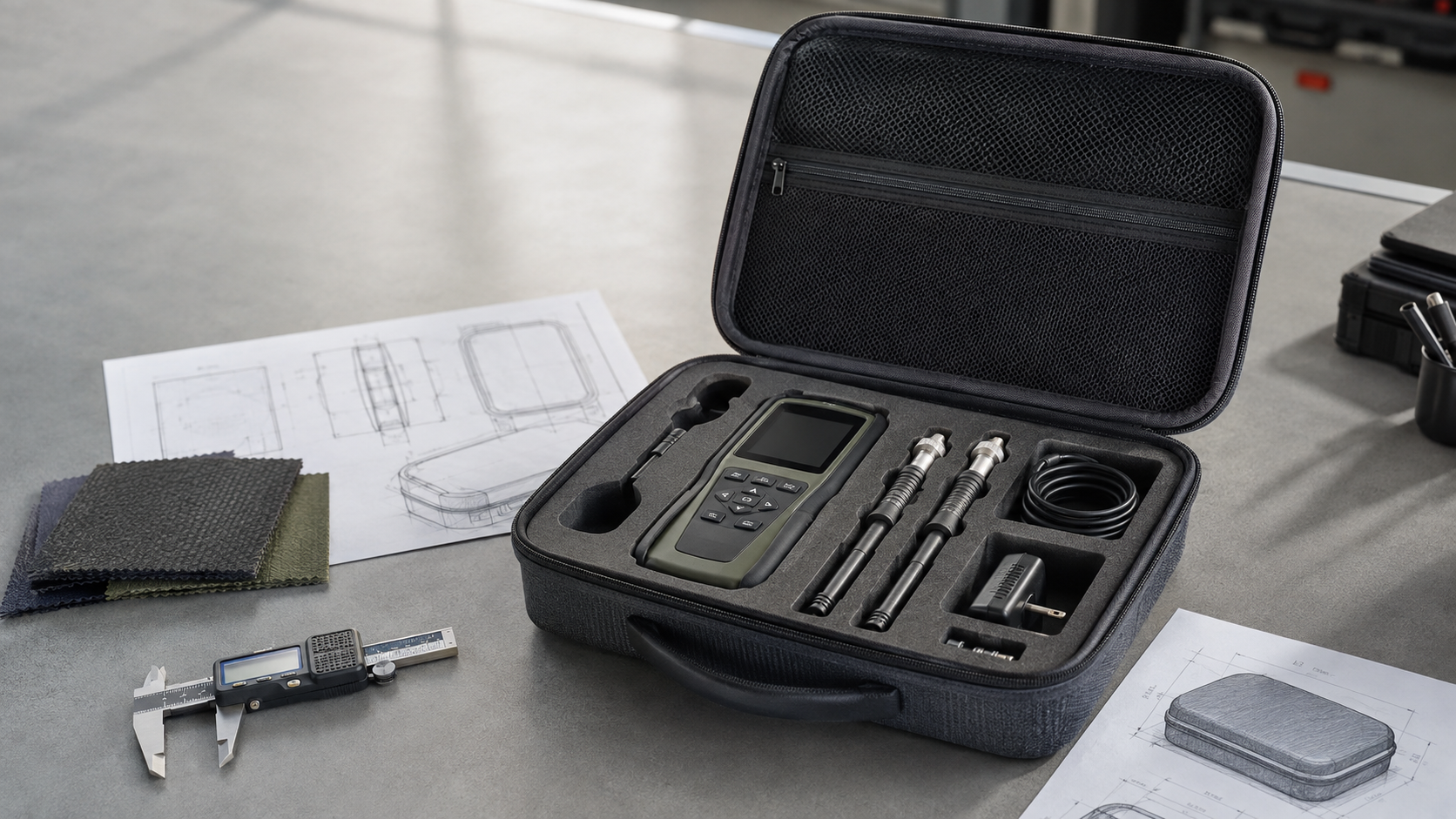
Protective Cases for Measuring Devices: A Buyer's Guide to Fit, Foam, and Field Use
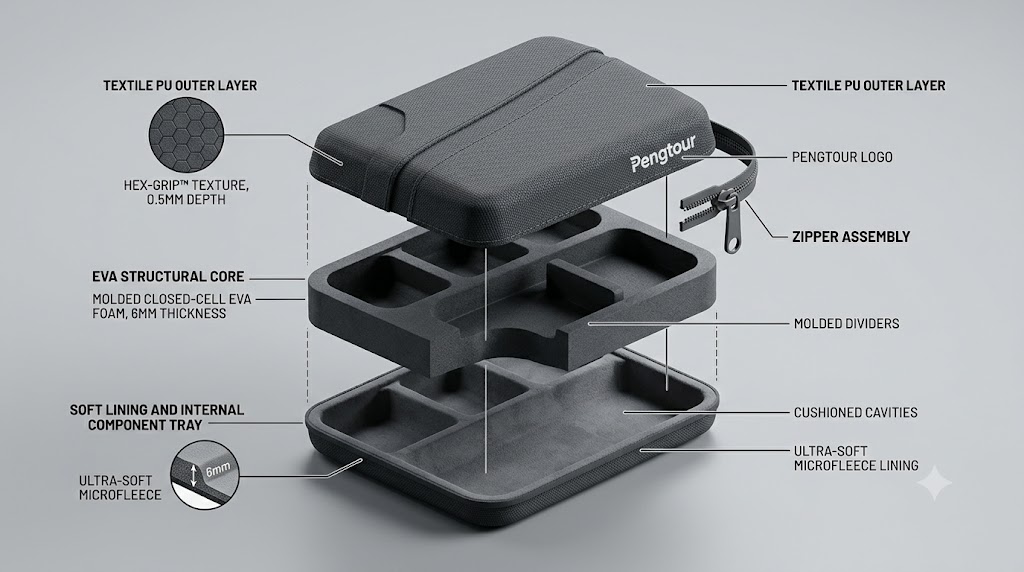
Learn how to map instruments, accessories, access, carrying, and sample checks before developing a custom measuring-device case.
 pengtour
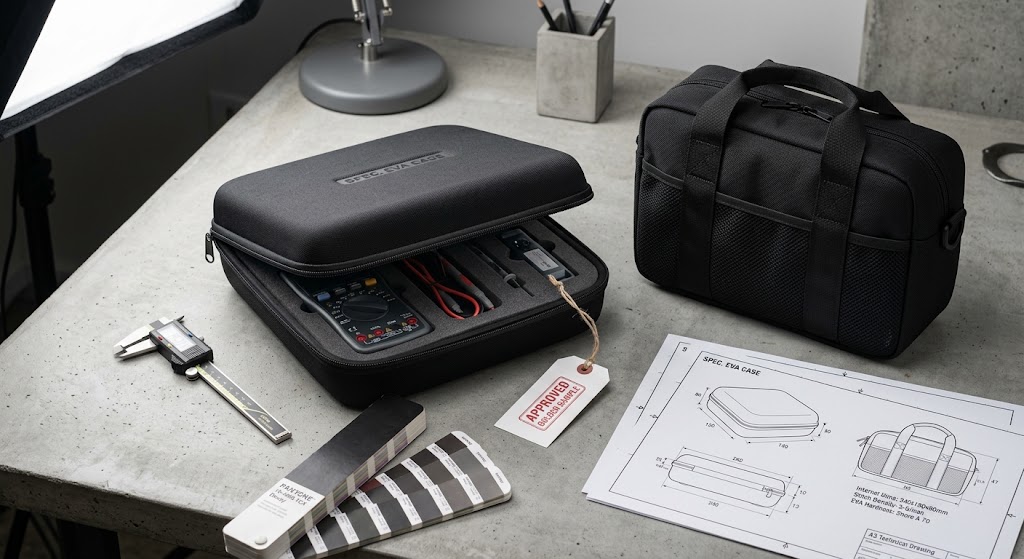
What Is a Golden Sample for Custom EVA Cases and Bags? A Buyer's Guide
Understand how an approved sample guides custom EVA case and sewn bag production, revisions, written specifications, and project-specific testing.
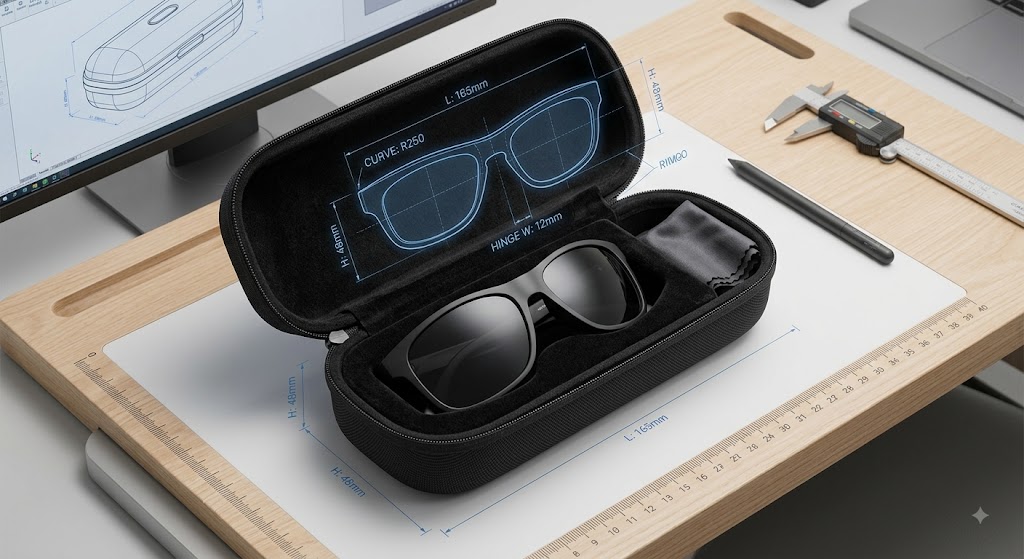
pengtourEVA Glasses Case Fit Guide: Frame Clearance, Access, and Sample Checks
Learn which folded-frame details to provide, how to review clearance and access, and what to check with actual eyewear on the first physical sample.
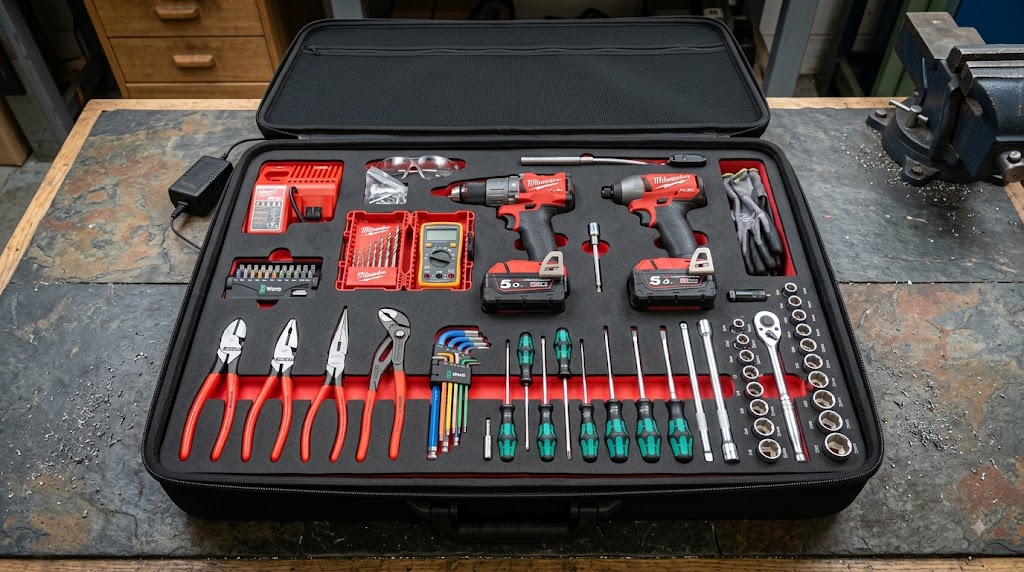
pengtourTool Case With Foam Insert: How to Plan Layout, Access, and Sample Checks
Learn how to freeze a tool set, plan grip and accessory space, review the loaded first sample, and recheck a revised foam insert layout.
pengtourEVA vs PVC for Protective Cases: Which Material Role Fits Your Design?
Compare EVA and PVC by their role in a protective-case construction, then prepare the material, sample-review, and RFQ inputs needed for a project decision.
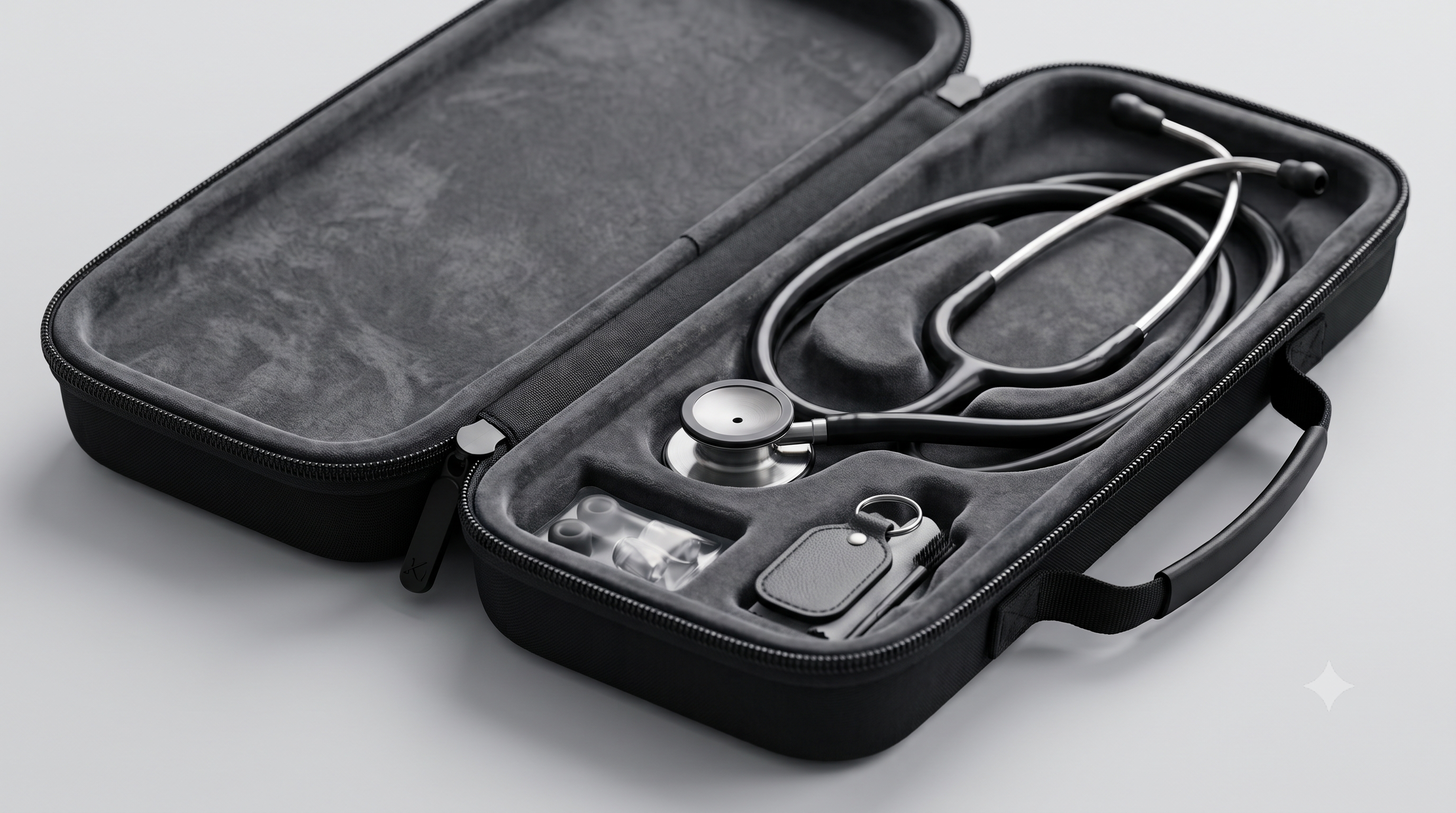
pengtourEVA Stethoscope Case Guide: What Buyers Should Specify Before Sampling
Plan an EVA stethoscope case around the actual product, complete accessory load, access method, and physical first-sample checks.
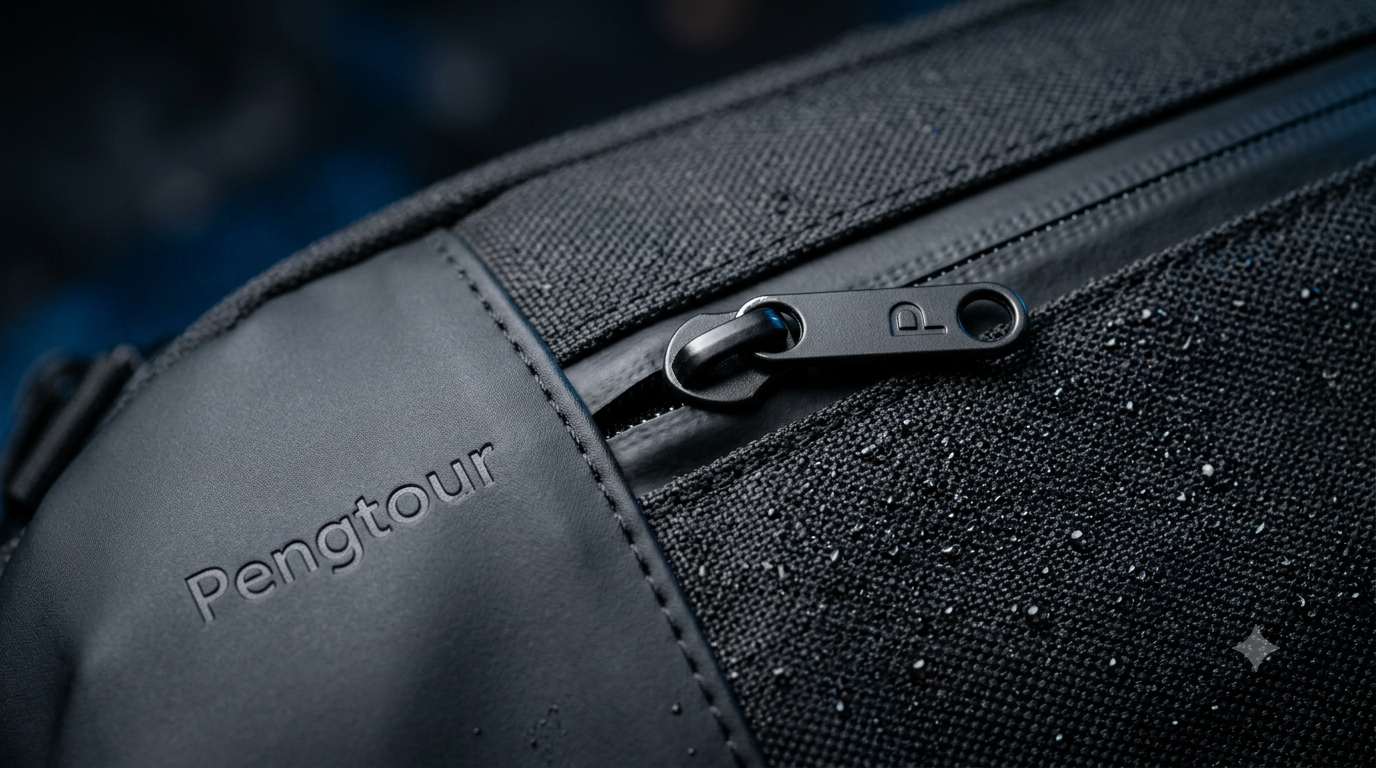
pengtourDoes a Waterproof Zipper Make a Bag Waterproof?
A waterproof zipper covers only one part of a sewn bag. Learn how fabric, seams, zipper ends, construction, exposure conditions, and testing determine the right water-performance claim.
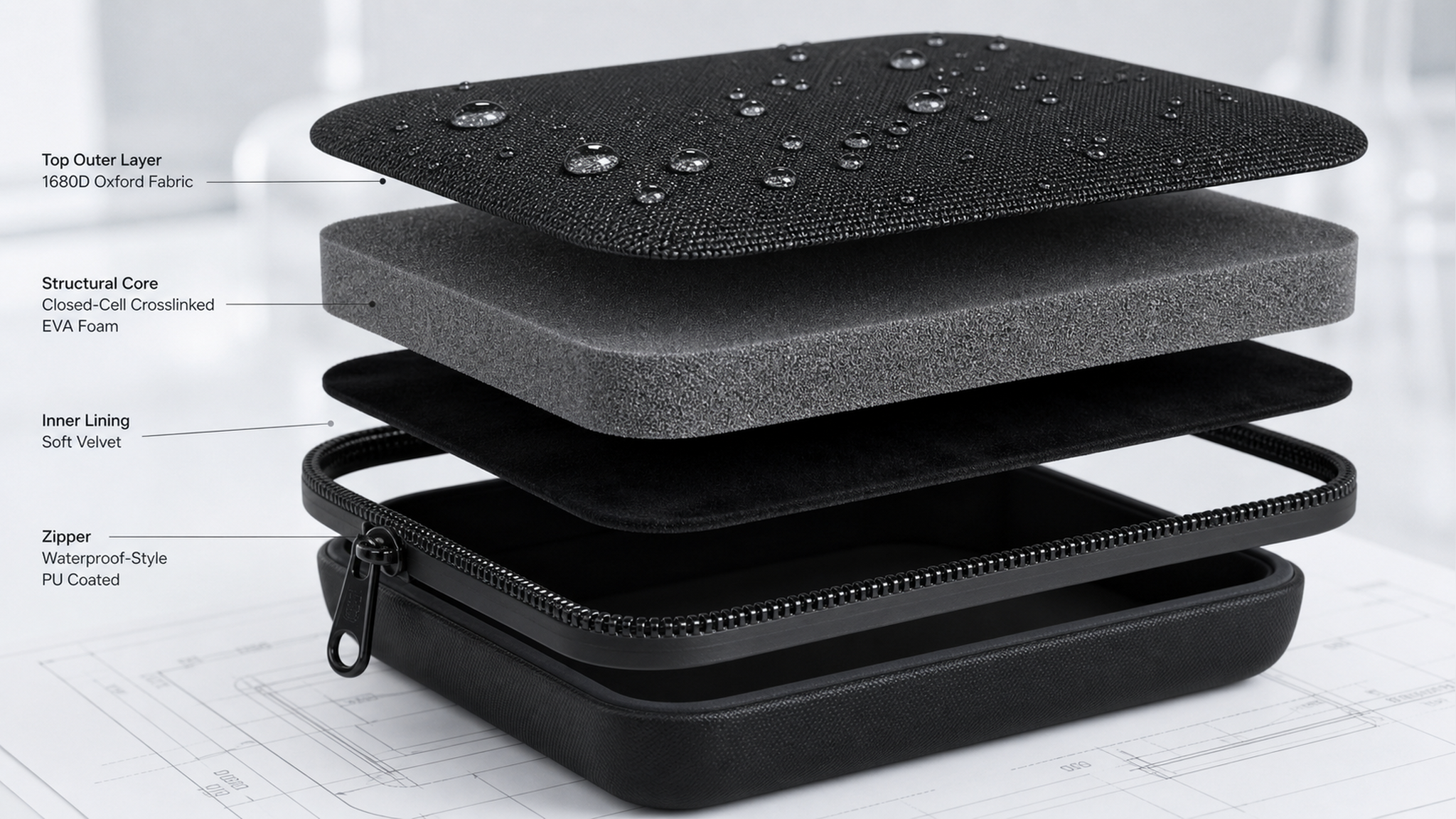
pengtourIs EVA Foam Waterproof? What It Means for Protective Case Design
Closed-cell EVA is generally water-resistant, but the foam alone does not make a complete protective case waterproof. Learn how materials, zippers, joints, openings, exposure conditions, and test requirements affect the finished-case claim.
pengtour