

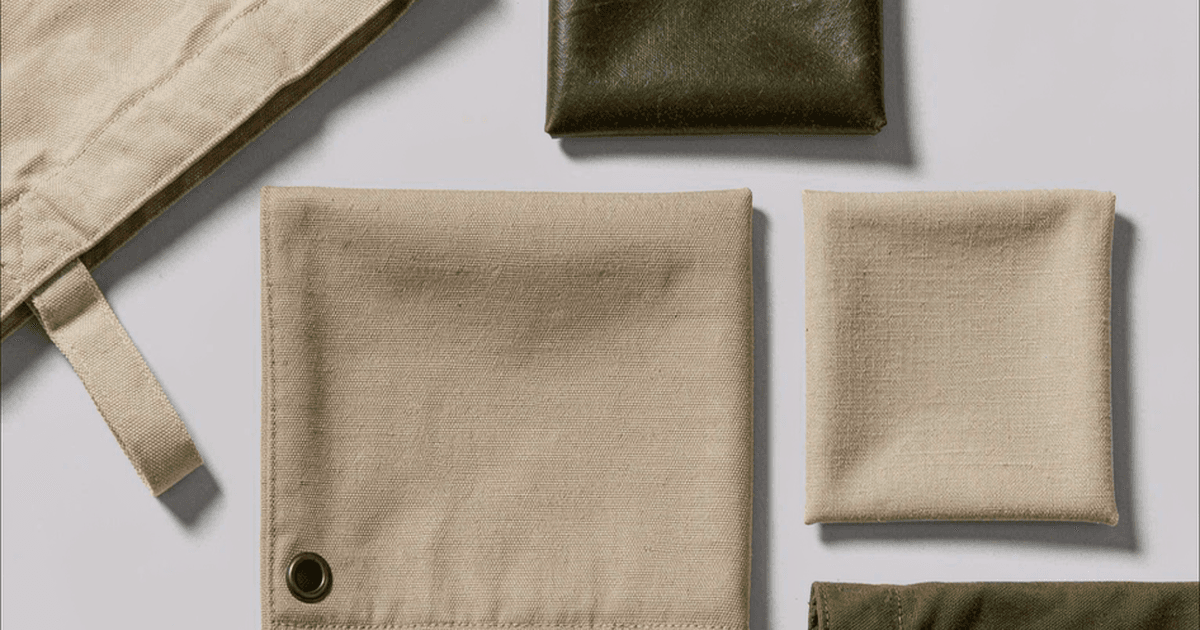
Buyers rarely start a project by asking about canvas types. They start with a use case: a tote for a retail program, a carry-all for tools, a giveaway that has to survive more than one trade show. Then they discover that "canvas" is not one material.
It is a weave family. Cotton duck, poly-cotton blends, coated polyester and waxed cotton all get called canvas, and the one you pick decides how the bag prints, how it carries and how long it lasts. The differences show up after cutting and sewing, not on the swatch card, which is why they are worth settling before the first sample.
What Is Canvas Made Of?
Canvas is a plain-weave fabric, heavier and denser than apparel cloth. The word describes the construction, not the fiber. That is the whole reason two "canvas" bags can feel nothing alike.
The fiber inside the weave is what separates the types. Cotton canvas is natural fiber with a soft hand and good dye uptake. Cotton duck is the heavyweight member of the cotton family. Poly-cotton blends put cotton touch together with polyester strength, and they are what most retail and promotional totes actually use. Coated polyester canvas, usually with a thin PU layer, is the most dimensionally stable and the most print-consistent. Waxed canvas is any of these, usually cotton, treated with paraffin or wax so it sheds water and ages visibly.
None is universally better. A waxed cotton duffel and a coated poly tote are solving different problems. What follows is how each one behaves once it goes into production.
Cotton Duck: the Heavyweight Standard
Duck is the type most people picture when they think "canvas bag." The word comes from doek, Dutch for cloth, and it refers to a tighter, denser weave than standard cotton canvas.
Duck is numbered, and the number runs backwards: a lower number means a heavier fabric. In the numbering most mills use, #1 sits around 18 oz and is the floor-grade material used for tool rolls and belting, #4 is around 12 oz for heavy totes and work bags, #8 around 10 oz for everyday totes, #10 around 9 oz, and #12 around 7 oz for light promotional totes. Treat that as an industry convention rather than a specification. Two mills selling "#8" can deliver different weights. So the spec line carries the fabric weight in oz or GSM, and the duck number is just a label.
Three things change how duck behaves after you commit to it.
It softens with use. A #8 duck tote that feels stiff at sampling relaxes after a few weeks of real carrying. Buyers usually like this, but if your end customer is not told, "the bag changed shape" turns into support email.
It shrinks. Cotton duck shrinks on the first wash, and by how much depends on the finish the mill applied. If the bag will be washed, specify pre-shrunk or sanforized material, or move to a blend, and take the shrinkage figure from the mill rather than assuming one.
Untreated duck wets out. The fiber is hydrophilic, so water resistance has to come from a finish or coating. It is not a property of the weave. This is also where product claims go wrong: a coated fabric or a water-resistant zipper does not make the finished bag waterproof. Any water claim has to be tested on the complete construction, seams and closures included.
Weight alone will not tell you how a duck fabric holds up either. Weave density, fiber, finish, seam construction and hardware all move the result. Our note on how denier and fabric durability are read in custom cases covers the same trap in a different material family.
Poly-Cotton Blends: the Retail Default
A blend in the region of 65/35 or 50/50 is where most retail programs land, for reasons that hold up in production. The polyester limits shrinkage and adds tear strength without giving up the cotton look. The cotton face takes screen print ink cleanly while the polyester keeps the panel from moving. And at the same visible quality, blends usually cost less than pure cotton duck.
The difference shows at the edges. Blends fray differently from all-cotton, so edge finishing, folding, binding or taping, has to be specified instead of assumed. On a tote with raw-edge seams, a blend and a cotton duck will not age the same way after twenty washes.
Coated Polyester Canvas: When Print Consistency Wins
For programs where brand colour has to match across thousands of units, coated polyester canvas is usually the safest pick. The PU layer stabilizes the fabric, stops fraying at cut edges, and gives heat transfer and full-coverage prints a uniform surface. It is also the type most often confused with oxford fabric, a related and lighter plain-weave polyester family. If your spec sits between "canvas tote" and "oxford shopper," read the breakdown of oxford fabric weights (600D, 900D, 1680D); the two overlap in use but not in hand feel.
Structure is the other reason to pick it. A bag with a reinforced base panel or an internal stiffener behaves far more predictably in coated poly than in soft cotton duck. Where a project needs that structure together with tear resistance, our note on ripstop fabric for bags explains where ripstop nylons and polyesters slot into the same construction.
One caution on testing. Abrasion test methods are not interchangeable between coated and uncoated fabric, and a result measured on one does not transfer to the other. If you plan to specify an abrasion requirement, agree the method against your actual fabric before sampling, not after.
Waxed Canvas: Character Comes With Conditions
Waxed cotton is back in fashion and outdoor retail because of how it ages. Creases stay visible, scuffs stay visible, and the fabric develops a patina that buyers actively want. As a specification it carries real constraints.
Heat melts the wax, so heat-pressed prints are out, and machine washing strips the finish. Cleaning is wipe-down or re-waxing. Print options narrow to embroidery, patches or wax-tolerant screen processes, and the artwork route should be confirmed with the factory before you commit to it. Waxed canvas can also transfer residue onto clothing in hot weather, which may be fine for a retail product and unacceptable for a corporate gift. And the finish is maintenance: it degrades with use and gets renewed by the user. A water-resistance claim therefore describes a freshly waxed bag, not a bag two years in. Plan for that conversation with your customer.
Choosing by Program, Not by Fabric
Start from the requirement you cannot move, then work back to the fabric. For a shopping-bag use case, choose fabric for a shopping bag project by considering the contents, carrying method, foldability, structure, logo, care expectations, and sample acceptance criteria before selecting a canvas type.
If the unit cost target is the hard constraint, start with coated polyester or an 8 to 12 oz poly-cotton. If the brief says premium retail look and feel, start with 10 to 12 oz cotton duck or waxed cotton. If brand colour has to hold across a large run, start with coated polyester. If the product will be washed regularly, start with a pre-shrunk blend. If it has to hold its shape, start with coated poly plus reinforcement panels. If the programme is positioned on recycled content, our rPET fabric sourcing guide covers that route, and the recycled-content claim has to survive compliance review in the destination market, not just read well in the brief.
From Canvas Type to a Spec Sheet
Whichever type you land on, the things that protect the project are the ones our bag tech pack sourcing guide walks through: fabric weight and fiber content, coating and finish, print method and placement, hardware, and seam construction.
"10 oz duck" is a starting point. "10 oz cotton duck, PU-coated, single-needle seams with box-stitch handles, two-colour screen print on the front panel" is something a factory can quote without guessing, and something a sample can be checked against. Development samples are then reviewed for material, colour, size, structure, logo, fit and packaging, with the material checked against the approved reference sample. None of that is laboratory proof of performance. It is consistency against the specification you wrote.
Two of our custom sewn and functional bag projects rarely look alike, which is the point of specifying rather than ordering. If you have a canvas idea at any stage, including "we only know the product category so far," send your project details and we will tell you what has to be confirmed before a quote means anything.
How Pengtour Reviews a Canvas Specification
Our production team brings 13 years of industry experience in EVA cases and sewn bags.
We build both sewn bags and molded cases, so a fabric decision and a structure decision are reviewed in the same room. That matters for canvas work more than it sounds: whether a tote needs a reinforced base panel, an internal stiffener or a heavier webbing handle changes which canvas weight is workable, and those questions are usually answered by two different suppliers when they are split up.
Before a quote is built, the review covers fiber content and weight in oz or GSM, coating or finish, print method and placement, hardware, seam construction, interior layout and packaging. If the end customer will wash the bag, the shrink and finish expectation goes into that review too, because it changes both the material and the edge finishing.
On availability, we are specific rather than vague. Our regular outer-material range covers Oxford fabric, polyester, nylon, matte PU, PVC and other coated or laminated fabrics. Cotton canvas, duck and waxed cotton are reviewed per project rather than assumed to be in stock: mill availability, weight band, finish and hand feel get confirmed against your brief before the quote is written. That is a sourcing conversation, not a limit on the design.
On sampling: a regular custom sample typically takes approximately 7 to 15 days after requirements are sufficiently confirmed. Modeling, tooling, material availability and project complexity can move that schedule, and a specific quotation may set a different start point. A canvas sample is then checked against the specification you signed off, which is why the spec line matters more than the fabric name.
On quantity: MOQ depends on the material, product structure, size and project requirements. Projects using common black materials may use approximately 500 pieces as a reference, while lower quantities can be evaluated. Final MOQ is confirmed in the specific quotation. Where a buyer wants external verification, buyer-appointed third-party inspection or testing can be evaluated before shipment according to the agreed standard, scope, schedule, responsibility and cost.
Next step: the fastest way to get a useful answer is to send the fabric direction, the target weight if you have one, the print method and what the bag has to carry. Send the brief or see how custom soft bag development is handled from first requirement to approved sample.
FAQ
Is duck canvas the same as canvas? Duck is one of the fabrics sold under the canvas name, not a different material family. In most mills it means a tighter, denser plain weave than standard cotton canvas, which is why duck feels heavier in the hand at the same fiber. The label alone settles nothing, so ask for fiber content and weight in oz or GSM before you compare two quotes.
Is canvas always cotton? No, and this is where briefs get costly. Poly-cotton blends and coated polyester are both sold and specified as canvas, and a supplier may answer "canvas" without naming the fiber. If the fiber matters to your product, for dye uptake, hand feel, print behaviour or a recycled-content position, put fiber content and percentage in the spec line and ask for the mill's declaration rather than inferring it from the word canvas.
Is canvas waterproof? Not on its own. Cotton is a hydrophilic fiber, so untreated canvas takes on water, and a coating or wax finish changes how much it takes on and how fast. The finished bag still decides the outcome, because seams, zipper and closures are where water actually enters. Specify the water requirement against the assembled bag and have the assembled bag tested, not the swatch.
Where should I buy canvas fabric for a bag program? It depends on what you are buying. If you are buying fabric by the roll for your own cut-and-sew, you buy from a mill or converter and should confirm weight band, finish and dye lot terms there. If you are buying finished bags, you are buying manufacturing and material sourcing together, and the fabric route is confirmed as part of the project rather than left to you. Mixing the two, quoting fabric yourself and asking a bag factory to sew it, usually adds a quality argument over who owns the fabric defect.
Can canvas be printed? Yes, but separate two things that get called printing. A printed-canvas bag can mean the fabric itself was printed at the mill with a pattern, or that a logo was applied to a plain canvas bag. The first is approved at fabric level and carries dye and repeat risk. The second is approved at bag level, and the method follows the canvas: heat transfer needs a stable coated surface, screen print needs ink that grips the fiber, embroidery needs backing that will not distort a softer weave, and waxed canvas rules heat pressing out. Say which one you mean in the brief.
Key Takeaways
- Canvas is a weave family, not a fiber: cotton duck, poly-cotton, coated polyester and waxed cotton solve different problems.
- Duck numbers run backwards, lower number means heavier fabric, but the spec line should carry weight in oz or GSM, not the number.
- Untreated cotton wets out. Water resistance comes from finishes, and water claims need to be tested on the finished bag.
- Print method constrains fabric choice: waxed canvas rules out heat transfer, coated poly is the most print-consistent.
- Shrinkage and abrasion figures are mill-specific. Confirm them, do not assume them.