

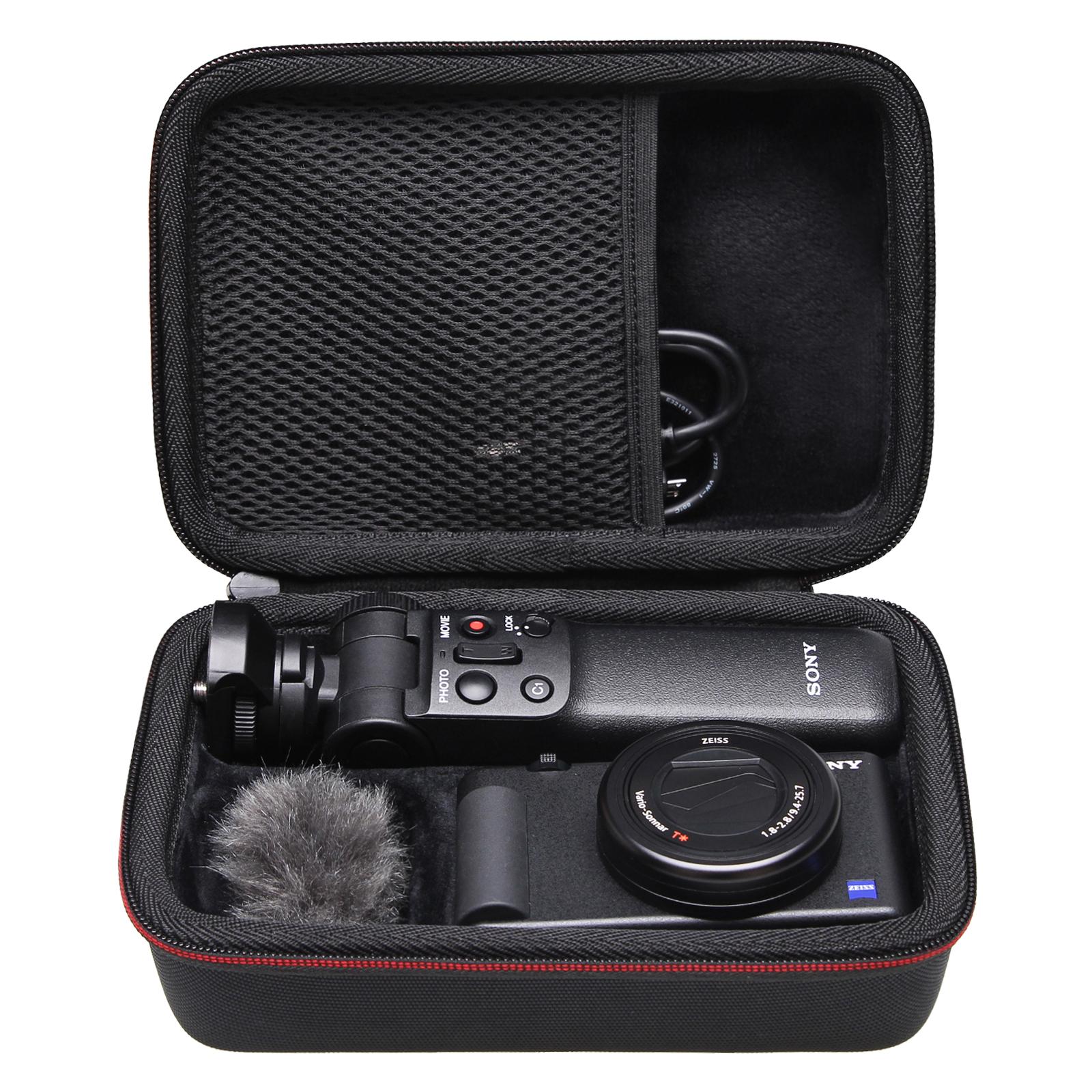
Custom Sony ZV-1 EVA Case: OEM Protective Solution for Vlog Camera Storage & Travel Safety
A custom Sony ZV-1 EVA case helps camera brands, Amazon sellers, and OEM buyers protect compact vlog cameras during storage, travel, and retail delivery. For a custom EVA camera case manufacturer, the key is not only making a hard shell, but also designing the right foam insert, accessory layout, logo branding, and packaging structure for bulk orders.
Answer Summary
A custom Sony ZV-1 EVA case is a protective storage solution designed for vlog cameras, compact cameras, and camera accessories. For B2B buyers, it is not only a camera storage product, but also an OEM protective case solution that can include custom foam inserts, logo branding, retail packaging, and bulk manufacturing support.
Key Takeaways
- Sony ZV-1 cameras need dedicated protection for the lens, screen, body surface, and small accessories.
- EVA hard shell cases offer stronger structure than soft camera bags for travel and logistics protection.
- Custom foam insert design is critical for camera fit, anti-shock performance, and batch consistency.
- OEM buyers should confirm size, accessory layout, logo method, packaging, MOQ, and sample approval before production.
- Amazon sellers and camera accessory brands need stable product consistency to reduce retail complaints.
- A qualified EVA camera case OEM supplier should provide sampling, tooling, QC, packaging, and bulk production support.
What Is a Sony ZV-1 EVA Case?
A Sony ZV-1 EVA case is a molded protective case designed to hold the Sony ZV-1 camera body and related accessories in a fixed internal layout. Unlike a simple soft pouch, an EVA case usually combines an outer fabric layer, a shaped EVA shell, an inner lining, and a custom foam insert. The EVA layer provides structure and cushioning, while the lining helps reduce scratches on the camera surface.
EVA stands for ethylene-vinyl acetate. In protective case manufacturing, EVA foam is valued because it is lightweight, moldable, flexible, and suitable for cushioning applications. For camera products, the material is often used as the structural core between the outer fabric and the inner lining.
For B2B buyers, the important point is that an “EVA case” does not mean the entire outside of the case is pure EVA. In most custom EVA case solutions, EVA works as the molded middle layer. The visible outer material may be Oxford fabric, polyester, PU leather, PVC synthetic leather, or another textile, while the inner surface may use velvet, tricot, fleece, or multi-spandex depending on the protection requirement.
This structure is useful for camera products because cameras need both hard-shell support and surface-friendly contact. A compact vlog camera such as the Sony ZV-1 may be small, but its lens, screen, hot shoe area, battery, SD card, and microphone space all require different internal protection logic.
Why Sony ZV-1 Needs a Dedicated Protective Case
The Sony ZV-1 is a compact vlog camera with a small body and a protruding lens structure. According to Sony ZV-1 specifications, the camera body is approximately 105.5 × 60.0 × 43.5 mm and weighs about 294 g with battery and memory card. This makes it portable, but also easy to carry together with cables, batteries, tripods, filters, or microphones.
For vloggers and travel creators, the camera is often used in fast-moving situations. It may be taken in and out of a backpack, suitcase, or shooting kit many times a day. If the camera and accessories are stored loosely in a normal bag, the lens, screen, and body coating may be scratched during movement.
For retail brands and Amazon sellers, this is not only a protection issue. It is also a user experience issue. End users judge the product by how well the camera fits, whether the zipper moves smoothly, whether the foam smells strong, whether the case feels solid, and whether the accessories are organized.
A dedicated camera travel case OEM project solves this by creating a fixed storage position for the camera and accessories. Instead of letting the product move inside a soft compartment, the case can use foam insert cavities, elastic straps, mesh pockets, or molded dividers. This is especially important for OEM and private label orders because the buyer is not only purchasing protection, but also building a repeatable product experience.
From a procurement perspective, a dedicated EVA camera case also makes product packaging easier to standardize. If every unit has the same inner layout, accessory position, zipper direction, and packaging format, the buyer can reduce variation across bulk production.
Key Features of a High-Quality Sony ZV-1 EVA Case
A high-quality Sony ZV-1 EVA case should be evaluated by structure, fit, protection, usability, and branding options. For B2B buyers, “durable” is not enough. The case must be consistent across bulk production, easy to pack, suitable for retail display, and aligned with the brand’s positioning.
| Feature | Function | Why It Matters for B2B Buyers |
|---|---|---|
| EVA hard shell | Shock absorption and shape retention | Helps reduce damage risk during shipping and travel |
| Custom foam insert | Camera and accessory fitting | Prevents movement inside the case |
| Soft lining | Scratch protection | Protects lens, screen, and camera body surface |
| Accessory slots | Organized storage | Improves end-user experience |
| Smooth zipper | Easy opening and closing | Reduces complaints about daily use |
| Custom logo | Brand presentation | Supports OEM and private label sales |
| Retail packaging | Shelf and e-commerce readiness | Supports Amazon, distributor, and retail channels |
The foam insert is the most important part of a custom foam insert camera case. For Sony ZV-1 type cameras, the body is compact, but the lens area requires careful clearance. If the foam cavity is too loose, the camera may move inside the case. If it is too tight, pressure may appear around the lens or buttons.
This is why the sample stage should include real fitting, zipper closure testing, and accessory placement review. A buyer should not approve mass production only from a product rendering. Real samples help confirm whether the camera, batteries, SD cards, cables, and microphone can sit naturally inside the case.
The outer shell also matters. A camera case used for travel, retail, or e-commerce delivery should keep its shape after repeated handling. Depending on the target market, buyers may choose Oxford fabric for a practical outdoor style, PU leather for a premium retail look, or polyester textile for a balanced cost-performance option.
Sony ZV-1 EVA Case vs Standard Camera Bag
A Sony ZV-1 EVA case and a standard camera bag can both store a camera, but they solve different problems. A soft camera bag is usually flexible and lightweight, but it often relies on general compartments. An EVA camera case is more structured and is better suited for buyers who need fixed internal layout, repeatable product fit, OEM branding, and retail-ready presentation.
| Item | EVA Camera Case | Soft Camera Bag |
|---|---|---|
| Protection | Better structural support and shock absorption | Basic scratch and dust protection |
| Internal fit | Custom foam insert or molded layout | General compartment or soft divider |
| Branding | Suitable for logo, color, zipper pull, and packaging customization | Branding options depend on fabric and sewing structure |
| Retail use | Good for Amazon, private label, and gift packaging | Often better for personal carry |
| Batch consistency | Easier to standardize with fixed mold and insert | Depends more on sewing consistency |
| Best use case | Camera kits, e-commerce bundles, OEM projects | Flexible daily carry or multi-device storage |
For protection, EVA hard shell cases are more useful when the buyer wants the camera to stay in one position. This is important for shipping, travel, and retail return prevention. However, a soft bag may still be suitable for users who need flexible space for multiple camera bodies or larger accessories.
For OEM buyers, the main advantage of an EVA case is repeatability. Once the mold, foam insert, logo method, and packaging are confirmed, the same design can be produced in bulk with consistent structure. This makes it more suitable for camera accessory brands, Amazon sellers, and distributors that need a stable SKU rather than a flexible personal bag.
OEM & Customization Options for Sony ZV-1 EVA Case
OEM customization is where a Sony ZV-1 EVA case becomes more than a simple storage product. For a B2B buyer, customization can include the case size, shell hardness, foam insert layout, lining material, zipper type, carry handle, logo method, color, hangtag, barcode label, and retail packaging.
Common logo options include silk screen printing, embossed or debossed logo, heat transfer printing, rubber patch, metal plate, woven label, embroidery for sewn sections, and custom zipper pull branding. A premium camera accessory brand may prefer debossing or metal plate branding, while an Amazon seller may choose heat transfer or silk screen printing for clearer retail presentation.
Foam insert customization should be confirmed before mass production. Buyers need to decide whether the case should hold only the Sony ZV-1 body, or include batteries, SD cards, USB cable, charger, mini tripod, filter, or microphone. If accessories change after sample approval, the foam layout may need to be adjusted.
Packaging customization is also important for camera travel case OEM projects. Retail buyers may need color boxes, hang tags, barcode labels, polybags, carton marks, or Amazon-ready packaging. Before confirming packaging, the buyer should check the sales channel requirements and carton labeling rules.
Before requesting a quotation, a buyer should prepare the camera model, dimensions, accessory layout, logo artwork, packaging style, quantity, target price range, and shipping destination. This allows the factory to evaluate the correct EVA thickness, mold cost, foam insert design, sampling time, and bulk production schedule.
Buyers who already have a target camera kit can request OEM quotation with photos, drawings, or a sample list. If the buyer only says “make a camera case,” the quotation may be too general. If the buyer provides the camera model, accessories, logo file, and order quantity, the factory can give a more useful structure proposal.
Who Needs a Custom EVA Camera Case?
A custom EVA camera case is suitable for camera accessory brands that want to create a private label product around compact cameras, vlog cameras, or camera accessory kits. Instead of selling a generic pouch, the brand can offer a product with a fixed layout, custom logo, and packaging that matches its market positioning.
Amazon sellers are another important buyer group. For Amazon products, the final customer cannot inspect the case before purchase, so product images, fit, packaging, and reviews become important. A case that fits the camera securely, opens smoothly, protects accessories, and looks consistent across batches can help reduce negative user feedback.
Photography equipment distributors may also use custom EVA cases as part of a bundle. For example, a distributor can combine a camera case with cleaning cloth, lens filter, SD card holder, or cable organizer. In this case, the internal layout must be designed around the complete sales kit, not only the camera body.
OEM/ODM sourcing teams need a factory that understands both protective structure and production consistency. A good custom camera protective case factory should be able to discuss mold design, material selection, foam insert tolerance, zipper quality, logo durability, packaging, QC, and lead time instead of only quoting a unit price.
Manufacturing Process of a Custom EVA Camera Case
The manufacturing process of a custom EVA camera case starts before cutting material. It begins with understanding the product that needs protection. For Sony ZV-1 type projects, the buyer should provide the exact camera model, physical sample if available, 3D data or drawings, accessory list, branding requirements, packaging style, and expected order quantity.
Step 1: Confirm camera dimensions and accessory layout
The factory first confirms the camera body dimensions, lens clearance, screen position, button area, and accessory requirements. Sony’s official dimensions provide a useful starting point, but foam insert design should still be verified with real fitting because accessories and protective skins may change the final space requirement.
Step 2: Design case structure and foam insert
After dimensions are confirmed, the factory designs the case structure and internal insert. The most important question is whether the camera should be held in a tight fixed cavity, a semi-flexible foam area, or a combination of foam slot and elastic strap. For camera products, a few millimeters of error can affect user experience.
Step 3: Choose EVA thickness, fabric, lining, and zipper
Material selection depends on the market. A retail camera case may need a cleaner outer finish, while an outdoor travel case may need stronger Oxford fabric and a more practical zipper. The lining should be chosen to reduce surface scratches, especially around the lens and display screen.
Step 4: Make sample and test fitting
The first sample should be checked for camera fit, accessory placement, zipper closure, handle position, logo appearance, and packaging fit. In factory practice, many issues appear during this stage, such as foam pressure around the lens, zipper resistance, or insufficient space for accessories.
Step 5: Adjust mold and confirm bulk production
After sample review, the mold or insert layout may need adjustment. For Sony ZV-1 type camera cases, the real challenge is often not the outer shell, but the internal foam precision. The lens protrudes from a compact body, so poor foam design may either press the lens or allow the camera to move inside the case.
Step 6: Inspect, package, and ship
Before shipment, inspection should cover shell shape, zipper function, stitching, logo position, foam fitting, lining cleanliness, packaging, and carton marking. Pengtour’s manufacturing process includes design, raw material preparation, laminating, cutting, pre-heating, thermoforming, trimming, stitching, inspection, and packaging.
For packaged products, transportation testing can help buyers evaluate whether the packaging structure is suitable for shipment. The ISTA 2A overview covers individual packaged products weighing 150 lb / 68 kg or less, and it can be used as a reference when discussing packaging performance for shipment. This should be used as a reference only unless the specific product has been tested under that procedure.
Factory Experience with Amazon EVA Case Production
In our factory experience, Amazon-based EVA case projects require stronger batch consistency than many traditional OEM projects. A sample that looks good is not enough. For e-commerce sales, thousands of units must maintain the same fit, zipper feel, foam structure, logo position, and packaging appearance.
We have experience producing EVA protective cases for Amazon-based brands such as LTGEM. This type of customer usually cares deeply about end-user feedback because buyers on Amazon often comment directly on fit, zipper quality, foam smell, accessory space, and packaging condition. For a factory, the challenge is not only making one correct sample, but keeping every production batch close to the approved sample.
For Sony ZV-1 style camera cases, foam insert tolerance is especially important. If the camera cavity is too loose, customers may complain that the product does not feel protective. If the cavity is too tight, users may feel resistance when placing the camera or closing the zipper. A practical solution is to confirm the insert through physical fitting and then check batch samples during production.
Trust is built by careful wording and careful production. It is better to say that protection performance depends on product configuration, accessory layout, and shipping conditions than to claim “zero damage” or “guaranteed protection.” Final specifications should be confirmed through sample testing before mass production.
How to Choose the Right EVA Camera Case Manufacturer
Choosing the right EVA camera case manufacturer is not only about comparing price. For B2B buyers, the supplier should understand product structure, foam insert design, camera protection, logo customization, packaging, sample approval, and bulk production consistency.
| Buyer Question | Why It Matters |
|---|---|
| Can you make a custom foam insert? | Determines product fit and protection |
| Can you support OEM logo? | Important for private label buyers |
| What is the MOQ? | Helps estimate sourcing feasibility |
| Can you provide a sample before bulk order? | Reduces production risk |
| Do you inspect batch consistency? | Important for Amazon and retail sales |
| Can you customize packaging? | Supports brand presentation and e-commerce needs |
| Can you work from 3D data or physical samples? | Helps reduce design errors |
| Can you support camera accessory layout? | Improves end-user usability |
A reliable custom camera protective case factory should ask questions before quoting. If the supplier only asks for quantity and target price, the quotation may not reflect the real design needs. For camera cases, the factory should confirm device dimensions, accessory layout, foam density, lining type, zipper grade, branding method, packaging style, and inspection requirements.
MOQ and lead time should also be discussed early. Custom EVA camera case orders may require sampling, mold development, material preparation, printing or logo tooling, packaging confirmation, and final inspection. The exact timeline depends on case complexity, order quantity, customization level, and material availability.
Before mass production, buyers should request photos or videos of the sample, confirm the physical sample if possible, and approve all details in writing. This includes logo size, foam layout, packaging artwork, barcode position, carton mark, and final quantity. This step reduces misunderstandings between sourcing teams, engineering teams, and production teams.
FAQ
What is an EVA camera case used for?
An EVA camera case is used to protect compact cameras, vlog cameras, and accessories during storage, travel, shipping, and retail delivery. For B2B buyers, it can also serve as a private label product with custom foam inserts, logo branding, and packaging.
Is an EVA case better than a soft camera bag?
An EVA case is usually better for fixed protection, molded structure, and OEM retail packaging. A soft camera bag may be better for flexible daily carry. The right option depends on the camera model, accessory set, sales channel, and target user.
Can I customize the foam insert for Sony ZV-1 and accessories?
Yes. A custom foam insert can be designed for the Sony ZV-1 body, batteries, SD cards, cable, microphone, filter, or other accessories. The final layout should be confirmed through sample fitting before bulk production.
What is the MOQ for custom EVA camera case orders?
MOQ depends on the material, mold, logo method, packaging, and customization level. For accurate quotation, buyers should send the camera model, dimensions, accessory layout, logo file, packaging request, and estimated order quantity.
How does camera case OEM production work?
Camera case OEM production usually includes requirement confirmation, structure design, foam insert design, material selection, sample making, fitting test, mold adjustment, bulk production, inspection, and packaging. The process should be confirmed step by step before mass production.
Can I add my logo and retail packaging?
Yes. OEM buyers can customize logo methods, outer color, zipper pullers, hangtags, color boxes, barcode labels, and carton marks. The best option depends on brand positioning, target price, and sales channel.
Build a Better Sony ZV-1 EVA Case with an OEM Manufacturer
A custom Sony ZV-1 EVA case should be designed around real camera protection, not only appearance. For B2B buyers, the value comes from the full system: molded EVA shell, accurate foam insert, accessory layout, logo branding, packaging, QC, and stable bulk production.
If you are a camera accessory brand, Amazon seller, photography equipment distributor, or OEM sourcing team, working with a custom EVA camera case manufacturer can help turn a camera protection idea into a retail-ready product. The key is to confirm the camera model, accessory layout, target market, packaging style, and order quantity before sample development.
Please send your camera specifications, accessory layout, logo requirement, packaging style, and estimated order quantity to get custom EVA case quote.