
When engineering a custom EVA (Ethylene-Vinyl Acetate) hard shell case—whether it’s for medical devices, premium consumer electronics, or heavy-duty industrial tools—the logo branding method is far more than a cosmetic afterthought. It directly influences your upfront tooling costs, production lead times, durability in rugged environments, and perceived brand value.
For B2B procurement managers, product managers (PMs), and global brands (selling on Amazon or Shopify), choosing the wrong branding method can lead to peeling logos, compliance failures, or unexpected mold expenses.
This comprehensive guide breaks down the 8 industry-standard logo customization options for EVA cases, analyzing their pros, cons, and ideal business use cases.
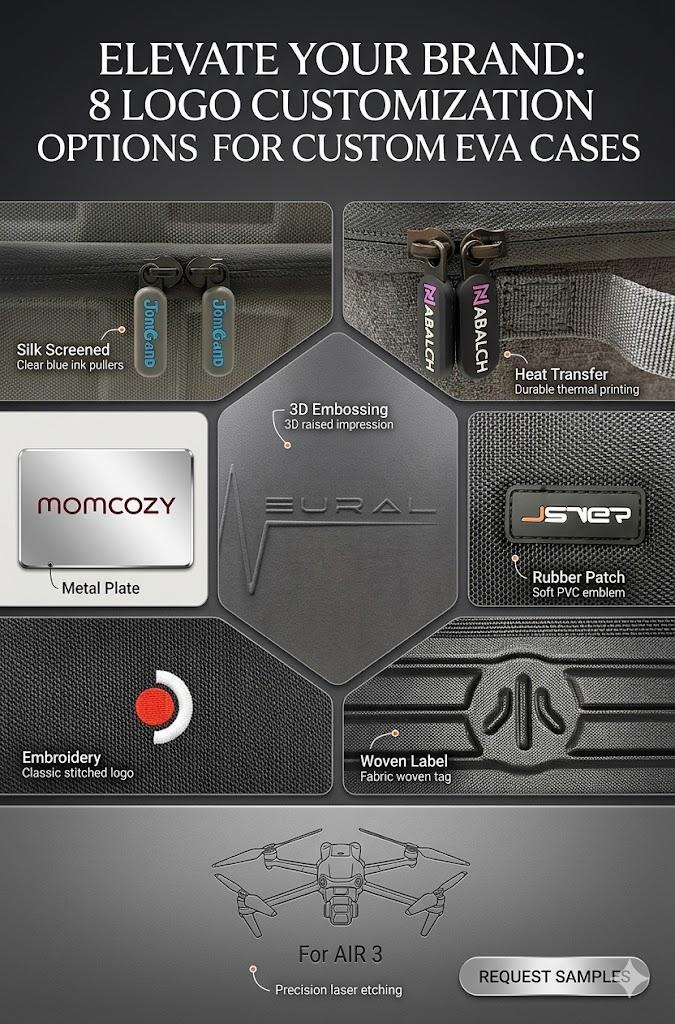
1. Silk Screen (High-Quality Screen Printing)
-
How it works: Ink is pressed through a stenciled mesh screen directly onto the fabric surface (Oxford cloth, jersey, or PU leather) of the EVA case.
-
The Pros: Highly cost-effective for large production runs; low MOQ requirements; offers vibrant, highly saturated colors with crisp edges.
-
The Cons: Not suitable for gradients, complex shading, or photographic designs. Heavy abrasion or extreme freezing temperatures may cause micro-cracking over time.
-
Best For: Entry-to-mid level tool kits, basic tech accessory pouches, and high-volume promotional giveaway cases.
2. Heat Transfer (Durable Thermal Printing)
-
How it works: High-resolution graphics are digitally printed onto a specialized carrier film, then transferred onto the case surface using intense heat and hydraulic pressure.
-
The Pros: Complete color freedom. It perfectly reproduces complex gradients, multi-color branding, and photographic details while maintaining a flush, flat surface.
-
The Cons: Slightly alters the natural hand-feel of the base fabric; higher unit cost compared to traditional silk screening.
-
Best For: Outdoor sports gear cases, educational equipment covers, and visually vibrant consumer electronics packaging.
3. Embossing (3D Raised Impression)
-
How it works: A custom-engraved metal die applies high heat and pressure to stamp a permanent, 3D raised design directly into the EVA shell (best achieved on PU leather or specialty synthetic materials).
-
The Pros: Zero inks or adhesives required. The logo is structurally integrated into the case, meaning it can never peel, fade, or wear off. It delivers an ultra-premium, minimalist matte finish.
-
The Cons: Requires an upfront, one-time metal tooling/mold fee; cannot display multiple colors.
-
Best For: High-end medical devices, precision measurement instruments, and executive travel cases (especially on sleek black PU leather).
4. Metal Plate (Premium Metal Badge)
-
How it works: A bespoke zinc alloy or aluminum emblem is manufactured separately and anchored onto the EVA case body using rivets, back-claps, or high-strength industrial adhesives.
-
The Pros: Drastically elevates the perceived market value of the product. Available in brushed, polished, chrome, or enameled finishes, it signals "military-grade" or "luxury status."
-
The Cons: High tooling costs and expensive per-unit pricing. If poorly engineered, plates risk snagging or detaching under extreme impact.
-
Best For: Premium drone safety cases (e.g., DJI Air series), high-end VR headset cases, and professional salon/cosmetic kit boxes.
5. Embroidery (Classic Stitched Logo)
-
How it works: Automated high-speed embroidery machines sew the logo directly into the outer fabric panel using heavy-duty polyester or nylon threads prior to the EVA lamination process.
-
The Pros: Incredible resistance to wear, tear, and washing. It provides a tactile, premium stitched texture that gives a classic, rugged aesthetic.
-
The Cons: The design must be stitched before the fabric is molded to the EVA core, requiring precise manufacturing alignment. Tiny fonts or razor-thin lines may lose clarity.
-
Best For: Gaming console cases (such as Steam Deck or Nintendo Switch carriers), pro-audio headphone cases, and tactical outdoor gear.
6. Rubber Patch (Soft PVC/Silicone Emblem)
-
How it works: Liquid PVC or silicone is micro-injected into a custom mold to form a flexible, 3D rubber badge, which is then stitched or thermally fused to the case's exterior.
-
The Pros: Ultimate weatherproofing. It is entirely waterproof, shock-absorbing, and dirt-resistant. Colors stay sharp and isolated within distinct 3D layers.
-
The Cons: Requires a dedicated rubber mold tool; the necessary stitching border takes up valuable real estate on the face of the case.
-
Best For: Action camera cases (e.g., GoPro accessories), automotive emergency roadside kits, and rugged surveying equipment.
7. Laser Engraving (Precision Laser Etching)
-
How it works: A high-energy CNC laser precisely vaporizes the top layer of the surface material (like specialized PU coatings or metal zipper pulls) to reveal a clean, recessed contrast design underneath.
-
The Pros: Zero tooling/mold fees. Because it is entirely digital, you can import vector files instantly, making it perfect for rapid prototyping, serial numbers, and micro-batches.
-
The Cons: Color choices are limited to the natural contrast color of the sub-layer material when burned.
-
Best For: Industrial equipment labeling, adding unique product serial numbers, and high-precision markings (e.g., "For AIR 3" drone indicators).
8. Woven Label (Fabric Woven Tag)
-
How it works: Your brand name or logo is tightly woven using fine, high-density threads onto a narrow ribbon, which is then folded and stitched into the side seam or edge-binding of the case.
-
The Pros: Exceptional reproduction of fine text and subtle graphics on a tiny surface area. Adds a clean, apparel-grade touch of craftsmanship.
-
The Cons: Subtle and understated; does not serve well as a dominant, center-front logo.
-
Best For: Lifestyle tech pouches, first-aid nursing kits, and adding secondary brand identifiers to the side seams ("ears") of commuter backpacks.
B2B Strategic Procurement: The Selection Matrix
To help balance your project budget (CapEx vs. OpEx) with your brand positioning, use our quick decision framework:
By Target Retail Price & Tiering
-
High-Volume Giveaways / Budget-Sensitive Retail: Stick with Silk Screen or Woven Labels to maximize your margins.
-
Mid-Tier Consumer / E-Commerce Brands: Choose Heat Transfer, Embroidery, or Rubber Patches to balance eye-catching aesthetics with field durability.
-
Industrial Grade / Enterprise / High-Ticket Luxury: Invest exclusively in Embossing or Metal Plates to match the premium build of your core hardware.
By Sample Lead Time & MOQ
-
Fast-Track Prototyping / Low MOQs (100–300 units): Leverage Laser Engraving or Silk Screen to avoid heavy upfront mold outlays and speed up time-to-market.
-
Mass Production (1,000+ units): The tooling costs for Embossing, Rubber Patches, or Metal Badges become negligible when amortized over large batches. Prioritize these for their long-term durability.
Supply Chain Best Practices: 3 Sourcing Pitfalls to Avoid
-
Don't Ignore the Zipper Puller: As seen on industry-leading designs (like TomGland or NABALCH in the reference image), the zipper pull is prime brand real estate. Utilizing a custom injected-molded rubber puller or an engraved metal zipper pull is the most cost-efficient way to make a generic design look completely bespoke.
-
Verify Material Adhesion: If your case utilizes highly water-resistant fabrics like 1680D double-strand ballistic nylon, screen printing inks may peel under friction. Always demand a 3M Tape Cross-Hatch Adhesion Test during the golden sample approval phase.
-
Ensure Chemical Compliance (RoHS / REACH): For brands exporting to North America or Europe—particularly in the maternal/infant care space (like Momcozy) or medical sectors—ensure the PVC plasticizers in your Rubber Patches and the inks in your Heat Transfers are entirely heavy-metal free and certified.
Partner With an Expert EVA Manufacturer
Looking to design, mold, and manufacture a turnkey custom EVA case for your upcoming product launch? We provide full-service OEM/ODM manufacturing, integrating structural 3D design, custom hard shell molding, and all 8 premium branding techniques under one roof.
-
Capabilities: Full DFM (Design for Manufacturability) support, rapid prototyping, and international compliance auditing.
-
Ready to start? Contact our engineering sales team today with your 3D CAD files or reference drawings to receive a detailed DFM report and tooling quote within 24 hours.
When the logo method and artwork are ready, use our request a logo and tooling quote page to submit your files for a production review.