

A custom bag project usually starts with a useful idea and an incomplete description. A short design brief turns that idea into information a designer, developer, or factory can review before sampling. It should explain what the bag must carry, how people will use it, what the structure needs to do, and what the first sample must answer.
This brief is not a replacement for a technical pack. It is the working record that helps a project team agree on the direction before detailed drawings, patterns, or tooling are prepared.
Start with the product use and contents
Begin with the job the bag must perform. Name the products or equipment that will travel inside it, how often they will be accessed, and how the bag will be carried or stored. A buyer does not need every dimension on the first page, but the development team needs enough information to see the design problem.
Record:
- the intended product type and use environment;
- the main contents and any fragile, sharp, wet, or bulky items;
- approximate dimensions and weight of the contents when available;
- the items that need the fastest access;
- whether the bag is carried by hand, shoulder, on a trolley, or inside another bag;
- storage, cleaning, and packaging expectations that affect the design.
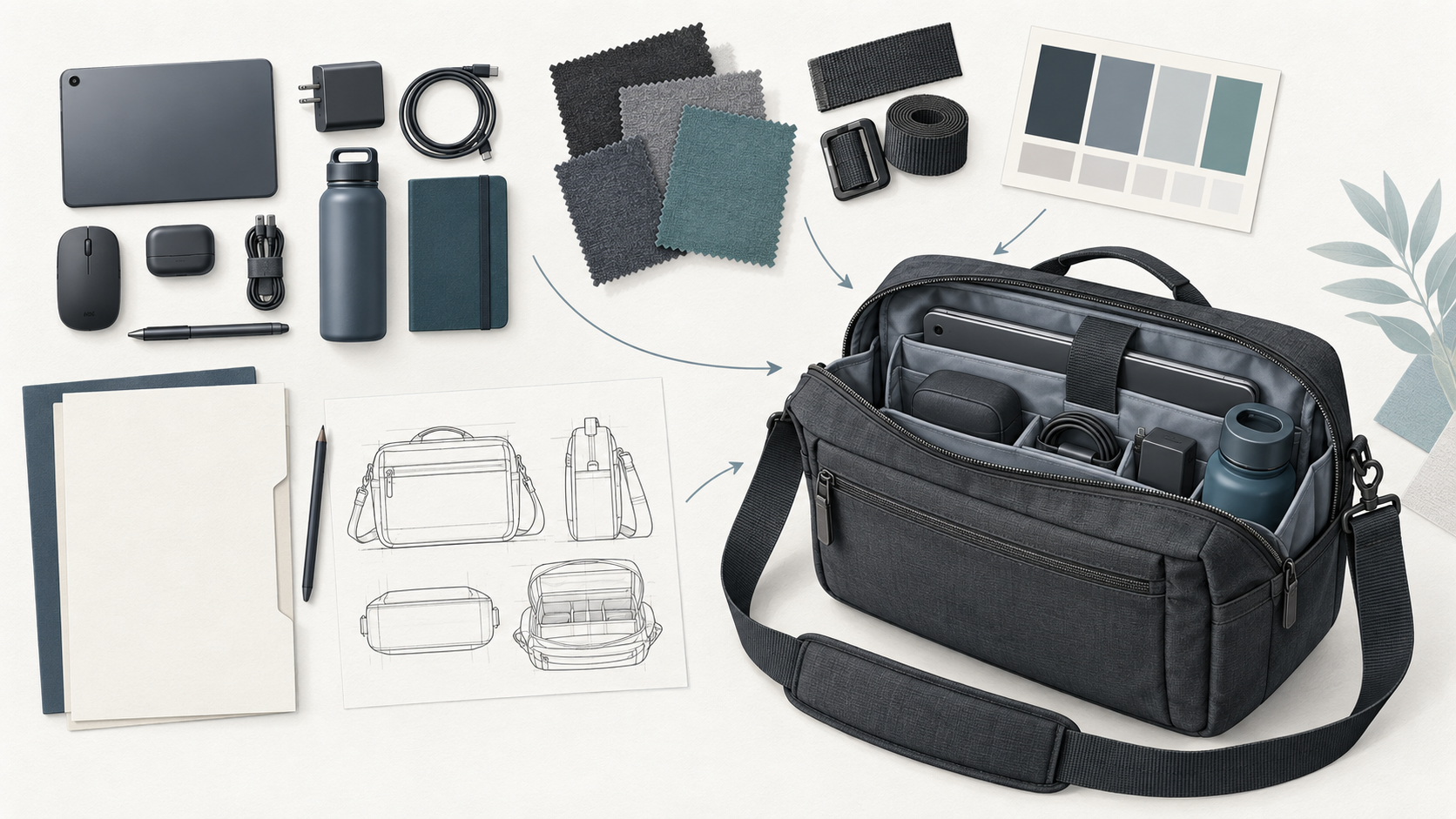
If the contents are still changing, mark the unknowns. A clear unknown is easier to resolve than a precise-looking assumption.
Describe the user and the buying context
A brief should identify who will use and buy the bag. For a B2B project, the user and the purchasing team may have different concerns. A field technician may need one-handed access, while a product manager may need consistent branding and a repeatable sample review.
Explain the work situation, carry route, access frequency, and reason the product is being developed. Avoid vague descriptions such as "premium" or "professional" unless the brief explains what those words mean in materials, appearance, layout, or handling.
Define materials and construction together
Material names alone do not describe a finished bag. The brief should connect the outer material, lining, padding, panels, seams, closure, and reinforcement to the intended use.
Useful inputs include:
- preferred outer and lining categories, if known;
- areas that need a softer, firmer, or more structured feel;
- panel joins, seam locations, and reinforcement points to review;
- zipper route, opening size, and closure direction;
- handles, webbing, straps, buckles, or other hardware;
- pockets, dividers, elastic retainers, or removable components;
- logo, color, label, and packaging requirements.

For a broader review after the sample stage, see the Custom Bag Quality Control Checklist. For an EVA case project, the material and structure discussion follows a different route from a sewn bag.
Turn access and organization into layout decisions
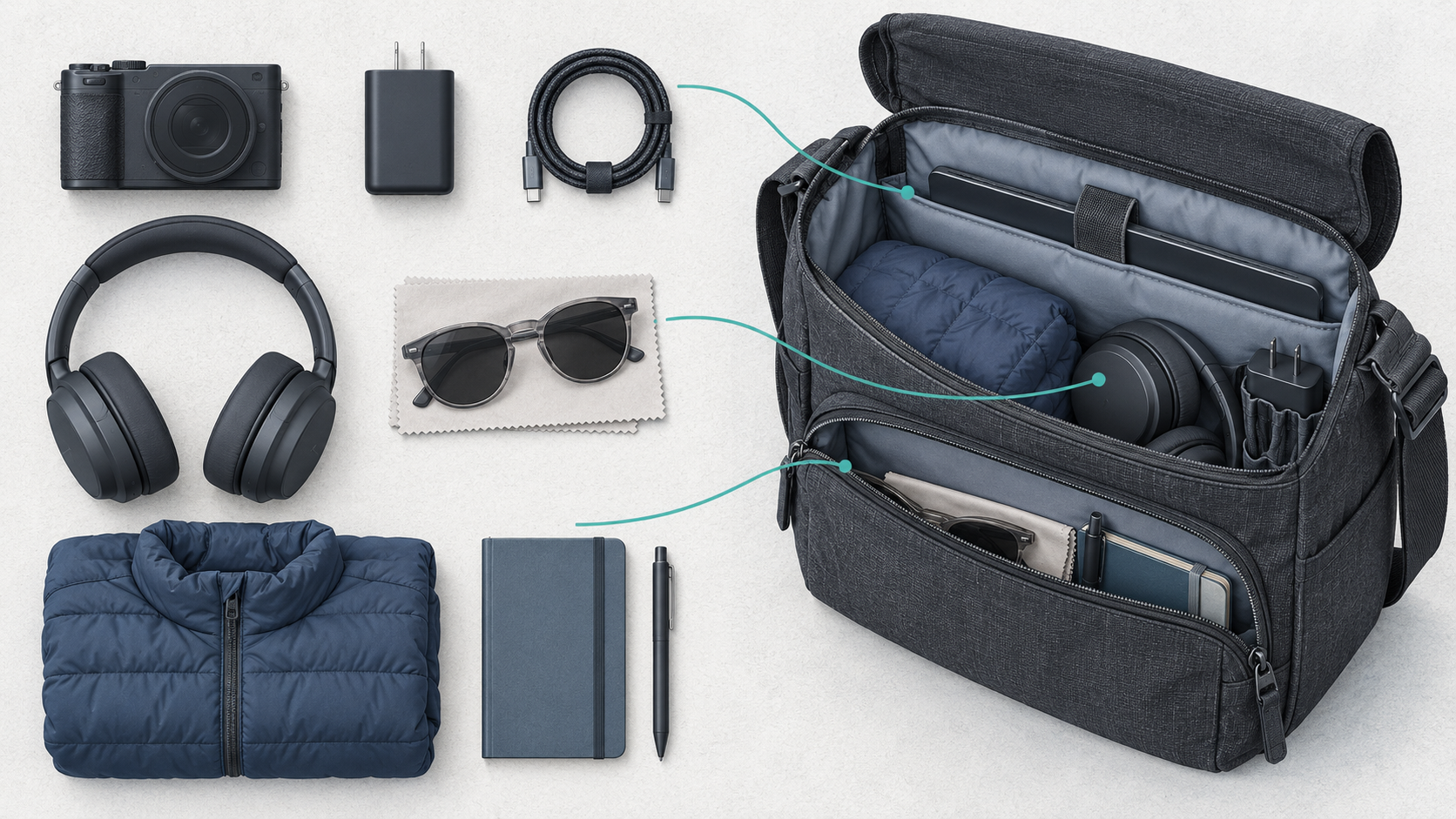
Organization works when it follows the way the contents are handled. List the order in which users take items out and put them back. Then show which items need fixed positions, flexible space, quick access, or separation from other contents.
A simple layout record can include:
| Question | Design input |
|---|---|
| What is accessed first? | Place it where the opening gives a clear view and reach. |
| What must stay in position? | Consider a pocket, divider, elastic, or other retention feature for review. |
| What changes between orders? | Leave adjustable space or identify a component that can be revised. |
| What must stay separate? | Note the material, divider, or compartment requirement without assuming a universal solution. |
| What happens when the bag is full? | Review closure movement, shape, and access with the intended contents. |
This level of detail gives a developer something to check without pretending that one layout is right for every bag.
Record branding, color, packaging, and project constraints
Brand decisions belong in the brief because they can affect panel size, material choice, logo placement, and sample approval. Include the preferred logo location, reference color, label information, and packaging direction. A color reference should be reviewed on the actual material or sample, since a screen or printed reference may not match the finished surface.
Also record the practical constraints that shape development:
- target order quantity or quantity range, if known;
- required packaging or pack-out format;
- requested sample quantity;
- internal approval participants;
- documents or reference products supplied by the buyer;
- decisions that are still open.
These are project inputs, not guarantees of price, minimum order quantity, lead time, or production capacity.
Separate the brief from a Tech Pack
A design brief explains the product direction and the decisions the team needs to make. A bag Tech Pack guide covers the more detailed technical document used to communicate specifications for development and production.
Keeping the documents separate helps prevent two common problems. A brief can stay readable while the concept is still changing, and a Tech Pack can carry detailed measurements, construction drawings, material references, and revision information once those decisions are ready. The exact document set depends on the project and the development partner.
Use a first-sample review plan
The first sample should answer questions that the brief made visible. Review it with the intended contents whenever possible. If substitutes are used, record that limitation next to the observation.
Check the following against the approved project requirements:
- overall dimensions and shape with the intended contents;
- opening size, zipper route, and access sequence;
- pocket, divider, retainer, and support positions;
- handle, strap, hardware, and logo placement;
- material appearance, color reference, stitching, and finishing;
- closure movement and fit when the bag is full;
- packaging arrangement and any unresolved change requests.
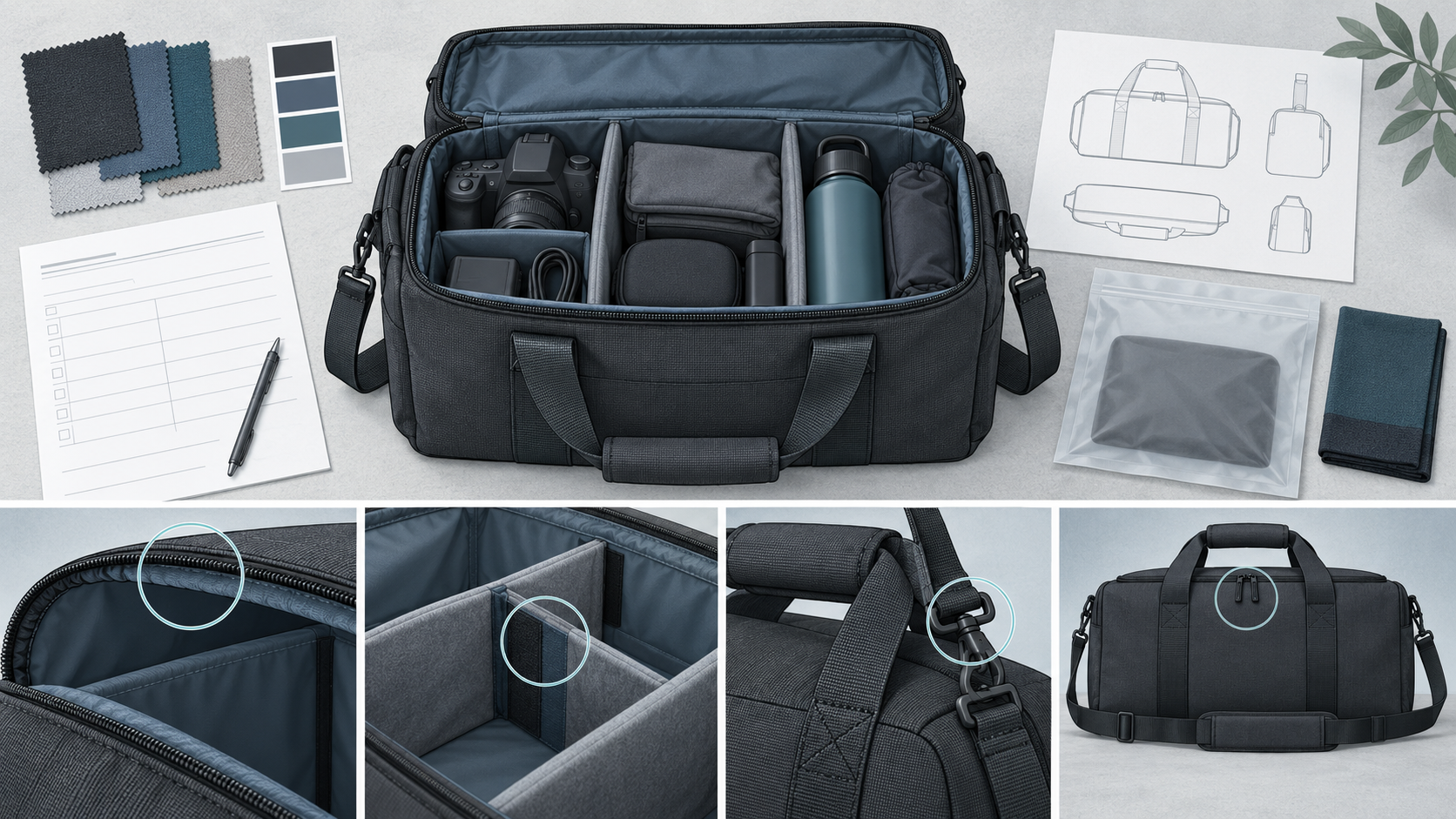
This is a sample and requirement review. It is not proof of a universal drop, waterproof, load, durability, safety, or certification result. Any formal test or acceptance rule must be defined for the individual project.
What a practical brief should hand over
Before requesting a sample, the project team should be able to hand over:
- a short product and user description;
- an inventory with approximate dimensions where available;
- a use and access sequence;
- a sketch, reference product, photo, or layout note;
- material, component, color, logo, and packaging preferences;
- open questions and assumptions marked clearly;
- the first-sample review points and who will approve them.
The purpose is shared understanding. A longer brief is not automatically better if the important decisions are hard to find.
How Pengtour can support a custom bag brief
For eligible custom sewn-bag projects, Pengtour may review product size, shape, opening, internal layout, materials, colors, logos, zippers, handles, straps, pockets, dividers, hardware, packaging, and sample requirements. The project may then move through requirement review, material selection, structure evaluation, sampling, production preparation, manufacturing, inspection, packaging, and shipment as appropriate.
The exact scope, materials, documents, timing, commercial terms, and acceptance requirements must be confirmed for each project. You can review the broader Pengtour Functional Bags range as a starting point for an eligible B2B discussion.
FAQ: custom bag design brief questions
What should a custom bag design brief contain?
It should describe the product use, contents, user, access sequence, structure, materials, branding, packaging, open questions, and first-sample review points. The exact fields depend on the project.
Is a design brief the same as a Tech Pack?
No. A brief records direction and decisions before detailed technical documentation. A Tech Pack normally carries more specific construction and specification information after the design direction is agreed.
Should dimensions be exact before sampling?
Use exact dimensions when they are available. Approximate dimensions can still help start a review, but mark them as provisional and confirm them before the sample is approved.
How should a buyer review the first bag sample?
Use the intended contents where possible and compare the sample with the written requirements. Review fit, access, organization, materials, closures, branding, packaging, and any open questions. Record observations separately from formal testing.
Can a factory help refine the brief?
An eligible project may include requirement review, material and structure evaluation, and sample development. The partner should confirm what it can review for the specific product rather than assuming every customization or process is available.