

Summary of Answer:An accurate quote for a custom EVA protective case depends on more than just size. Before providing a reliable quote, the factory needs the buyer to have the product dimensions, weight, intended use, protection requirements, foam lining requirements, logo design, material preferences, order quantity, and packaging options ready. These details help the factory more accurately determine the case's structure, sampling method, minimum order quantity, delivery time, and production costs.
Price is a result, not a starting point.
Many buyers who come to order custom EVA protective cases always ask the same question first: "How much?"
In actual customization projects, price is not the primary factor for factories. We first need to understand the product's dimensions, weight, usage scenario, protection requirements, foam lining requirements, logo production method, and packaging scheme.
Once these details are clear, the factory can propose suitable structures, materials, minimum order quantities, sample production plans, and mass production costs.
In custom EVA protective case projects, the unit price is the final price, not the starting price. If the product structure, materials, lining, logo production method, and packaging have not yet been finalized, the factory can only provide a general price range.
The final product range may vary due to factors such as mold development, special materials, complex inserts, custom zippers, or packaging requirements. Therefore, clear initial communication helps ensure a smooth process for quoting, sample making, and mass production.
What should a buyer prepare before requesting a quote?
Before requesting a quote, buyers should prepare some basic project information.
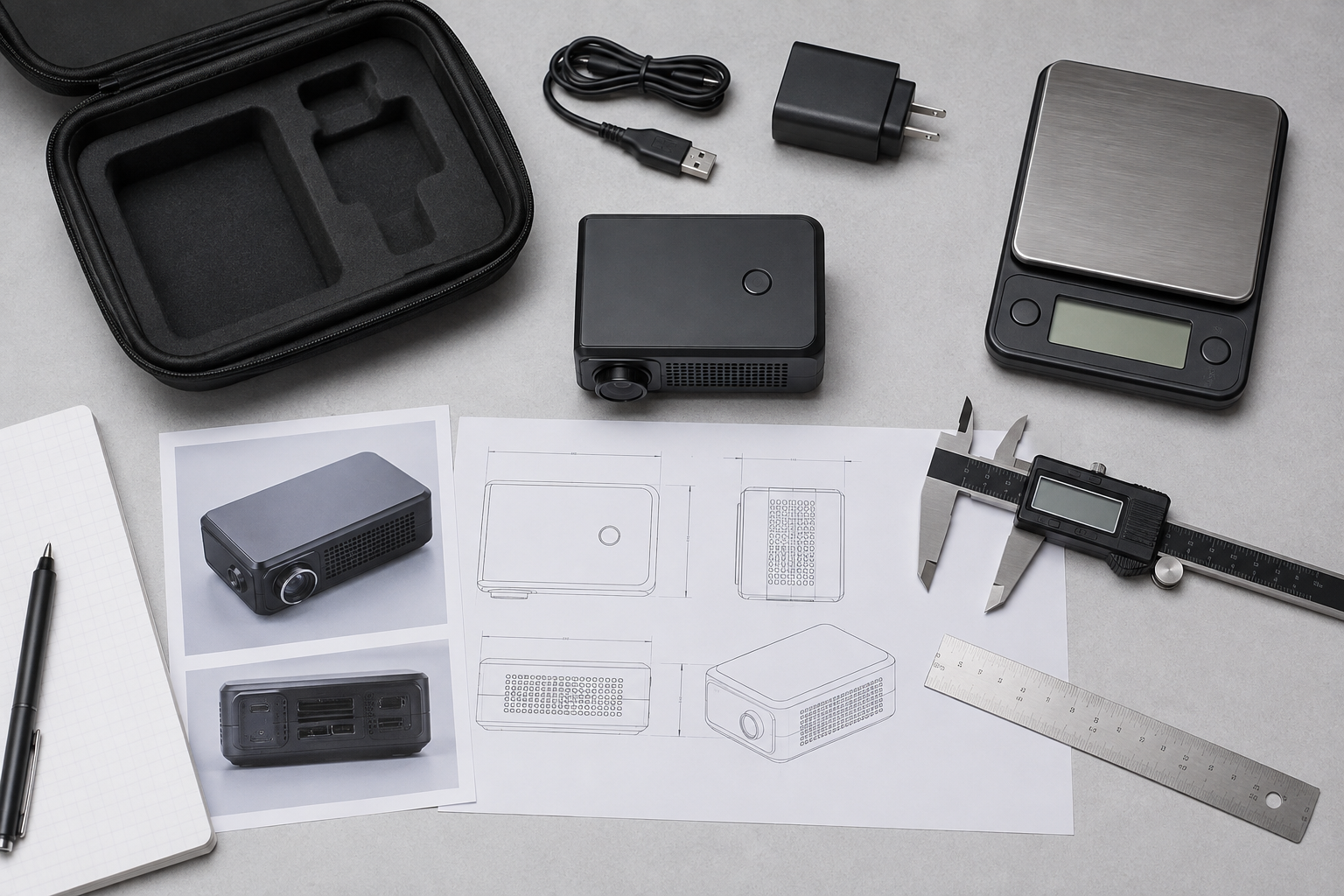
This includes product dimensions, weight, product photos, material requirements, whether any accessories need to be stored together, and the product's primary usage location.
If you have 3D drawings, physical samples, or reference cases, you can also provide them to the factory. The more complete the information, the easier it will be for the factory to determine the box structure, foam lining design, material selection, production process, and a more suitable price.
For buyers new to EVA bag development, Pengtour's custom EVA bag customization pagecan also help explain what aspects can be adjusted, including size, shape, material, color, lining, zipper, logo, inner lining, and packaging.
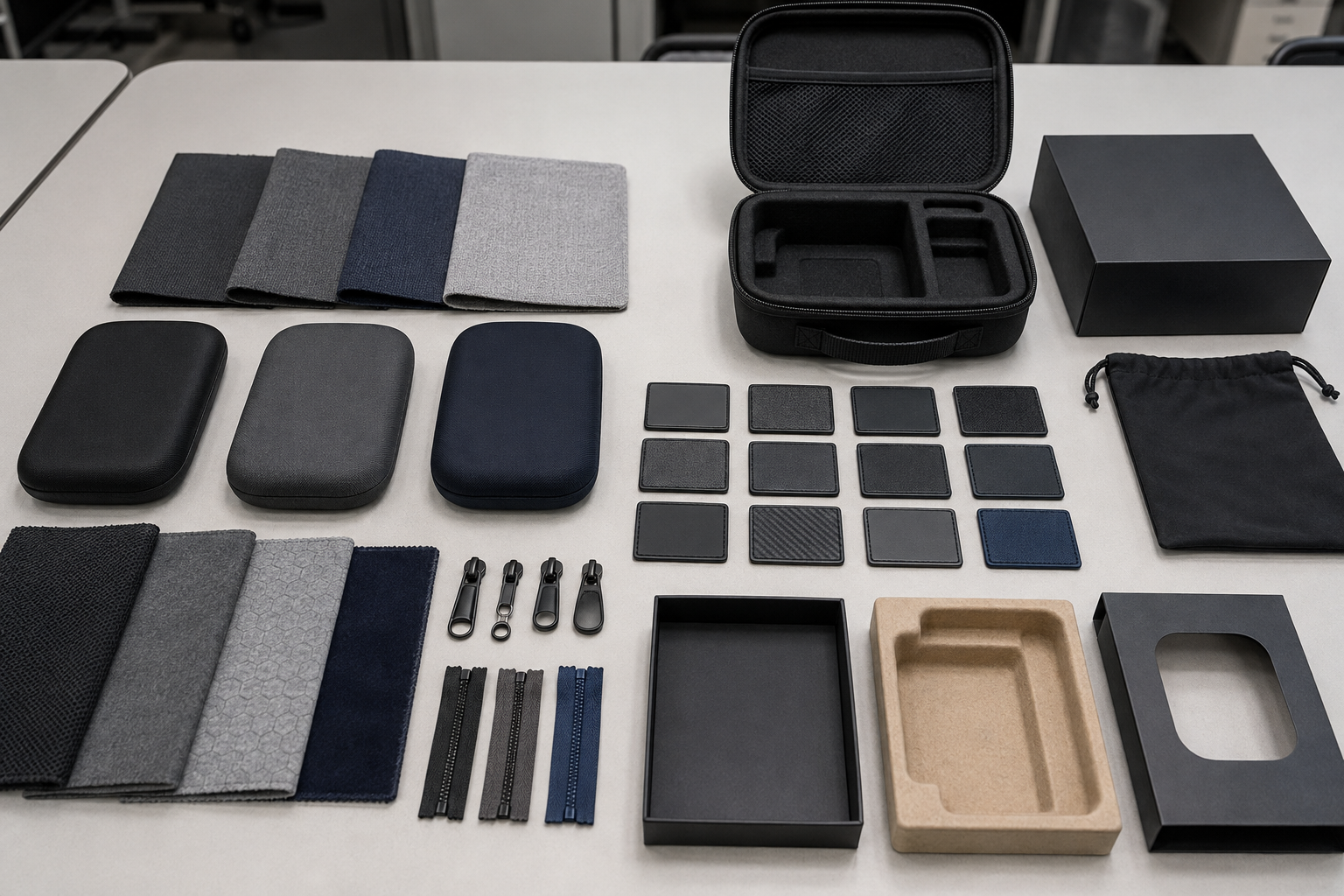
Different products require different EVA protective shell solutions.
Different products have different requirements for EVA protective cases.
For electronic products, buyers typically need to consider factors such as shock resistance, pressure resistance, scratch resistance, cable management, and internal fixation.
For beauty devices or makeup tools, buyers may pay more attention to appearance, feel, lining color, easy-to-clean compartments, and brand display.
For tool-type products, the case needs to be more durable. Zippers, handles, stitching, and internal compartments should all be sturdy enough to withstand long-term use.
Therefore, factory quotes should not be based solely on length, width, and height. Even with identical external dimensions, the required materials, shell rigidity, lining structure, sewing techniques, and packaging methods can vary significantly depending on the internal product.
If you'd like to compare common application examples, you can also check out Pengtour's Custom EVA Casescategory page for different product usage examples.
The factory first reviews its structure and processes.
After receiving project details, factories typically do not immediately provide a quote. They first need to determine which housing structure and manufacturing process is suitable for the product.
For example, factories need to check whether products require a hard shell, whether they need foam lining for fixation, how thick the shell should be, how much space should be left inside, and whether zippers and handles need to be reinforced.
If the protective case is used for electronic products and the buyer expects it to be used repeatedly over a long period of time, then the choice of material, feel, lining gaps, fabric, and waterproof requirements should not be based solely on cost.
For buyers still comparing material choices, Pengtour's EVA bag material selection guideexplains how fabric, lining, shell structure, and finish affect the final bag.
Based on our factory's experience, for common custom EVA shell structures, unless the materials, mold radius, structure, and protection requirements have all been carefully reviewed, we generally avoid molding heights exceeding 13 cm. Improper design can increase the risk of edge thinning, whitening, uneven thickness, or cracking during deep thermoforming.
For PU-coated box structures, we pay extra attention when the height exceeds approximately 8 cm, as over-molding may increase the risk of fabric wrinkling, whitening, adhesive failure, or deformation. This is merely factory experience and not an industry standard. The final decision should be based on the materials, mold, sample results, and actual product requirements.
Some projects may seem like simple EVA protective cases at first glance, but their internal structure, foam cutting, logo placement, and packaging methods can all affect the final price and delivery time. Therefore, experienced factories will confirm these details before providing a more accurate quote and sample suggestions.
Sampling is not just about appearance.
Just because a sample looks good in a photo doesn't mean it should be approved.
For custom EVA protective cases, buyers should place the actual product and accessories into a sample to check if the product is stable, if the zipper closes smoothly, if the protective case fits the product tightly, and if the handles and stitching are strong and durable enough.
If the product is heavy, fragile, or valuable, the sample should also be checked for drop resistance, pressure resistance, scratch resistance, odor, plug compatibility, and packaging methods.
Minor issues discovered during sampling are usually easy to resolve. However, if the same problem is only discovered after mass production, it can result in significant cost and time losses.
Why foam lining is important
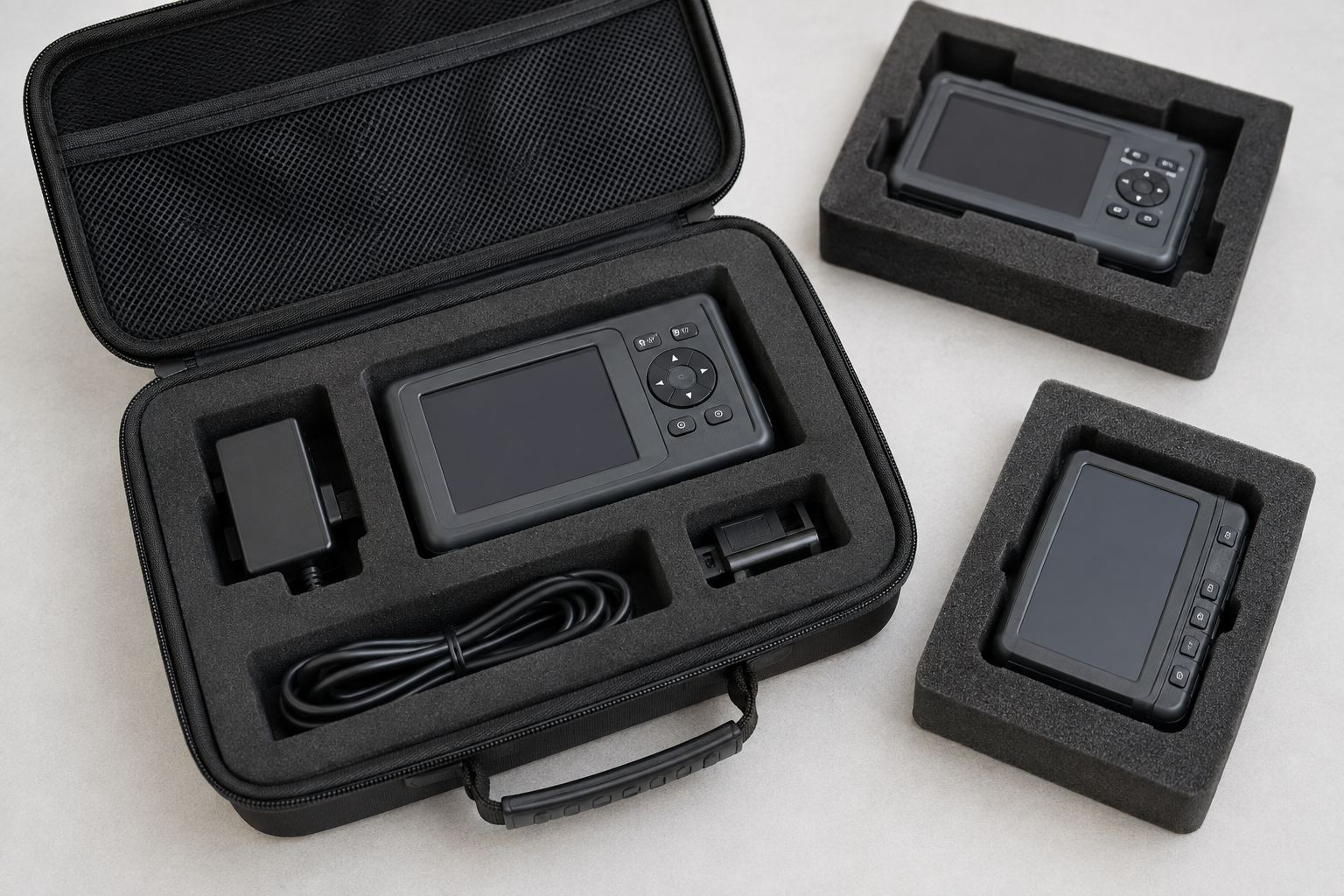
Foam lining is a very important component of EVA bags, especially suitable for electronic products, tools, medical accessories and high-value products.
Its function is not only to put products into packaging boxes, but also to keep products stable during transportation and daily use, reducing movement and impact.
If the lining is too loose, the product may wobble inside the storage box, causing scratches, collision damage, or misalignment of accessories. If the lining is too tight, the user may have difficulty removing the product, and the foam material may deform after prolonged use.
In our projects, we typically evaluate gaskets by examining product securing, removal space, accessory placement, lid clearance, and the user's actual operating habits. For some products, simple cut foam gaskets are sufficient. For others, buyers may require EVA foam, PU foam, velvet gaskets, multi-layered foam, or molded gaskets.
A well-designed lining enhances protection and makes the entire phone case look more professional.
The logo design methodology should be determined as early as possible.
Logo design methodology is another detail that needs to be confirmed early in a custom project.
Different materials are better suited to different logo production methods, such as screen printing, embossing, rubber patches, woven labels, metal plates, or high-frequency embossing.
Some methods are better suited for large, high-profile brand campaigns, while others are better suited for smaller, more subtle but lasting brand displays.
If the location of the logo is not determined in time, problems such as zippers obscuring the logo, surface deformation, unclear embossing, or color differences may occur later.
Before creating a prototype, it's best to send the logo file, size, color, placement, and expected effect to the factory for confirmation. Buyers can also refer to Pengtu's "Custom EVA Protective Case Logo Options Guide"for a more in-depth comparison of common logo design options.
General Material and Labelling Methods Reference
| Material | Preferred tagging method | Optional methods | This is generally not recommended. |
|---|---|---|---|
| Oxford cloth/600D polyester | Screen printing, embroidery | Woven labels, rubber patches, heat transfer printing, embossed TPU patches | Embossing, gravure printing, hot stamping, high-frequency embossing |
| 1680D Nylon | Screen printing, embroidery | Woven labels, rubber patches, heat transfer printing | Embossing, hot stamping, high-frequency embossing |
| PU | Embossing, gravure printing, screen printing, hot stamping | High-frequency embossing, embossed TPU patches, heat transfer printing, metal plates | Embroidery, because it may leave needle holes. |
| PVC | High-frequency embossing, screen printing | Embossing, hot stamping, embossed TPU patches | embroidery |
| EVA casing surface | Screen printing, embossing | Localized high-frequency pressing, heat transfer printing, rubber patch | Embroidery or heat embossing may be unstable on uneven, soft EVA surfaces. |
| Textured fabrics | Woven labels, rubber patches | embroidery | Due to the surface texture, screen printing may result in unevenness; embossing is generally not suitable. |
| Mesh/Hollow Materials | Woven labels, sewn rubber patches | — | Screen printing, embossing, and heat transfer are all performed on uneven surfaces. |
| liner | Screen printing, woven labels | Heat transfer | If the lining is too thin, embossing or embroidery can be used. |
Quality inspection cannot be ignored.
Besides structure and appearance, quality inspection is another crucial aspect that cannot be ignored in custom EVA protective case projects.
A beautifully designed sample does not necessarily mean that the quality will remain consistent during mass production.
During mass production, the factory needs to check whether the outer shell shape is consistent, whether the edges and corners are thinned, cracked or whitened, whether the fabric is wrinkled, whether the zipper is smooth, whether the stitching is strong, and whether the lining is suitable for the product.
For electronic products or high-value products, special attention should be paid to their shock resistance, pressure resistance, scratch resistance, and deodorization properties.
Packaging should also be inspected, including the packaging of individual products, labels, instructions, number of cartons, and the strength of the outer cartons.
These details may seem insignificant, but they directly impact the buyer's receiving experience and future repeat orders.
Packaging plans should be confirmed before production.
Packaging is usually a topic discussed later, but it can affect pricing, production time, and final delivery.
For B2B buyers, packaging options may include plastic bags, hang tags, barcode labels, instruction cards, color boxes, inner cartons, outer cartons, or Amazon FBA labels.
If the buyer requires retail packaging, the design, box size, material, printing method, and carton packaging method need to be confirmed before mass production. If the packaging is only for bulk shipping, the factory still needs to understand the carton strength, packaging quantity, and shipping method.
Confirming packaging early helps avoid last-minute changes and allows buyers to get a more realistic landed cost.
A good supplier should help identify problems early.
For buyers, choosing an EVA protective case manufacturer requires considering not only whether the factory can produce the protective case, but also whether the factory can identify potential problems early.
Experienced factories will confirm product structure, material suitability, component design, marking methods, packaging methods, and quality requirements before quoting prices and making prototypes.
This helps reduce repeated modifications later and also helps buyers understand the source of costs and delivery time.
If suppliers quote prices based solely on size without inquiring about the product's intended use, protection requirements, and packaging methods, the risk of future problems is higher.
A good supplier is not just a manufacturer; it should also be a partner in the product development process.
Partner with Pengtour to create your own custom EVA protective case project
If you are looking for custom EVA storage boxes for storing electronics, beauty devices, tools, medical accessories, or travel supplies, you can send us your product details first.
Based on product size, usage scenario, protection requirements, material preferences, marking methods, and packaging options, we can help you review suitable packaging box structures and sample solutions.
If you already have drawings, samples, or reference photos, please send them to us so that we can provide suggestions more quickly.
Confirming these details early in the project will make subsequent processes such as quoting, prototyping, mass production, and delivery smoother.
Ready to start a custom EVA protective case project? Pleasesend us your product dimensions, photos, protection requirements, logo design, target quantity, and packaging needs through Pengtour's quotation system , or contact Pengtourto discuss your project with our team.
Sources and Notes
- Pengtour's capabilities and references in custom EVA cases: custom EVA case manufacturers and complete customization options.
- Pengtour EVA Protective Case Product Category: Custom EVA Protective Cases
- Pengtour logo method reference: Custom EVA protective case logo options
- Thermoforming Design Reference: Considerations for Wall Thickness Reduction and Radius: Indu Thermoforming Machine Design Guide
- Thermoforming Design Reference: Material Distribution and Corner/Rounding Design: Jamestown Plastics Thermoforming Design Guide