

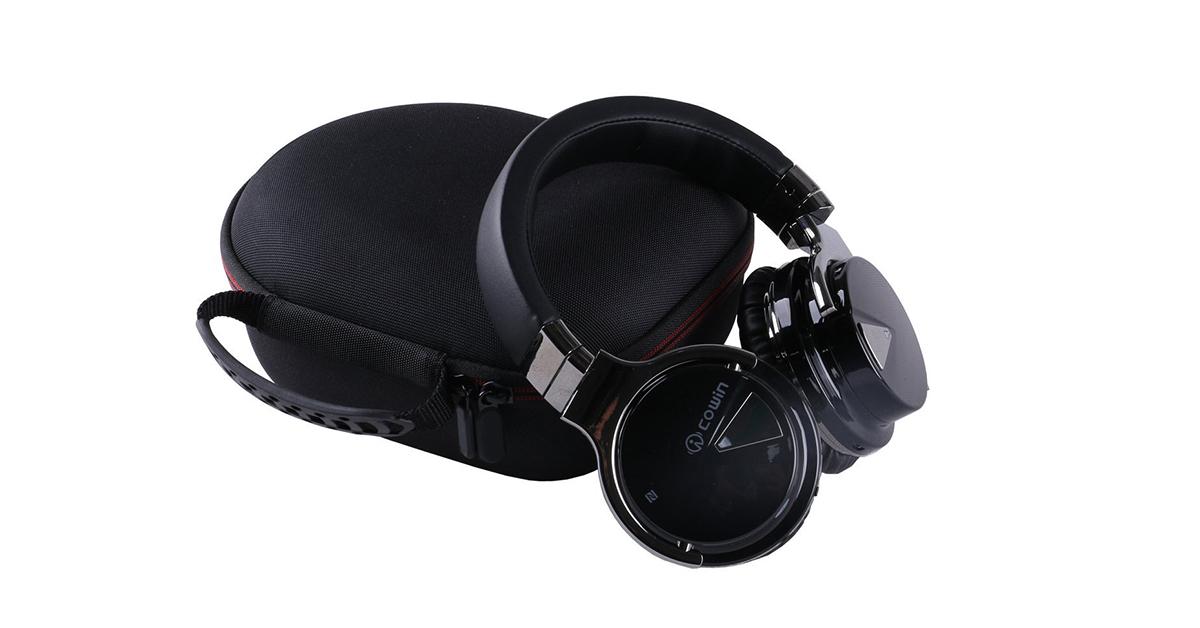
Custom headphone case sample approval is the point at which a development sample becomes a formal reference for production. Before releasing an order, the buyer should confirm the completed case’s handling, lining, opening operation, zipper, branding, color, packaging, and final specifications.
For a project developed from a customer-supplied 3D file, the digital model provides the structural starting point. Final approval should be based on the completed physical sample, supported by photographs, operation videos, and a specification sheet that records the agreed production details.
A 3D File Starts Development, but It Does Not Approve Production
A customer-supplied 3D file gives the manufacturer a structural reference for developing a custom headphone case. It can help define the intended product profile, cavity arrangement, outer dimensions, opening direction, and other design features that influence the molded structure.
However, the 3D file does not represent every part of the completed case.
The finished sample also includes the exterior material, EVA structure, lining, zipper, stitching, logo, pockets, handles, and packaging-related details. These components are assembled after the digital structure has been prepared, so the final sample must be reviewed as a complete product.
TThe development stage establishes the main headphone case OEM design requirements, while the sample approval stage confirms the completed physical result before production.. The sample approval stage confirms whether those requirements have been translated correctly into a physical case that can serve as a production reference.
This distinction helps buyers avoid approving only a rendering, drawing, or partial sample. A digital model may confirm structure, but it cannot fully demonstrate material feel, zipper operation, lid movement, lining presentation, or the way the finished product is handled.
Approval should therefore identify the exact physical sample, specification version, materials, branding files, color references, packaging method, and order quantity that will be used for production.
The Buyer’s Sample Review Session
A practical sample review should follow the same sequence that the final user will follow when storing, carrying, opening, and removing the headphones.
The review should focus on how the fully assembled sample performs in actual use and whether it follows the approved product arrangement.The base structure has already been developed from the customer-supplied 3D information. The review should instead confirm that the fully assembled sample provides the intended handling and presentation.
Review placement and removal
When the buyer receives the physical sample, it should be reviewed with the intended headphone model whenever possible.
The buyer should confirm:
- whether the storage direction is clear;
- whether the headphone can be placed into the case naturally;
- whether it can be removed without repeated repositioning;
- whether the headband and earcups sit in the intended areas;
- whether any planned accessories remain separate from the main product.
These checks focus on practical use rather than questioning whether the case was developed from the correct dimensions.
A structurally accurate case can still require a usability review after the lining, zipper, pockets, and other components have been assembled. The finished case should guide the user toward the intended placement direction and allow convenient access to the product.
Review the lining as part of the completed case
The interior lining should be evaluated after the case has been fully assembled.
Buyers can check whether the lining:
- follows the intended internal structure;
- is flat and properly attached;
- covers the planned product-contact areas;
- has clean transitions around edges and internal features;
- provides the expected interior appearance.
The lining affects both presentation and handling. It should be reviewed together with the molded structure rather than judged only as a separate material swatch.
Where the design includes a mesh pocket or accessory compartment, the buyer should place the intended cables or accessories inside it. The compartment should support the planned storage function without interfering with normal opening, closing, or headphone placement.
For more detail on lining, support positions, pockets, and accessory separation, review the headphone case inner layout guide.
Confirm the lid opening angle
The lid should open to a practical angle that supports normal access to the headphone.
The required opening angle depends on the case structure, zipper path, hinge area, and internal arrangement. It does not need to follow one universal measurement. The buyer should instead confirm whether the finished sample opens naturally and provides convenient access to the product.
A static photograph can show the case in an open position, but a short operation video is usually more useful for demonstrating the complete movement.
Operate the zipper on the completed sample
The zipper should be reviewed after the lining, exterior material, and internal components have been assembled.
The buyer should confirm:
- smooth movement around the finished case;
- a practical opening direction;
- convenient zipper-puller positioning;
- normal opening and closing without repeated adjustment;
- no interference from the planned accessory layout.
These are approval checks, not claims that a zipper defect has already occurred. The purpose is to confirm that the final sample performs as expected before the order is released.
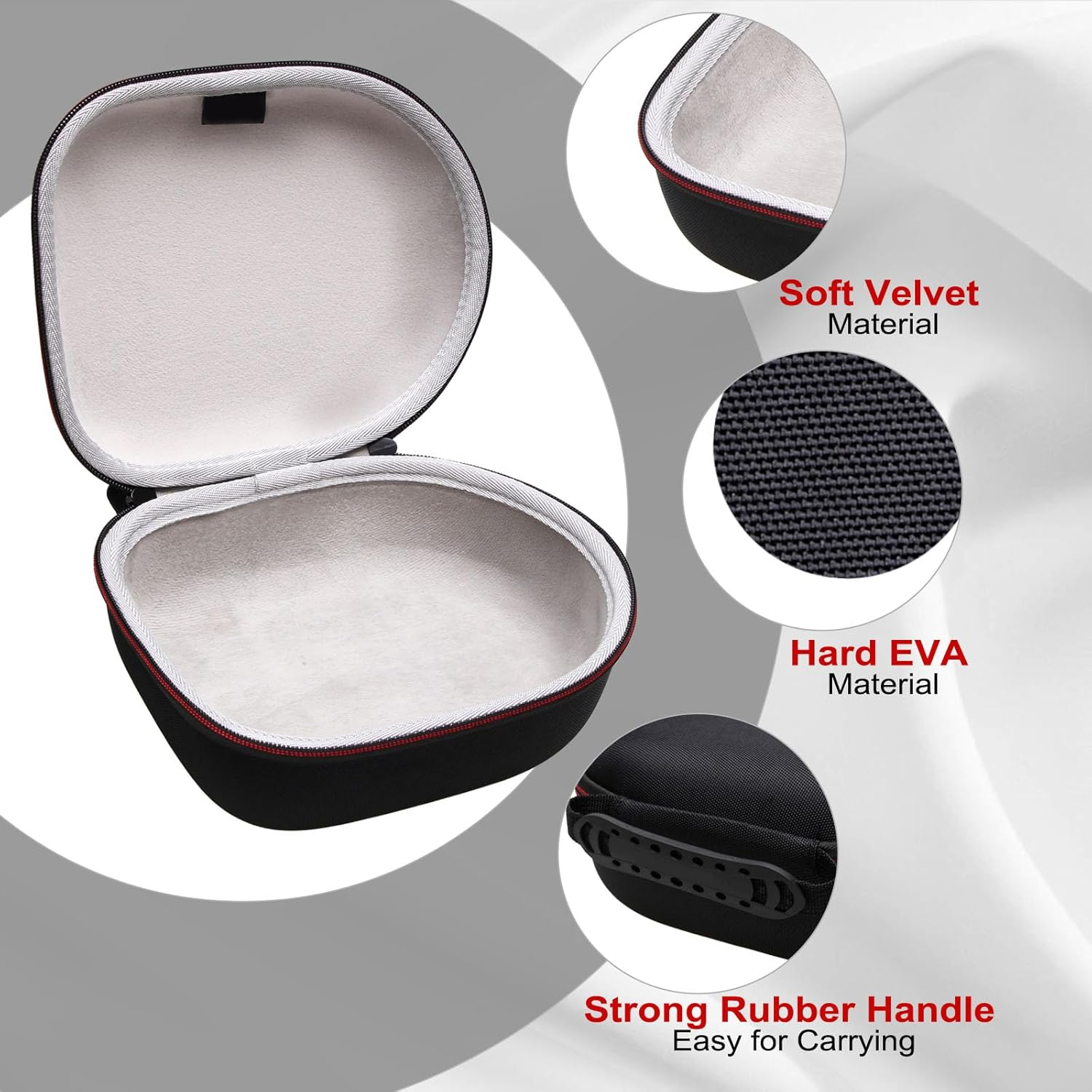
What Photos and Videos Can Confirm—and What They Cannot
Physical samples, photographs, videos, and specification sheets serve different purposes during custom headphone case sample approval.
They should be used together rather than treated as interchangeable.
| Approval method | Best used to confirm |
|---|---|
| Physical sample | Handling, material feel, lining, product placement, opening and zipper operation |
| Photographs | Exterior appearance, logo position, lining details, local workmanship and packaging presentation |
| Video | Placement, removal, lid opening angle, zipper movement and handling sequence |
| Specification sheet | Structure, materials, lining, branding, color, packaging, quantity and approved version |
The physical sample remains the main reference for actual handling and material review.
Photographs are useful for recording specific details such as logo position, stitching, surface finish, interior presentation, labels, and packaging layout. They also help both parties identify which sample version is being discussed.
Videos demonstrate movement. They can show how the lid opens, how the zipper travels around the shell, how the product is placed and removed, and whether the planned accessories can be stored without affecting normal operation.
Photos and videos support remote approval, but they should not automatically replace the physical sample. Material feel, real handling, interior contact, and the relationship between assembled components are easier to evaluate through the completed product.
The specification sheet performs another role: it records production information that cannot be preserved reliably through images alone.
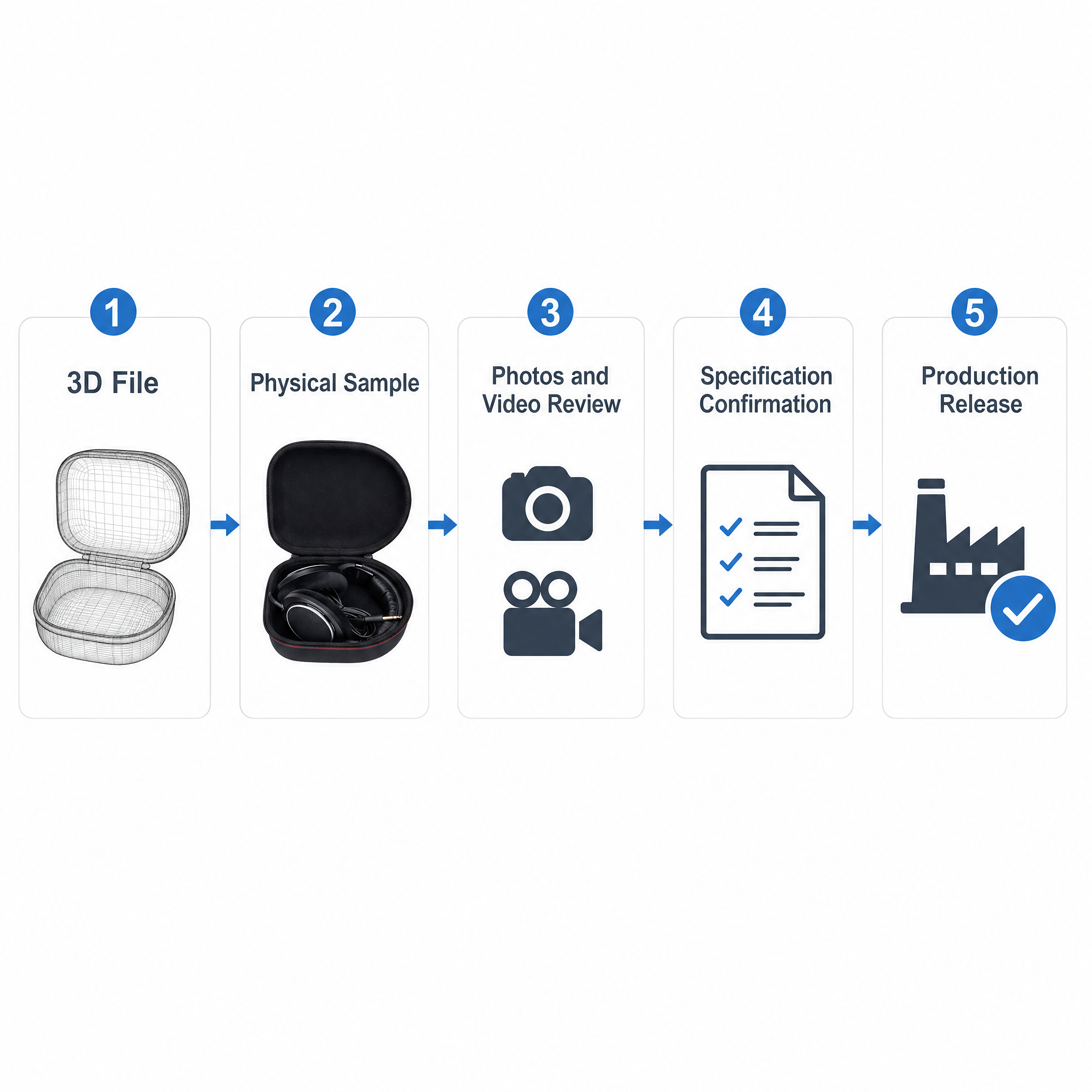
When the Sample Becomes a Production Standard
A sample becomes a production reference only after the buyer and manufacturer have confirmed the complete set of order details.
A message such as “the sample looks good” is not enough to define the production standard. The final approval should identify exactly which structure, materials, files, colors, packaging requirements, and quantities have been accepted.
Production release record
| Item | Information to confirm before production |
|---|---|
| Structure | Final dimensions, molded shape and internal layout |
| Exterior material | Approved material type, texture and finish |
| Lining | Approved material and application method |
| Logo | Process, artwork, size, position and orientation |
| Color | Approved material sample or color reference |
| Packaging | Individual bag, box, label and carton requirements |
| Quantity | Final total and variant allocation |
| Sample version | Physical sample approved for production |
| Pending items | Details that remain unapproved |
For this type of project, production approval covers the dimensions and structure, materials, lining, logo position, color, packaging, and final quantity.
These items should be confirmed together because each affects a different part of production preparation.
The structure is connected to the mold and the main form of the case. Materials affect processing and appearance. The lining determines the final interior presentation. Logo and color files guide branding preparation. Packaging affects final assembly, labeling, and shipment. Quantity determines material planning and scheduling.
A detail should not be considered approved simply because it appeared in an earlier message or preliminary quotation. The final production release should record the accepted version clearly.
Why Structural Changes Matter More After Approval
Not every post-approval change has the same effect.
A minor packaging-text correction may require only a new file review. A main structural change can affect several connected production references.
Depending on the modification, a structural change may require reassessment of:
- the mold;
- the dimensions and internal arrangement;
- the specification sheet;
- material preparation;
- cutting or assembly requirements;
- sample confirmation;
- cost;
- production scheduling.
This does not mean every structural adjustment automatically requires a completely new mold. The actual impact depends on the location and scale of the change.
However, structural changes usually have a greater project impact than small artwork or packaging updates because the structure is directly linked to the physical form of the case.
| Requested change | Possible project impact |
|---|---|
| Small logo-position adjustment | Artwork review or sample confirmation |
| Packaging graphic update | Packaging-file review |
| Color adjustment | New material or color-sample confirmation |
| Material replacement | Appearance, processing and cost review |
| Interior layout adjustment | Modeling and sample review |
| Main structural change | Mold, specification, cost and schedule review |
When a buyer requests changes after approval, the factory should first determine whether the existing sample, mold, and specification sheet remain valid.
Material, tooling, sampling, and commercial considerations are covered further in the custom headphone case pricing and RFQ checklist.
The Three Production References Pengtour Retains
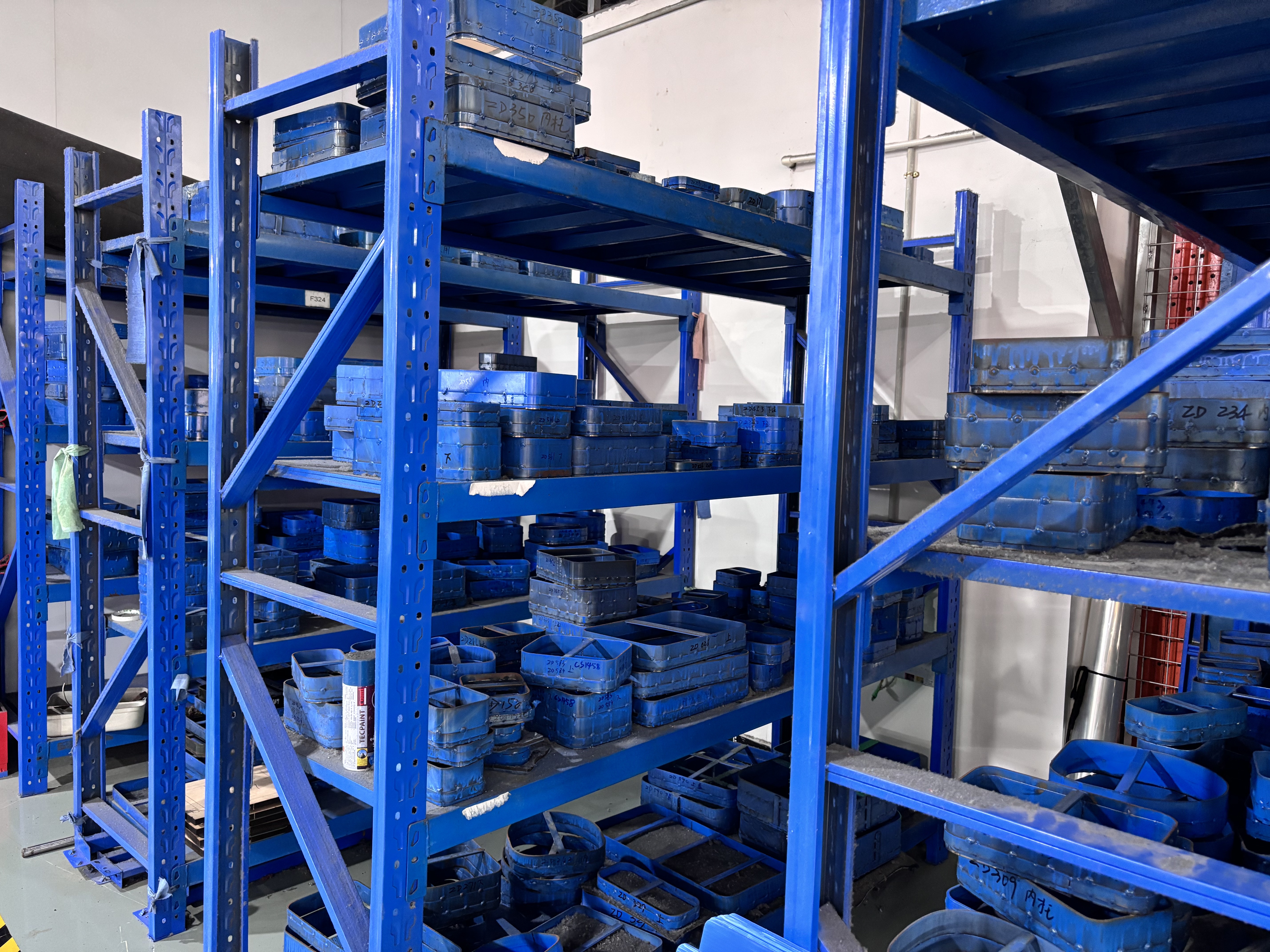
After approval, Pengtour retains three connected project references:
- the approved physical sample;
- the corresponding mold;
- the specification sheet.
Each reference serves a different purpose.
The approved physical sample
The approved sample represents the accepted appearance, assembly, lining, handling, branding, and product presentation.
It allows the production and quality teams to compare finished cases with a real approved reference instead of relying only on written descriptions.
The physical sample can demonstrate details that are difficult to describe precisely, including:
- exterior-material appearance;
- lining presentation;
- actual logo proportion;
- zipper path;
- lid-opening behavior;
- the relationship between assembled components.
The corresponding mold
The mold represents the approved structural form.
It is connected to the shape and dimensions confirmed during development. If the main structure changes later, the factory must determine whether the existing mold remains suitable or whether further work is required.
Keeping the mold associated with the approved project version also helps distinguish it from molds used for other structures or product models.
The specification sheet
The specification sheet records information that the sample and mold cannot communicate completely.
It may include:
- exterior material;
- lining material;
- logo process and position;
- color reference;
- accessory requirements;
- packaging method;
- quantity and variant allocation;
- approved file versions;
- remaining notes.
| Production reference | Main role |
|---|---|
| Approved sample | Appearance, handling, assembly and presentation |
| Mold | Confirmed structural form |
| Specification sheet | Materials, branding, color, packaging and order details |
The three references should be used together.
The sample alone may not identify the exact material code or packaging file. The specification sheet alone cannot fully communicate how the case feels and operates. The mold confirms the structural form but does not record the final branding or packaging.
Together, they support production consistency and reduce avoidable misunderstandings.
A Practical Buyer Sign-Off Record
A buyer does not need a complicated approval system, but the final record should be clear enough for both parties to identify the exact version being released.
The following format can be used as a practical headphone case sample checklist.
| Approval field | Buyer or project-team record |
|---|---|
| Project name | |
| Sample version | |
| 3D file version | |
| Approved structure | |
| Exterior material | |
| Interior lining | |
| Logo process | |
| Logo size and position | |
| Approved color reference | |
| Accessory layout | |
| Packaging method | |
| Label or barcode requirement | |
| Final order quantity | |
| Variant allocation | |
| Approval date | |
| Approved by | |
| Pending items | |
| Additional comments |
The “Pending items” field is particularly important.
A physical case may be approved while packaging artwork, labels, barcodes, carton marks, or another commercial detail is still being finalized. Recording these open items prevents them from being treated as approved by default.
The final record should also identify the exact physical sample.
When several sample versions exist, phrases such as “latest sample” may become unclear. A sample number, date, reference photograph, or version code gives both parties a more reliable production reference.
Feedback sent through multiple emails, messages, photographs, and videos should be consolidated before final approval. The production team should not need to reconstruct the final specification from separate conversations.
Before Releasing the Order
Before production scheduling begins, the buyer and manufacturer should confirm that:
- the final physical sample is clearly identified;
- the approved 3D or specification version is recorded;
- all implemented comments have been reviewed;
- the structure and materials are approved;
- the lining, logo, color, packaging, and quantity are confirmed;
- any pending item is listed separately;
- requested structural changes have been reassessed;
- the approved sample, mold, and specification sheet correspond to the same project version.
A sample should not enter production simply because most details appear acceptable. The purpose of approval is to remove uncertainty about what will be manufactured.
Buyers preparing a new custom EVA headphone case can provide their 3D file, product information, material preferences, logo artwork, color requirements, packaging details, and estimated quantity for an initial project review.
To begin development or confirm the next production stage, submit your headphone case project requirements.
Frequently Asked Questions
Can photos and videos replace the physical sample?
Photos and videos are useful for confirming appearance, logo position, workmanship, lid movement, zipper operation, and the product-handling sequence. However, they do not always provide the same information as a physical sample, especially for material feel, lining contact, and actual handling. They are best used together with the physical sample and specification sheet.
What becomes fixed after sample approval?
The approved structure, materials, lining, logo position, color, packaging, quantity, and sample version should be recorded as production references. Any item that remains unresolved should be listed separately rather than treated as approved.
For a broader checklist before production preparation, buyers can also use Pengtour's custom EVA case sample approval checklist.
What happens if the structure changes after approval?
A structural change may affect the mold, dimensions, specification sheet, material preparation, sampling, pricing, or production schedule. The actual effect depends on the scale and position of the modification, so the project should be reassessed before production continues.