

Quick Answer:
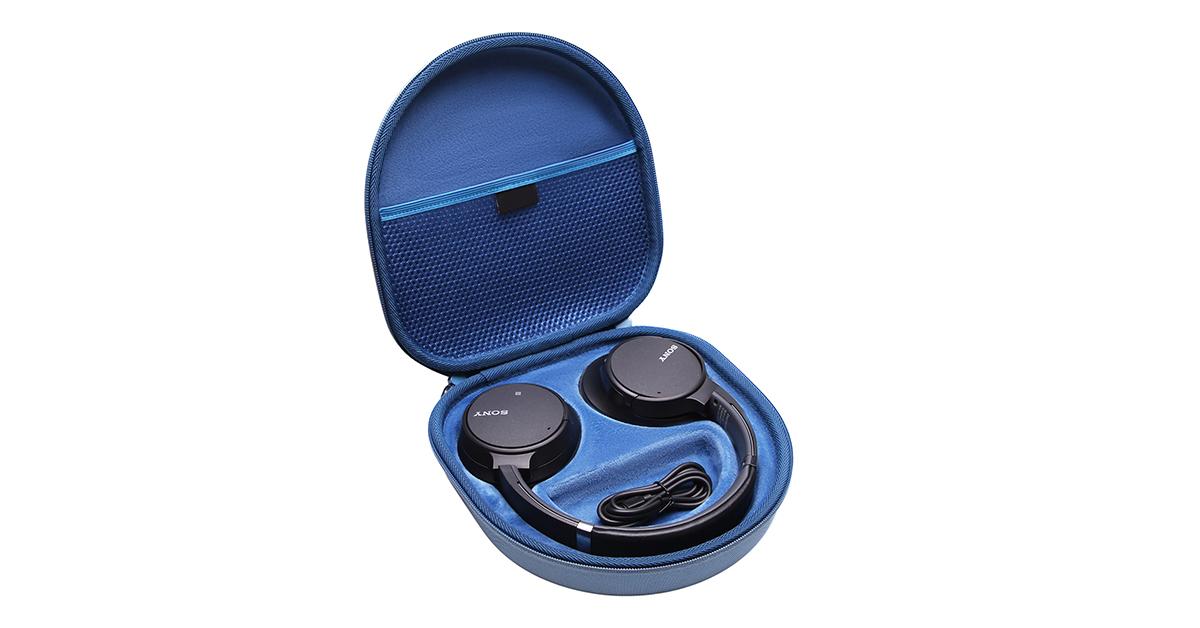
A custom foam insert is not always required for an EVA headphone case. Some headphone cases use a molded inner cavity, soft lining, raised inner support, lid-side mesh pocket, elastic strap, or separate foam insert to stabilize the headphone. The right inner layout depends on earcup thickness, headband clearance, accessory storage, surface sensitivity, and OEM production requirements.
For audio brands, the inside of a headphone case is just as important as the outside shell. A good inner layout helps the headphones sit naturally, keeps cables separated, reduces unnecessary movement, protects sensitive surfaces, and makes sample approval easier before bulk production.
Key Takeaways
- Not every EVA headphone case needs a separate custom foam insert.
- A molded inner cavity may be enough for basic storage, while soft lining or raised support can improve fit and presentation.
- Earcup thickness, headband clearance, folded size, and cable storage should be checked before sampling.
- A lid-side mesh pocket is useful, but its position should not press against the headphones after closing.
- Sample fitting should review inner height, zipper closing tension, earcup movement, lining thickness, and accessory placement.
- For OEM projects, buyers should prepare headphone dimensions, product photos, samples or 3D files, color requirements, logo position, and order quantity.
What Is the Inner Layout of an EVA Headphone Case?
The inner layout of an EVA headphone case refers to the internal structure that holds the headphones and accessories in place. It may include a molded inner cavity, soft lining, raised inner support, lid-side mesh pocket, elastic strap, accessory divider, or separate custom foam insert.
In many projects, buyers first focus on the outer shape, color, logo, and zipper style. These details are important, but the internal design decides whether the case actually works well in daily use. A headphone case may look attractive from the outside, but if the headphones move too much inside, if the ear cushions are pressed, or if the cable scratches the earcups, the user experience will not be good.
A molded inner cavity is usually created as part of the case structure. It helps guide the headphone position without adding a separate foam part. This can be suitable for many over-ear or foldable headphones when the product shape is not too complicated. A soft lining can be added to reduce direct friction and improve the visual presentation when the case is opened. Raised inner support can help hold the earcups or headband area more naturally. A lid-side mesh pocket is often used for charging cables, adapters, manuals, or small accessories.
A separate custom foam insert is useful when the product needs more precise positioning. However, it is not necessary for every headphone case. The best choice depends on the headphone shape, surface sensitivity, target cost, accessory layout, and sample fitting result.
Why Inner Layout Design Matters for Headphone Protection
Inner layout design matters because headphones are not simple rectangular products. Over-ear headphones have raised earcups, curved headbands, soft cushions, folding hinges, and sometimes exposed cables or accessories. These shapes create different pressure points inside the case.
For a complete overview of custom EVA headphone case OEM design requirements, buyers should review the full design checklist before starting sample development.
The main purpose of a headphone case insert design is not only to add cushioning. It should control how the headphones sit inside the case. If the inner cavity is too loose, the headphones may shift during shipping or daily carrying. If the inner structure is too tight, the zipper may become difficult to close, or the ear cushions may be compressed. Both situations can create problems.
Earcup support is especially important for over-ear headphones. The earcups are usually thicker than the headband, and they often have soft pads that should not be pressed for a long time. The inner layout should allow the earcups to rest naturally. The headband also needs enough clearance, especially when the headphones have a curved or raised structure.
Cable storage is another common issue. Many headphone cases include a charging cable, adapter, manual, or small accessories. A lid-side mesh pocket can keep these items separated from the headphones, but the pocket should be checked after closing the case. If the mesh pocket is too full or placed too low, it may press against the earcups.
For this reason, inner layout design should be reviewed together with the actual headphone sample, not only based on a reference picture.
The approved lining and inner layout should also be recorded in the complete headphone case sample checklist before production.
Does Every EVA Headphone Case Need a Custom Foam Insert?
No. Not every EVA headphone case needs a separate custom foam insert. Some cases use a molded inner cavity, soft inner surface, raised support, mesh pocket, or elastic strap to control headphone movement. A separate custom foam insert is more suitable when the headphone or accessories require precise positioning.
For projects beyond headphone-specific layouts, the EVA foam insert selection guide covers product inputs, finger access, loaded closure, sample review, and revision risk for custom product cases.
This is an important distinction for OEM buyers. If every project is treated as a foam insert project, the case may become more complicated or expensive than necessary. If the case has a well-shaped inner cavity and the headphones sit naturally, a separate insert may not be needed. For basic storage or general travel protection, a molded cavity with proper inner height and a lid-side mesh pocket may already be enough.
However, some projects do need a custom foam insert. For example, if the headphones have an irregular shape, if the earcups need to be held in a fixed angle, if multiple accessories must be separated, or if the product will be presented as a premium retail kit, a custom foam insert can improve the internal organization. It can also help reduce unnecessary movement during transport.
The key is to choose the structure based on the product, not based on a fixed template. A custom EVA foam insert is one possible solution, but it should be evaluated together with molded shell design, inner lining, zipper position, accessory layout, and target order quantity.
Molded Inner Cavity vs. Soft Lining vs. Custom Foam Insert
A molded inner cavity, soft lining, and custom foam insert serve different purposes inside an EVA headphone case. A molded cavity helps shape the storage space. A soft lining helps reduce surface friction and improve presentation. A custom foam insert provides more controlled positioning when the product requires a more precise fit.
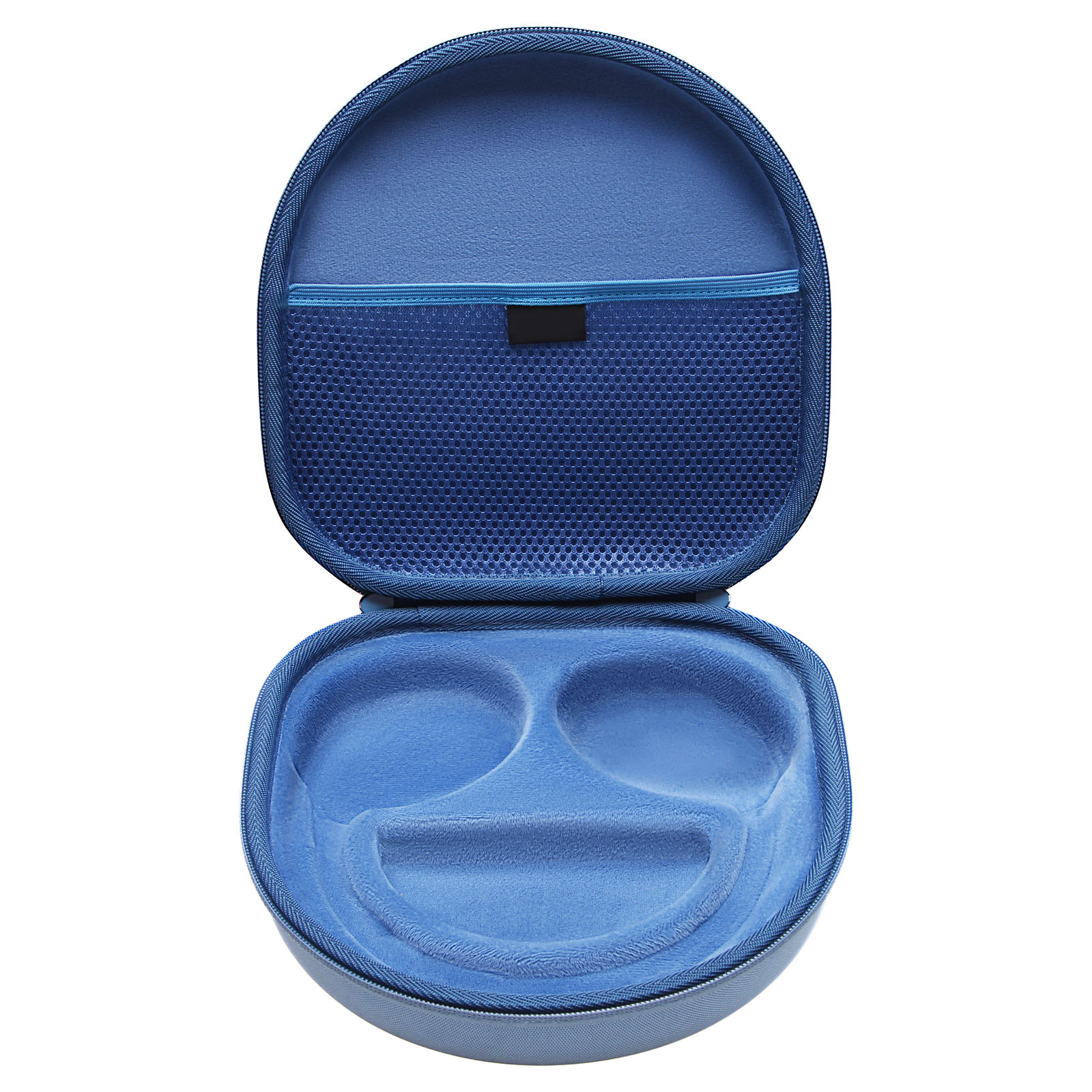
Different headphone cases may use different internal structures depending on the product’s value, surface material, ear cushion thickness, accessory package, and cost target. For example, a simple Bluetooth headphone case may only need a molded inner cavity and mesh pocket. A premium headphone case may need soft lining to improve the opening experience and reduce friction. A project with strict positioning requirements may need a separate custom foam insert.
| Internal Structure | Best For | Advantages | Buyer Checkpoint |
|---|---|---|---|
| Molded inner cavity | Basic headphone storage and general travel cases | Simple structure, easier cost control, clean internal shape | Check whether the headphones move inside the case |
| Soft lining | Scratch-sensitive or premium headphones | Better surface protection and improved presentation | Check lining thickness and closing pressure |
| Raised inner support | Over-ear or foldable headphones | Helps support earcups or headband area | Avoid pressing the ear cushions |
| Lid-side mesh pocket | Cables, adapters, manuals, small accessories | Keeps accessories organized and separated | Check whether the pocket presses the headphones |
| Elastic strap or divider | Small accessories or compact layouts | Helps reduce accessory movement | Confirm it does not interfere with headphone placement |
| Custom foam insert | Precise product positioning or premium kits | Better control of internal movement and layout | Requires sample, drawing, or 3D data |
This comparison is important because many buyers use the word “foam insert” to describe all internal structures. In factory development, these are different design choices. A molded inner cavity is not the same as a separate foam insert. A soft lining is not only decoration; it can affect thickness, surface contact, and closing pressure. A raised support is not just a visual feature; it may help the headphones sit more naturally.
For OEM buyers, the safest approach is to confirm the headphone position through sample fitting before bulk production.
Key Measurements Needed Before Designing the Inner Structure
The inner structure of an EVA headphone case should be designed around actual product measurements. A reference photo can show the style direction, but it cannot replace size data, physical sample fitting, or 3D structure review.
The first measurement is the overall headphone length, width, and height. This determines the basic case size. The second is the earcup diameter and thickness. Earcups are often the most raised part of the product, and their thickness directly affects the inner height and closing pressure. The third is the headband height and curve. Some headphones have a tall headband that needs more clearance, while foldable models may need a compact but uneven cavity.
Folded and unfolded storage sizes must also be checked. A foldable headphone may look small when folded, but the hinges, earcups, and headband curve may still create uneven height. If the case is designed only around the largest outside dimensions, it may waste space. If it is designed too tightly, the user may struggle to place the headphones correctly.
Accessory space should be planned early. Charging cables, adapters, manuals, replacement parts, or small accessories need a separate storage area. If they are placed loosely in the same cavity as the headphones, they may scratch the surface or interfere with the closing.
| Measurement | Why It Matters |
|---|---|
| Overall headphone length, width, and height | Defines the basic case size and outer shell dimensions |
| Earcup diameter | Affects cavity shape and resting area |
| Earcup thickness | Affects inner height, lining thickness, and zipper closing pressure |
| Headband height and curve | Affects top clearance and raised support position |
| Folded size | Important for compact foldable headphone cases |
| Accessory list | Determines mesh pocket, divider, or elastic strap layout |
| Cable length and adapter size | Helps avoid messy storage and pressure on earcups |
| Surface sensitivity | Helps decide whether soft lining is needed |
For B2B projects, the buyer should ideally provide a physical sample, 3D file, technical drawing, or detailed measurement sheet. If only a reference image is available, the first sample should be reviewed carefully before confirming the final mold or structure.
Common Inner Structures for EVA Headphone Cases
Common inner structures for EVA headphone cases include molded cavities, raised center support, soft lining, mesh pockets, elastic straps, accessory dividers, and optional custom foam inserts. The right structure depends on the headphone model and how the end user will store the product.
A molded inner cavity is one of the most common solutions. It uses the case shape itself to guide the headphone position. This is suitable for many standard over-ear headphones, especially when the headphones fit naturally into the base area. The advantage is a clean structure and easier production control. The limitation is that it may not provide enough precision for irregular shapes or premium display kits.
Raised center support is useful when the headphones need to rest around a central area. It can help reduce empty space and improve the visual layout when the case is opened. However, the support height must be checked carefully. If it is too high, it may press against the ear cushions or headband.
Soft lining is used when the headphone surface needs better friction control or when the buyer wants a more premium opening experience. It can be fabric, velvet, microfiber, or another soft material depending on project requirements. But lining also adds thickness, so it must be considered during sample fitting.
A lid-side mesh pocket is useful for charging cables and small accessories. It keeps accessories separated from the headphones. Elastic straps or dividers can also help organize smaller items.
A separate custom foam insert should be considered when the headphone shape needs more precise positioning, when multiple accessories must be organized, or when the product is sold as a higher-value package. It is useful, but it should not be treated as the default answer for every project.
Material Choices for Inner Support and Lining
Material selection affects support, surface protection, appearance, cost, and sample fitting. In an EVA headphone case project, inner materials should be selected based on the headphone structure and the intended user experience.
EVA foam can be used for structural support or shaped inner areas. It is suitable when the case needs a defined cavity or firmer positioning. PE foam can also be used for support or separation, depending on the required structure. Sponge foam is softer and may be used for cushioning, but it may not provide the same shaped support as EVA or PE. The final choice depends on the product weight, surface sensitivity, and positioning requirement.
Soft lining is often used for headphones with glossy surfaces, leather-like ear cushions, coated parts, or premium retail positioning. Velvet or microfiber can be added based on project requirements, but it should not be assumed for every case. Some headphone cases use a fabric-covered inner surface rather than a full velvet lining. The key is to reduce unnecessary friction while keeping the case easy to close.
Mesh material is commonly used for lid-side pockets. It allows users to see cables or small accessories and keeps them separated from the main headphone cavity. Elastic bands can help hold smaller accessories, but they should not make the layout too crowded.
When buyers require formal material data, standards such as ASTM D2240 or ISO 1798 can be used as testing-method references depending on the selected material and project requirements. These references should not be described as certification claims unless project-specific testing has been completed.
How Inner Layout Design Affects User Experience
Inner layout design affects how the user opens the case, removes the headphones, stores accessories, and closes the zipper. A case can look good in product photos but still create problems if the internal structure is not reviewed carefully.
When the user opens the case, the headphones should sit in a stable and natural position. If the earcups tilt, move, or collide with the cable, the case may feel poorly designed. A raised support or molded cavity can help guide the position, but it should not make the headphones difficult to remove.
Cable storage also affects user experience. If the cable is loose in the same cavity as the headphones, it can look messy and may rub against the earcups. A lid-side mesh pocket can improve organization, especially for Bluetooth headphones that include a charging cable or adapter. However, the mesh pocket must be tested with real accessories inside. A pocket that looks fine when empty may create pressure when filled.
Zipper closing is another practical detail. If the inner height is too tight, the zipper may feel strained or difficult to close. This often happens when the lining thickness, earcup height, accessory pocket, and shell depth are not considered together. A smooth zipper close is a simple but important sign that the internal structure is reasonable.
For audio brands, the case is also part of product presentation. A clean inner layout can make the product feel more complete when the customer opens the package. This is especially important for retail kits, e-commerce products, and branded OEM orders.
Factory Experience: Sample Fitting and Inner Layout Revision
From a factory-side perspective, the inner layout of an EVA headphone case should be confirmed before focusing only on the outside appearance. Some projects use a separate custom foam insert, while others rely on a molded inner cavity, fabric-covered inner surface, mesh pocket, or elastic support to keep the headphones stable. The right structure depends on headphone size, earcup thickness, headband curve, folded height, and accessory storage requirements.
For over-ear Bluetooth headphones, the main risk is not only impact from outside the case, but also unnecessary movement inside the case. If the inner cavity is too loose, the headphones may shift during transport. If the inner height is too tight, the zipper may become difficult to close or the ear cushions may be compressed. A lid-side mesh pocket is useful for cables or small accessories, but its position and capacity should be checked because it may press against the headphones when the case is closed.
During sample review, we normally check whether the headphones sit naturally inside the case, whether the earcups remain stable, whether the headband has enough clearance, whether the zipper closes smoothly, and whether the mesh pocket interferes with the main storage area. This is why sample fitting is important before bulk production, especially for headphone cases with curved shapes, thick ear cushions, or multi-color OEM orders.
Sample revision is common in headphone case development. It does not always mean the design is wrong. It usually means the buyer and factory are refining fit, inner height, lining thickness, accessory pocket position, and opening experience before final approval. This step is more reliable than moving directly into bulk production based only on drawings or reference photos.
Project Example: Soft-Lined EVA Headphone Case with Mesh Pocket
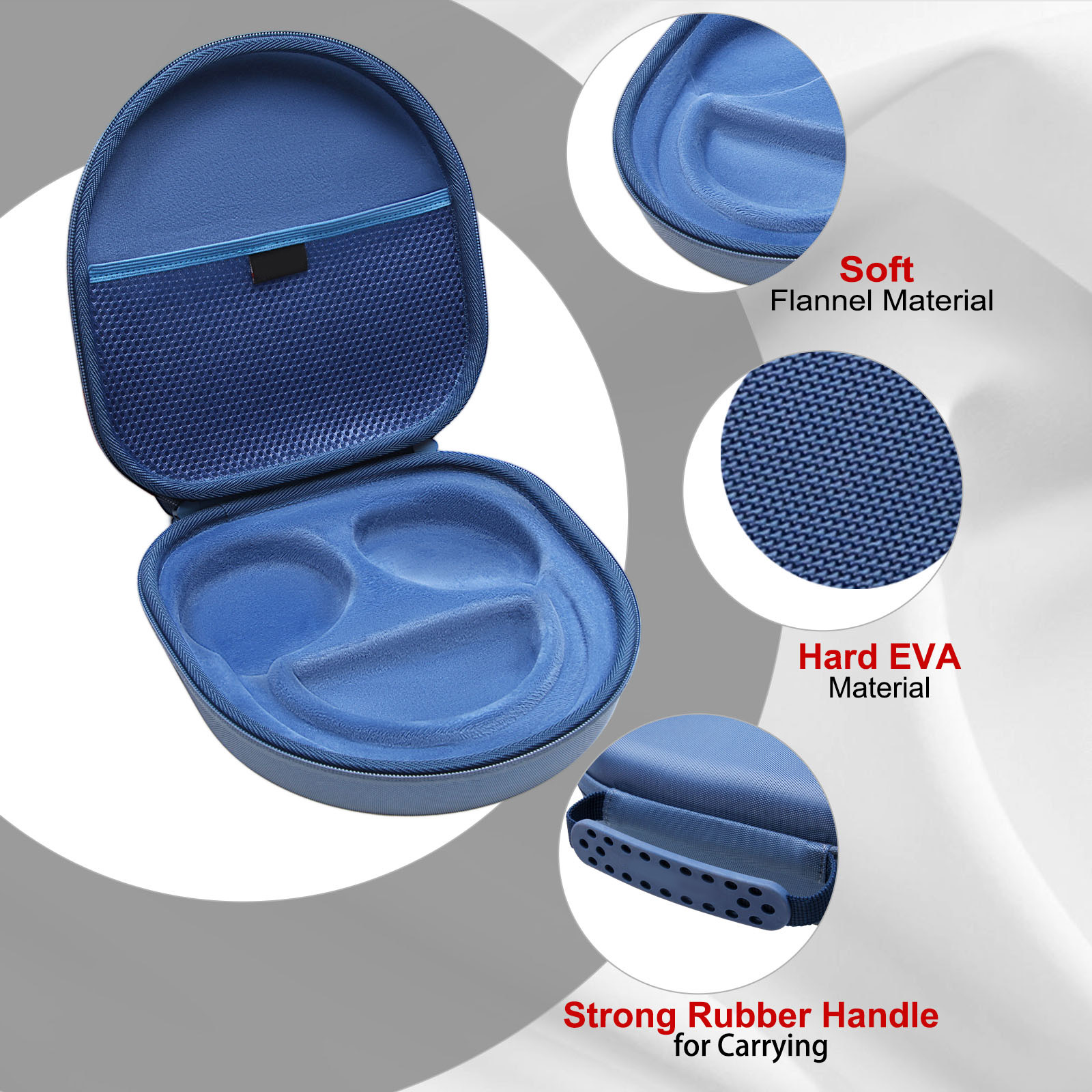
In one EVA headphone case project, the buyer used a hard-shell case for over-ear Bluetooth headphones as the product reference. The case size was approximately 7.7 × 6.4 × 3.4 inches. The structure included a molded EVA shell, zipper closure, shaped inner cavity, soft-lined inner surface, raised support area, lid-side mesh pocket, and carrying strap.
The project started with 3D modeling and sample development. The sample stage usually takes about 7–15 days, depending on structure complexity, material confirmation, and branding details. During sample review, the key checks were not limited to the outside appearance. We also needed to review the inner height, earcup movement, headband clearance, lining thickness, mesh pocket position, zipper closing tension, and whether the headphones could be placed and removed smoothly.
In this project, sample revision was needed before moving forward. This is common in headphone case development because small changes in inner space can affect how the headphones sit inside the case. If the cavity is too loose, the headphones may move during transport. If the inner space is too tight, the case may become difficult to close or may press against the ear cushions.
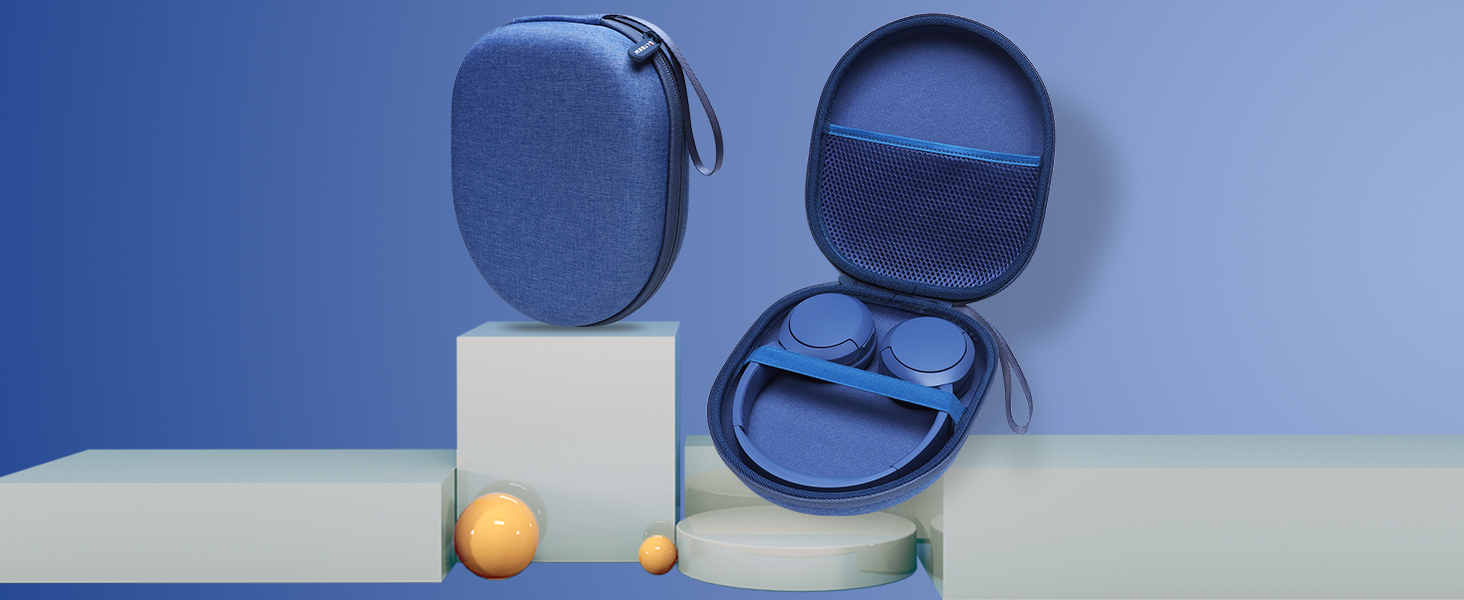
The buyer planned three color options: blue, orange, and black. Each color was expected to be produced at about 150 pieces, for a total quantity of around 450 pieces. Because this was a small-batch multi-color order, consistency was important. The molded shape, zipper alignment, mesh pocket position, logo placement, lining appearance, and overall case structure needed to remain consistent across all three colors before bulk production.
What Buyers Should Prepare Before Requesting Inner Layout Design
Buyers should prepare product information before asking for inner layout design or a custom foam insert. The more accurate the input, the easier it is for the factory to evaluate structure, sample cost, material direction, and production feasibility.
A physical headphone sample is the most useful reference because the factory can check the real earcup shape, headband curve, folded height, and accessory placement. If a sample is not available, a 3D drawing, CAD file, or detailed dimension sheet can help. Product photos are useful for visual reference, but they are usually not enough for accurate inner structure development.
Buyers should also prepare an accessory list. A charging cable, adapter, manual, or small part may change the pocket size and position. If the buyer wants a lid-side mesh pocket, the factory should know what will be stored inside it. The logo position should also be confirmed because it may affect the molded shape, outer surface, or zipper layout.
Color options and quantity matter as well. A single-color large order is different from a small-batch multi-color OEM project. For multi-color projects, the factory needs to check material consistency, lining color, zipper color, mesh pocket color, and logo placement across versions.
| Buyer Requirement | What to Provide |
|---|---|
| Headphone sample | Best for fit checking and sample review |
| 3D drawing or CAD file | Helps model the inner structure |
| Product dimensions | Needed for quotation and structure planning |
| Earcup size | Helps design support and resting area |
| Headband height | Helps confirm top clearance |
| Folded size | Important for foldable headphones |
| Accessory list | Determines mesh pocket or divider layout |
| Surface sensitivity | Helps decide whether soft lining is needed |
| Lining preference | Soft lining, fabric surface, or no lining |
| Color options | Affects material preparation |
| Logo position | Avoids conflict with molded shape |
| Target quantity | Affects production planning |
| Packaging requirement | Affects final quotation and carton planning |
Buyers can request a formal factory quote after preparing headphone dimensions, product photos, accessory list, target quantity, color options, and inner layout requirements.
ow Inner Layout Design Fits Into a Complete OEM Headphone Case Project
Inner layout design is only one part of a complete OEM headphone case project. It should be planned together with the outer EVA shell, exterior material, inner lining, zipper, mesh pocket, logo, color matching, packaging, sample approval, and inspection process.
For audio brands developing a custom EVA case for audio brands, Pengtour can help review headphone dimensions, inner layout options, material choices, logo method, color matching, sample fitting, and bulk production requirements.
Buyers can also review different headphone cases to compare molded inner cavities, soft-lined interiors, mesh pockets, raised supports, and different outer structures before starting a new OEM project.
At Dongguan Pengtour Cases & Bags Co., Ltd., also known as Pengtour, OEM/ODM case development usually starts with requirement review. For headphone cases, this means checking the headphone model, actual size, folded structure, accessory list, surface sensitivity, logo requirement, color plan, and target quantity. After that, the project can move into material selection, structure design, sample development, sample review, revision if needed, and production preparation.
A good project process should not rush from reference photo to bulk production. The internal layout should be tested with the actual headphones and accessories. The buyer should confirm whether the headphones sit naturally, whether the mesh pocket works, whether the zipper closes smoothly, and whether the final opening experience matches the product positioning.
FAQ
Q1: Does every EVA headphone case need a custom foam insert?
No. Not every EVA headphone case needs a separate custom foam insert. Some cases use a molded inner cavity, soft inner surface, raised support, mesh pocket, or elastic strap to control headphone movement. A custom foam insert is more suitable when the product requires precise positioning, has an irregular shape, or includes multiple accessories that need separation.
Q2: What is the difference between a molded inner cavity and a foam insert?
A molded inner cavity is part of the case structure and helps guide the headphone position. A foam insert is a separate or additional internal component that can be cut or shaped for more precise positioning. A molded cavity is often enough for basic storage, while a custom foam insert may be used for premium kits, irregular products, or projects requiring tighter internal control.
Q3: How can headphone movement inside an EVA case be reduced?
Headphone movement can be reduced by adjusting the molded inner cavity, adding raised support, using a soft lining, improving earcup support, separating cables with a mesh pocket, or using a custom foam insert when needed. The best solution should be confirmed through sample fitting with the actual headphone and accessories.
Q4: When should soft lining be used in a headphone case?
Soft lining should be considered when the headphone surface is scratch-sensitive, glossy, coated, leather-like, or positioned as a premium product. It can reduce surface friction and improve the opening presentation. However, lining thickness must be checked because it may affect inner height and zipper closing pressure.
Q5: Can cables and accessories be stored inside the headphone case?
Yes. Cables, adapters, manuals, and small accessories can be stored inside the case using a lid-side mesh pocket, elastic strap, or divider. The pocket position should be tested after closing the case to make sure it does not press against the earcups or interfere with the main storage area.
Q6: Why is sample fitting important before bulk production?
Sample fitting is important because drawings and photos cannot fully show how the headphones sit inside the case. During sample review, buyers should check inner height, earcup movement, headband clearance, lining thickness, mesh pocket position, zipper closing tension, and accessory storage. This helps reduce design problems before bulk production.
Start Your EVA Headphone Case Inner Layout Project
If you are preparing a new headphone case project, Pengtour can help review the headphone size, earcup thickness, headband clearance, inner layout, soft lining, mesh pocket, optional custom foam insert, color plan, logo position, packaging requirement, and bulk order quantity.
You can request a formal factory quote or review our custom EVA case for audio brands before sample development.