

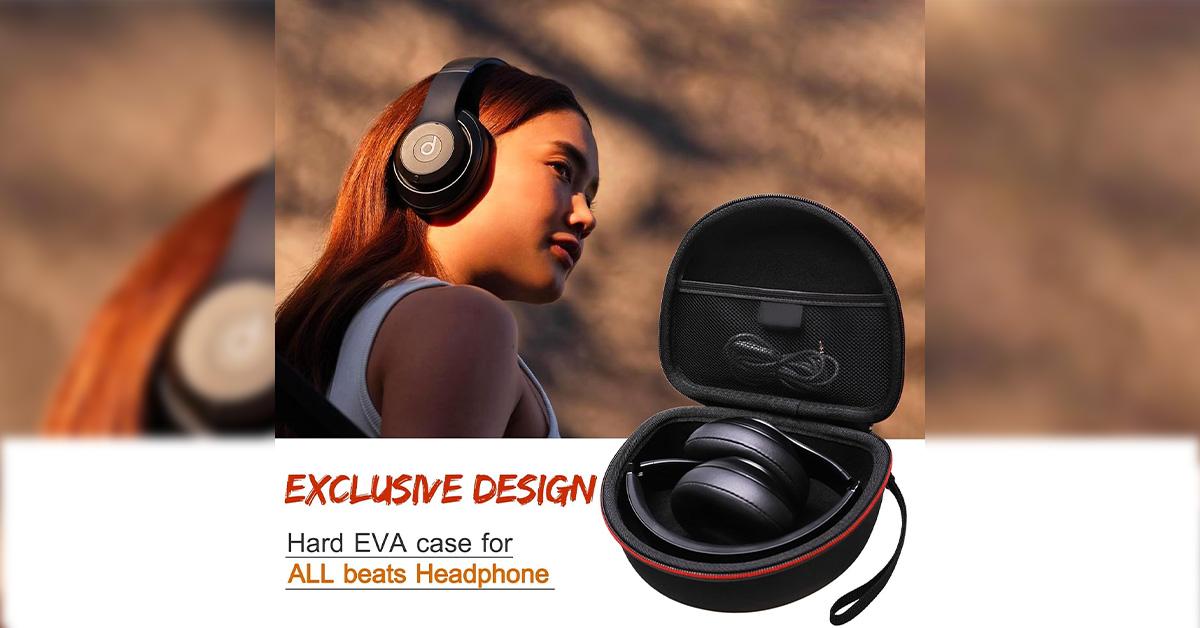
A custom EVA headphone case OEM project should start with product fit, not just appearance. Audio brands need to confirm headphone dimensions, headband clearance, earcup protection, internal storage, material choices, branding details, and bulk order requirements before sampling or production.
Key Takeaways
- A headphone EVA case should be designed around the actual headphone structure, not only a reference photo.
- Headband height, earcup thickness, folding angle, and accessory layout directly affect the case mold and inner cavity.
- PU exterior, velvet lining, mesh pockets, zipper opening, and logo placement should be confirmed during the sample stage.
- For OEM orders, buyers should prepare dimensions, samples or 3D files, color options, logo artwork, packaging requirements, and target quantity.
- A real sample is important before bulk production because small changes in inner height, zipper tension, or logo position can affect user experience.
For audio brands developing protective packaging for headphones, a custom EVA headphone case should be designed around product size, earcup shape, cable storage, accessory layout, and brand presentation.
What Is a Custom EVA Headphone Case?
A custom EVA headphone case is a molded protective case designed to fit a specific headphone product, usually with a semi-rigid or hard EVA shell, outer covering material, soft inner lining, zipper closure, and internal storage features. Unlike a generic headphone carrying case, an OEM headphone case is developed around the actual product size, usage scenario, retail positioning, and brand requirements.
For audio brands, the case may need to protect over-ear headphones, foldable Bluetooth headphones, gaming headsets, or premium audio products during shipping, retail display, travel, and daily use. The design is usually not limited to one external shape. Buyers may choose different outer materials such as PU, polyester, Oxford fabric, or textured fabric, depending on the target market and appearance requirements. Inside the case, velvet lining, microfiber, mesh pockets, elastic straps, or shaped inserts can be used to reduce scratches and organize accessories.
A typical custom EVA headphone case includes several functional parts. The molded EVA shell gives the case its shape and helps resist compression. The outer material improves appearance and surface feel. The lining protects the headphone surface from direct friction. The zipper controls opening and closing convenience. The mesh pocket or elastic band helps store cables, adapters, manuals, or small accessories.
The key point is that a custom EVA headphone case OEM project should not begin with the question, “What case size do you have?” It should begin with, “What headphone structure do we need to protect, and how will the user store it every day?” That difference is what separates a simple storage pouch from a product-specific OEM case.
Why Audio Brands Need Product-Specific Headphone Case Design
Audio brands should use product-specific headphone case design because headphones are not standard rectangular products. A headset may look simple from the outside, but its headband curve, earcup angle, cushion thickness, folding structure, and cable position can all affect how the case should be shaped. A universal case may fit many models loosely, but it often cannot provide stable positioning, clean presentation, or a premium user experience.
For over-ear headphones, the earcups are usually the most important protection area. If the inner cavity is too wide, the headphones may move inside the case during transport. If the cavity is too shallow, the zipper may feel tight when closing. If the headband clearance is not considered, the top area of the case may press against the headphone frame. These problems may not be obvious in a product photo, but they become clear during sample fitting.
Different audio products also require different storage logic. A Bluetooth headphone may need space for a charging cable. A gaming headset may need more room around the microphone area. A foldable headphone needs a case designed around the folded size, not the open size. A premium audio product may require a softer lining and a cleaner logo finish because the case becomes part of the brand experience.
For brands selling through retail, e-commerce, distributors, or Amazon channels, the case also affects perceived value. A well-fitted case can make the product feel more complete. It can also reduce after-sales complaints related to storage inconvenience, loose accessory placement, or surface scratches. This is why a custom headphone case for audio brands should be treated as part of the product development process, not only as an accessory.
Key Size and Fit Requirements for Custom EVA Headphone Cases
The most important part of custom EVA headphone case design is fit. Buyers often provide a headphone model name, product photo, or general size, but this is not always enough for accurate case development. From a factory engineering perspective, the final case structure depends on detailed measurements and how the headphone sits inside the cavity.
The headband height and curve should be checked first. Some over-ear headphones have a tall headband that requires more inner height. Others have a lower folding profile but wider earcups. The earcup diameter and thickness are also important because they determine how deep the main cavity should be. If the earcups are soft or padded, the lining should protect the surface without creating too much compression.
Foldable and non-foldable headphones require different design logic. A foldable model may need a compact oval or rounded case, while a non-foldable headset may require a larger shell and more stable support. The designer also needs to consider whether the headphone cable, charging cable, adapter, user manual, or small accessories should be stored inside the case.
For one project, a buyer may only need a simple lid-side mesh pocket. For another project, a shaped insert, elastic strap, or separate accessory compartment may be more suitable. A custom EVA headphone case OEM project should confirm these details before mold development, because changing the internal layout after sampling may affect the case size, zipper line, and production cost.
| Buyer Information | Why It Matters |
|---|---|
| Headphone length, width, and height | Determines the outer case size and inner cavity |
| Headband height and curve | Affects shell depth and top clearance |
| Earcup diameter and thickness | Affects inner support and movement control |
| Folded or unfolded structure | Determines the final storage layout |
| Cable and accessory list | Affects mesh pocket or compartment design |
| Logo position | Affects mold, patch, printing, or zipper puller planning |
| Quantity and color options | Affects material sourcing and production planning |
For buyers asking how to design a custom EVA headphone case, the safest starting point is to provide either a physical headphone sample, a 3D file, or detailed drawings with dimensions. A reference product can help explain style direction, but it should not replace fit confirmation.
Protective Structure: EVA Shell, Lining, Insert, and Zipper
A good EVA headphone case with foam insert or inner support structure should protect the headphone, keep accessories organized, and remain easy to open and close. The protective effect does not come from one material alone. It comes from the combination of molded EVA shell, outer material, inner lining, pocket layout, zipper quality, and the accuracy of the internal fit.
The molded EVA shell is the main structural layer. It helps the case maintain its shape and provides resistance against light compression during storage, shipping, and travel. For headphone cases, the shell should be strong enough to protect the earcups and headband, but not so bulky that the case becomes inconvenient to carry. The shell depth should match the headphone’s real profile, especially for over-ear or foldable designs.
The outer material affects both appearance and durability. PU is often selected when the buyer wants a clean retail look, smooth surface, and stronger brand presentation. Fabric options such as polyester or Oxford may be considered for more casual, outdoor, or cost-sensitive projects. The outer material should be selected together with logo method, color options, and target retail positioning.
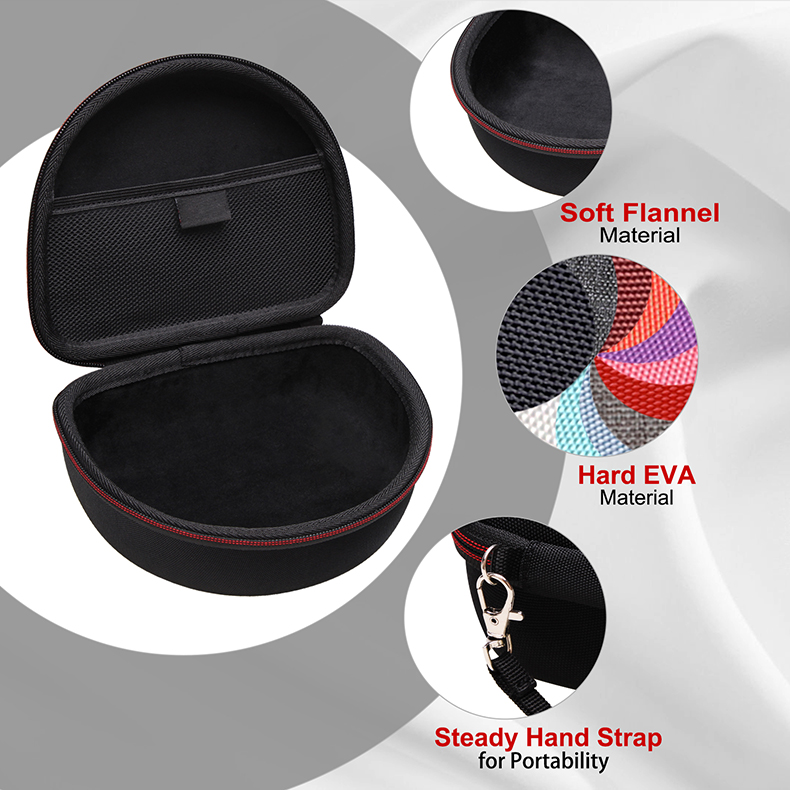
Inside the case, lining plays a different role. Velvet lining is commonly used when the headphone surface is scratch-sensitive or when the buyer wants a softer hand feel. Mesh pockets can be added on the lid side for charging cables, adapters, or manuals. Elastic straps may help hold small accessories in place. The zipper should also be considered carefully because headphone cases are opened and closed frequently.
A reliable OEM headphone case solution should combine a molded EVA shell, soft lining, stable zipper structure, and internal organization based on the actual headphone model.
For material performance discussions, hardness, foam behavior, and lining selection should be treated as project-dependent specifications. Standards such as ASTM D2240 for durometer hardness and ISO 1798 for flexible cellular polymeric materials can be used as testing-method references when specific material data is required. When buyers require formal material data, the testing method and available documentation should be confirmed during the quotation or sample stage.
Material Options for OEM Headphone Cases
Material selection affects cost, appearance, protection, user feel, and brand positioning. In an OEM headphone case project, buyers should not choose materials only by looking at a product photo. The same case shape can feel very different depending on the exterior surface, inner lining, zipper quality, and logo application.
PU exterior is a common choice for audio brands that want a cleaner and more retail-ready appearance. It can provide a smooth, modern look and works well with certain logo methods, such as rubber patch logos, debossing, or metal plate branding. For headphone products positioned as premium accessories, PU can make the case look more finished than a basic fabric surface.
Polyester and Oxford fabric are often used when the buyer wants a more durable, practical, or cost-balanced solution. These materials may be suitable for travel storage, daily carrying, and larger volume orders. The final choice depends on the surface texture, color availability, abrasion requirements, and the buyer’s target price range.
Velvet lining, microfiber, or brushed fabric can be used inside the case to reduce direct friction against the headphone surface. For headphones with glossy plastic, coated surfaces, metal parts, or leather-like ear cushions, the lining should be selected carefully. A lining that looks attractive in photos may not always be the best option if it creates too much lint, friction, or compression.
Mesh and elastic materials are usually used for internal organization. A lid-side mesh pocket can store cables, adapters, manuals, or small parts without interfering with the main headphone cavity. Buyers can also review Pengtour’s EVA case customization options when comparing material, lining, zipper, and branding choices before sample development.
| Material / Component | Best For | Buyer Consideration |
|---|---|---|
| PU exterior | Premium retail look, smooth appearance | Works well with clean branding and color options |
| Polyester fabric | Cost-balanced bulk orders | Suitable for practical daily-use cases |
| Oxford fabric | Durable travel or outdoor use | Good when abrasion resistance matters |
| Velvet lining | Scratch-sensitive headphone surfaces | Soft hand feel, premium inner presentation |
| Mesh pocket | Cable and adapter storage | Keeps accessories away from the main cavity |
| Elastic strap | Small accessory control | Helps reduce movement of small parts |
| Rubber patch logo | Strong brand visibility | Suitable for sporty, lifestyle, or audio accessory branding |
The best material combination depends on the headphone structure, buyer’s target market, expected order quantity, and brand positioning. For this reason, material confirmation should happen before final sample approval, not after bulk production starts.
Branding Options for Custom Headphone Cases
Branding is an important part of a custom headphone case OEM project because the case is often the first accessory users see after opening the product package. A well-selected logo method can improve product identity, but the wrong method may look inconsistent, wear poorly, or increase cost without improving value.
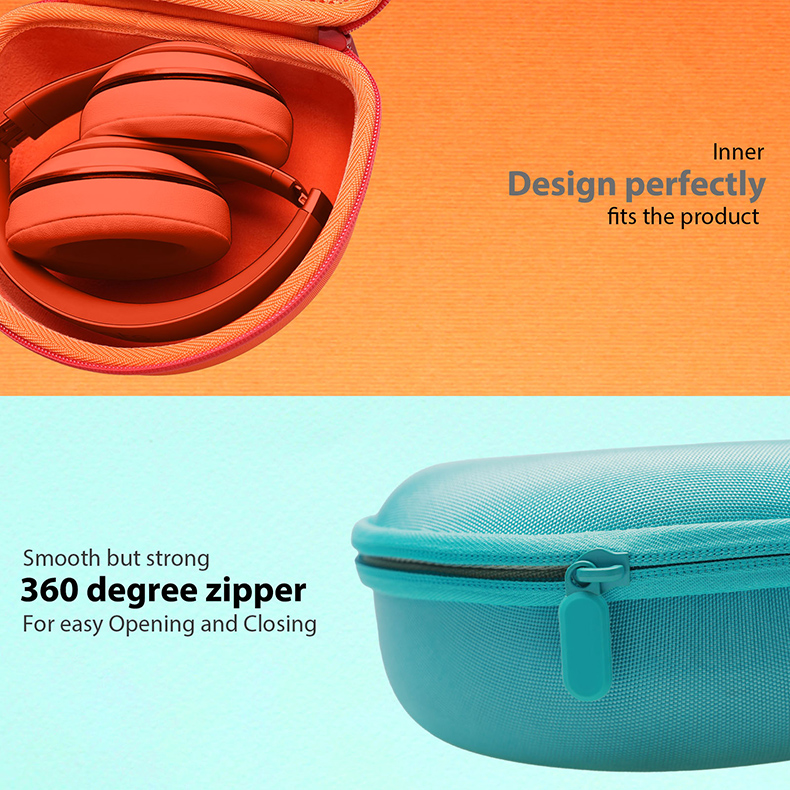
Rubber patch logos are suitable for many headphone cases because they create a visible brand element on the outer surface. They can work well with PU or fabric exteriors, especially when the buyer wants a lifestyle, sport, or consumer electronics look. For a headphone case with blue, orange, and black color options, the rubber patch position and color contrast should be reviewed during sampling to make sure the logo looks consistent on every color.
Silk screen printing is usually a cost-friendly option for simple logos. It may work well when the logo is flat, the surface is suitable, and the buyer wants a clean design. However, printing should be evaluated based on material texture and expected use conditions. It is not always the best choice for textured or heavily curved areas.
Embossed or debossed logos are often used when the buyer wants a more subtle and premium appearance. They may be suitable for PU surfaces or certain structured materials. Metal plate logos can create a stronger retail impression, but they may also increase cost and require careful placement. Custom zipper pullers can add small but useful branding detail, especially for premium or gift-set headphone packaging.
The logo method should be selected based on material, brand position, order quantity, budget, and sample approval. Buyers should provide logo files in AI, PDF, SVG, or other workable vector formats whenever possible. Before bulk production, logo size, placement, color, and durability expectations should be confirmed through samples.
What Buyers Should Prepare Before Requesting a Quote
Before requesting a formal quotation, buyers should prepare enough project information for the supplier to understand the structure, materials, branding, packaging, and order plan. A custom EVA headphone case OEM quote is not only based on the outside size. It depends on the mold or pattern work, material selection, lining, zipper, logo method, color options, quantity, and packaging requirements.
The first item to prepare is the headphone sample, 3D drawing, or detailed dimensions. A sample is especially helpful when the headphone has a curved headband, thick ear cushions, foldable structure, or irregular profile. If a physical sample is not available, the buyer should provide product length, width, height, earcup diameter, earcup thickness, and folded size if applicable.
The second item is the accessory layout. Buyers should confirm whether the case needs to store charging cables, adapters, manuals, replacement ear pads, or other small parts. If accessories are included, the supplier can decide whether a mesh pocket, elastic band, or separate compartment is needed.
The third item is branding and appearance. Buyers should provide logo files, color requirements, preferred exterior material, lining preference, and packaging direction. Quantity also matters. A project with three colors and 150 pieces per color requires different planning compared with a single-color large-volume order.
Before pricing, buyers can request a formal factory quote with headphone dimensions, sample photos, logo files, target quantity, color requirements, and packaging expectations.
| RFQ Information | Example |
|---|---|
| Headphone type | Over-ear Bluetooth headphone, gaming headset, foldable headphone |
| Product size | L × W × H, earcup thickness, headband height |
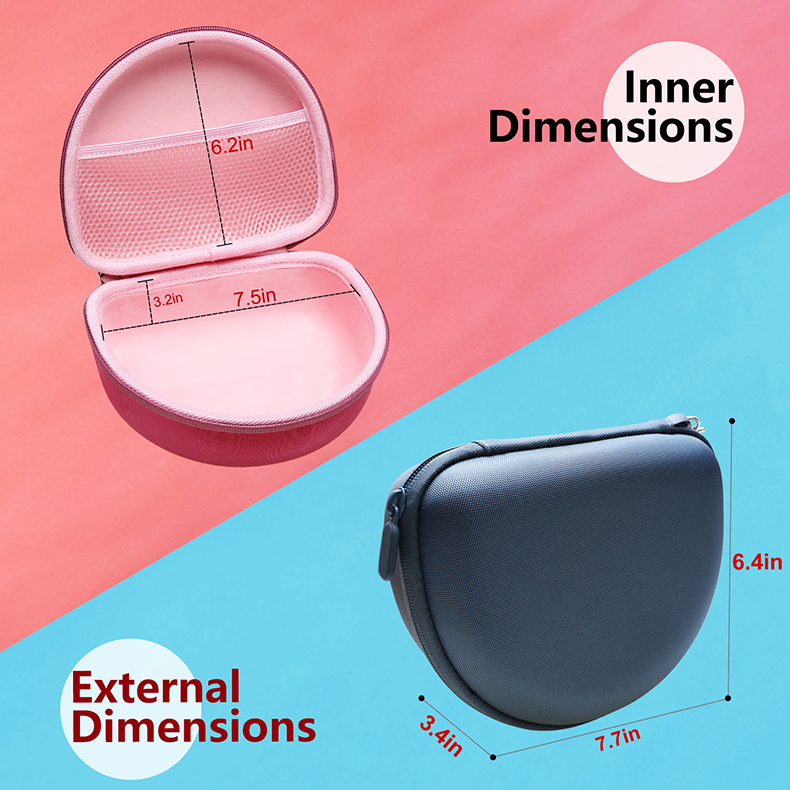
| Reference case size | 7.7 × 6.4 × 3.4 inches, if applicable |
| Structure requirement | Hard EVA shell, PU exterior, velvet lining |
| Internal storage | Mesh pocket, elastic strap, accessory compartment |
| Logo method | Rubber patch logo, printing, debossing, metal plate |
| Color options | Blue, orange, black, or buyer-specified colors |
| Quantity | 150 pieces per color, 450 pieces total, or other order plan |
| Packaging | OPP bag, color box, retail box, carton packing |
| Sample requirement | 3D modeling, sample development, revision confirmation |
A clear RFQ package helps reduce back-and-forth communication and improves quote accuracy. It also helps the supplier judge whether the project needs 3D modeling, mold development, material sourcing, special logo tooling, or packaging design support.Buyers preparing dimensions, materials, quantities, and packaging details can use this custom headphone case pricing and RFQ checklist before requesting a formal quotation.
Common Design Mistakes in EVA Headphone Case Projects
One common mistake in EVA headphone case projects is leaving too much internal movement. Buyers may assume that a slightly larger case is safer because it is easier to fit the headphone. In reality, excessive space can allow the product to move inside the case during transport. This can reduce the protective effect and make the product feel less stable when the user opens the case.
Another mistake is ignoring cable and adapter storage. Many headphone products include charging cables, adapters, manuals, or small accessories. If these are not considered early, the final case may protect the headphone but fail to organize the full product set. A lid-side mesh pocket or elastic strap can solve this issue, but it must be planned before the internal layout is finalized.
Lining selection is also important. Some buyers choose lining only by color or appearance. However, for headphones with glossy or coated surfaces, the lining should reduce scratching and friction. Velvet lining is often used for a softer inner feel, but the final selection should match the product surface, budget, and target market.
A real project can show why sample confirmation matters. In one custom EVA headphone case OEM project, the buyer used a hard-shell case for Beats-style over-ear Bluetooth headphones as the product reference. The case size was approximately 7.7 × 6.4 × 3.4 inches, with a molded EVA shell, PU exterior, velvet lining, zipper closure, and a mesh pocket on the lid side for cables or small accessories.
The project started with 3D modeling and sample development. The sample stage usually takes about 7–15 days, depending on structure complexity, material confirmation, and branding details. In this project, sample revision was needed before moving forward, which is common when the buyer needs to confirm fit, internal height, zipper feel, color appearance, and logo placement.
The buyer planned three color options: blue, orange, and black. Each color was expected to be produced at about 150 pieces, for a total quantity of around 450 pieces. Because this was a multi-color order at an early production stage, the main challenge was not only the protective structure, but also keeping the PU surface, velvet lining, molded shape, zipper alignment, rubber patch logo position, and overall appearance consistent across the three colors.
This type of project should not move to bulk production until physical sample details are reviewed. Small changes in inner height, lining thickness, zipper tension, mesh pocket position, or logo placement can affect both product protection and user experience.
How Pengtour Supports OEM/ODM EVA Headphone Case Projects
For B2B buyers, a custom EVA headphone case OEM project should follow a structured development process. The goal is not only to produce a case that looks similar to a reference product, but to create a manufacturable design that fits the headphone, supports the accessories, matches the brand identity, and remains consistent during bulk production.
Pengtour supports custom case development through requirement review, material selection, structure design, pattern or mold development, raw material preparation, laminating, cutting, pre-heating, thermoforming or compression molding, trimming, stitching, logo application, inspection, and packaging. This process is especially important for headphone cases because the final result depends on both molded structure and sewn assembly details.
Step 1: Requirement Review
The first step is to review the headphone type, product dimensions, reference case, material direction, logo requirement, color plan, packaging expectation, and target quantity. For example, a three-color order with blue, orange, and black versions needs color planning before material preparation.
Step 2: 3D Modeling and Sample Development
If the project requires a product-specific shape, 3D modeling may be used before sample development. The sample stage usually takes about 7–15 days depending on structure complexity, material confirmation, and branding details. Sample revision may be needed before the buyer approves the final direction.
After the physical sample is completed, buyers should follow a custom headphone case sample approval process before confirming production scheduling.
Step 3: Material and Branding Confirmation
The buyer confirms PU exterior, velvet lining, zipper structure, mesh pocket, rubber patch logo, and color options. At this stage, the supplier should also check whether the logo position works across different colors.
Step 4: Bulk Production and Inspection
After sample approval, production can move through cutting, molding, trimming, stitching, logo application, and inspection. Quality checks should include fit, zipper smoothness, lining appearance, color consistency, logo placement, and packaging.
At Pengtour, OEM/ODM case development focuses on practical protective storage applications, from requirement review to sample confirmation and bulk production.
FAQ
Q1: What information is needed to design a custom EVA headphone case?
To design a custom EVA headphone case, buyers should provide headphone dimensions, product photos, a physical sample or 3D file if available, accessory list, preferred material, lining requirement, logo file, color options, quantity, and packaging requirements. The most important measurements include overall length, width, height, headband clearance, earcup diameter, and folded size if the headphone is foldable.
Q2: How long does a custom EVA headphone case sample take?
A custom EVA headphone case sample usually takes about 7–15 days, depending on structure complexity, material confirmation, logo method, and whether sample revision is needed. More complex projects with multiple colors, custom logo tooling, special lining, or detailed packaging requirements may need more time before final approval.
Q3: Can you make an EVA case for foldable headphones?
Yes, an EVA case can be designed for foldable headphones, but the supplier needs to confirm the folded size, earcup thickness, headband position, and accessory storage requirements. Foldable headphones often require a different inner cavity compared with non-foldable over-ear headphones.
Q4: What lining is best for headphone protection?
Velvet lining is often used for scratch-sensitive headphone surfaces because it provides a soft inner touch. However, the best lining depends on the headphone surface, target market, budget, and expected user experience. Microfiber, brushed fabric, or other soft lining materials may also be considered.
Q5: Can headphone cables and adapters be stored inside the case?
Yes. Cables, adapters, manuals, and small accessories can be stored inside the case using a mesh pocket, elastic strap, or separate compartment. The accessory layout should be confirmed before sample development so the storage area does not interfere with the main headphone cavity.
Q6: Which logo method is suitable for OEM headphone cases?
Common logo methods for OEM headphone cases include rubber patch logos, silk screen printing, embossed or debossed logos, metal plate logos, and custom zipper pullers. The best method depends on the exterior material, brand positioning, color plan, quantity, and budget. For PU headphone cases, a rubber patch logo can be a practical option when the buyer wants stronger visual branding.
Start Your Custom EVA Headphone Case Project
If you are preparing a new headphone case project, Pengtour can help review your headphone dimensions, color options, logo method, lining material, packaging requirements, and order quantity. You can request a formal factory quote or review our custom EVA headphone case solution for OEM/ODM development.