

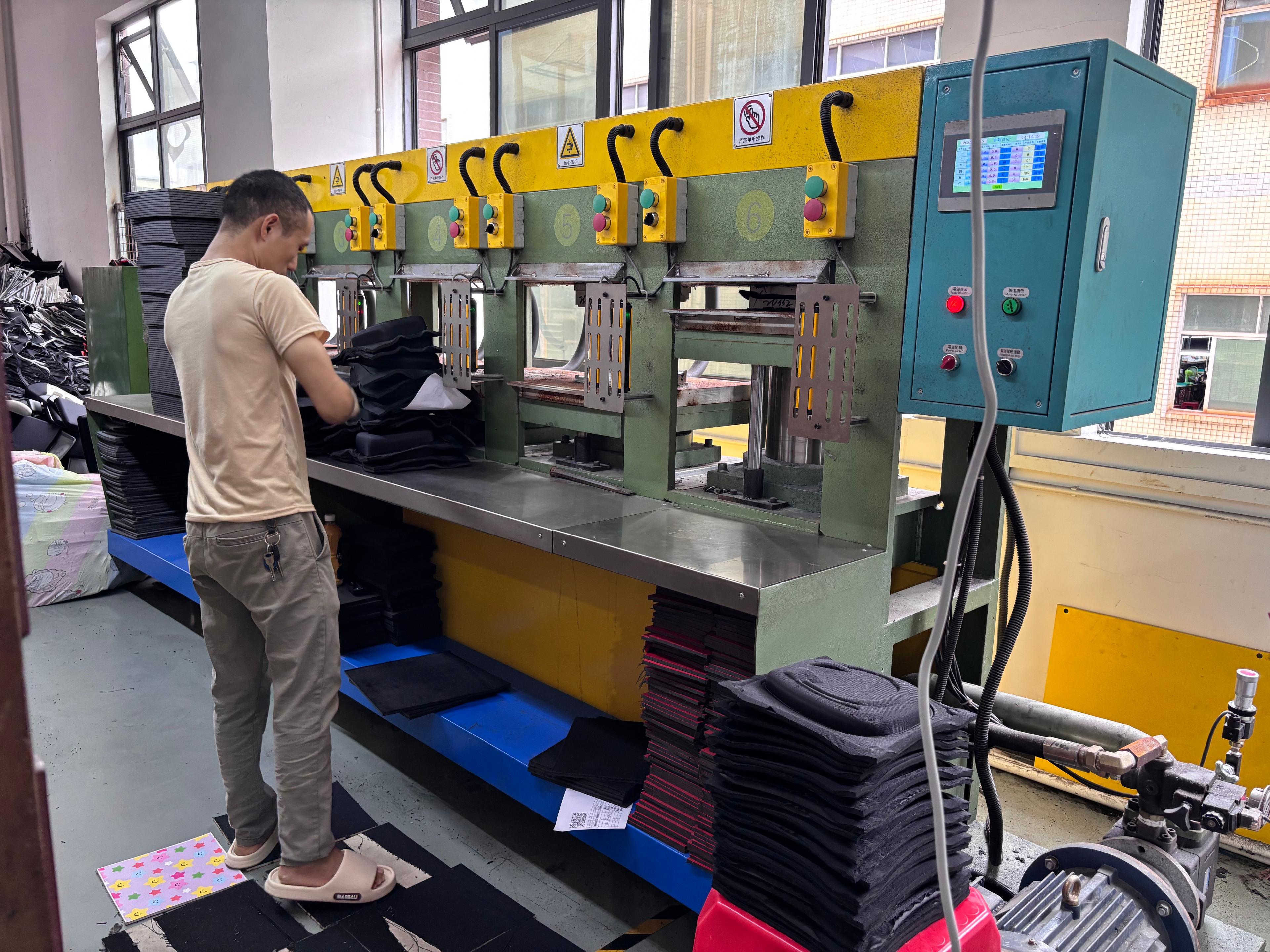
Overview of the Manufacturing Workflow
-
Phase 1: Concept validation and digital CAD rendering.
-
Phase 2: Low-cost prototype sampling utilizing raw foam blocks or temporary sample tooling.
-
Phase 3: CNC fabrication of production-grade, matched aluminum tooling.
-
Phase 4: High-temperature compression molding and precise die-cutting.
-
Phase 5: Automated sewing, hardware assembly, and final quality control (QC) inspection.
1. Step-by-Step: The Industrial Custom EVA Case Design Process
Executing a successful packaging project requires strict adherence to a multi-stage engineering validation sequence. Below is the standard production flow applied in professional B2B settings.
Step 1: Technical Blueprinting & CAD Optimization
The process begins by stabilizing the digital dimensions of the target hardware. Using specialized CAD platforms, industrial designers establish the draft angles and parting lines of the outer shell. This ensures that the case can cleanly release from the mold during production without warping the exterior fabric.
For the buyer-facing requirements that should be confirmed alongside the technical blueprint, see custom EVA case design requirements.
Step 2: Prototype Foam Milling (Pre-Tooling Verification)
Before cutting permanent steel or aluminum tooling, engineers often produce a non-molded physical sample. Using a CNC knife plotter or laser cutting machine, raw polyurethane foam is sculpted to mimic the internal cavity layout. This fast-turn prototype allows the client to test the physical arrangement of their equipment before finalizing the tooling budget.
Step 3: Production Tooling Fabrication
Once the prototype sample is approved, the project transitions to toolmaking. Machinists translate the finalized CAD paths into G-code for precision CNC milling centers, engraving the exact negative and positive profiles of the case into solid metal blocks.
Step 4: Sheet Lamination & Thermal Forming
Raw EVA resin sheets are laminated with the chosen exterior fabric (e.g., 600D polyester) and interior lining via a high-temperature rolling process. These composite sheets are then loaded into infrared pre-heating ovens until the polymer reaches its optimal softening point.
Step 5: Compression Molding & Punching
The heated sheet is rapidly transferred to hydraulic presses containing the custom EVA case molds. The press clamps down with 50 to 100 tons of force, forcing the softened material into every engraved detail. After a cooling cycle, the hardened shell is extracted and moved to a hydraulic die-cutting machine to trim away excess flashing.
2. Deep Dive: How Are Custom EVA Case Molds Developed?
Understanding thermal forming mold engineering is crucial for calculating long-term production tooling return-on-investment (ROI). Unlike plastic injection molds that require intricate gating and cooling channels, EVA compression molds operate on a matched-die press system.
During the initial design verification phase, manufacturers distinguish between temporary prototype molds (often milled from high-density wood, plaster, or sample-grade aluminum alloy) and mass-production tooling. For volume manufacturing, aircraft-grade forged or cast aluminum blocks are selected and processed via multi-axis CNC machining to ensure superior hardness and structural stability under repeated thermal cycling.
The production tooling relies on aluminum mold thermoforming because aluminum exhibits exceptional thermal conductivity, ensuring uniform heat dissipation across the entire forming surface. The mold set consists of a "male" plug and a "female" cavity.
During development, engineers must strategically incorporate micro-vent holes throughout the mold design. These vents, typically measuring between 0.5mm to 0.8mm in diameter, allow trapped air to escape rapidly during high-pressure closure while preventing the softened EVA compound from bleeding through the seams. Without precise venting, pockets of trapped air cause surface blistering and incomplete fabric adhesion, compromising the structural rigidity of the finished shell.
3. Tooling Classifications: Engineering Comparison
B2B buyers should evaluate the distinct mold classifications available during the product development cycle to optimize their capital expenditures.
| Tooling Property | Prototype Sample Molds | Production Aluminum Tooling |
| Material Composition | High-Density Epoxy Resin / Wood / Soft Alloy | Aircraft-grade 6061 Aluminum |
| Dimensional Tolerance | ±1.0 mm | ±0.2 mm |
| Surface Finish Quality | Standard / Textured Lack | Mirror Polish / Sandblasted Texture |
| Expected Lifespan | 50–100 Cycles | 50,000–100,000 Cycles |
| Primary Deployment Phase | Initial proof-of-concept testing | High-volume mass production runs |
4. Post-Molding Assembly and Quality Controls
Once the core EVA shells pass through the die-cutting department, they enter the sewing and assembly lines. This is where the separate top and bottom halves are unified into a functional commercial product.
Assembly Process Insight: When assembling dual zippers for precision instruments, standard single-needle sewing machines can easily cause fabric wrinkling due to uneven material tension. To combat this, production lines deploy automated JUKI dual-needle edge-binding sewing machines equipped with custom positioning jigs. This setup maintains a strict stitch density of 7 to 8 stitches per inch, ensuring that the zipper seams can withstand continuous tensile pull forces exceeding 250N without unraveling.
Advanced edge-binding techniques are utilized to attach high-tensile zippers (such as reverse-coil YKK or water-resistant PU-coated zippers). The perimeter stitching must maintain uniform tension; otherwise, the unequal stress will cause the EVA shell to twist slightly, resulting in an asymmetrical alignment when the case is zipped closed. Quality control inspectors verify every batch using industrial pull-testers to ensure long-term durability in rugged field environments.
Custom EVA Case Design Process FAQs
Why is aluminum preferred over steel for custom EVA case molds?
Aluminum transfers heat significantly faster and more uniformly than steel. Because EVA thermoforming requires precise temperature regulation to prevent fabric burning or incomplete curing, aluminum molds ensure consistent cycle times and stable product dimensions.
Can a single mold accommodate different exterior colors or fabrics?
Yes. Once an aluminum compression mold is fabricated, it can process various fabric laminates (such as different colors of 600D nylon or PU leather), provided the base sheet thickness remains identical to prevent closing pressure variances.
What is the role of the "parting line" in the design process?
The parting line determines where the upper and lower halves of the mold meet. Correctly positioning this line ensures easy extraction of the molded part and dictates where the zipper track will be sewn, directly affecting the structural symmetry of the case.
Do you perform automated testing on custom prototypes?
Yes. Our testing facilities execute initial physical evaluations on prototype samples, including environmental chamber baking (to test adhesive stability at temperatures up to 70°C), drop testing, and continuous zipper cycling.
For a project that needs prototype testing and mold development, review our custom EVA case development options before confirming the production specification.