

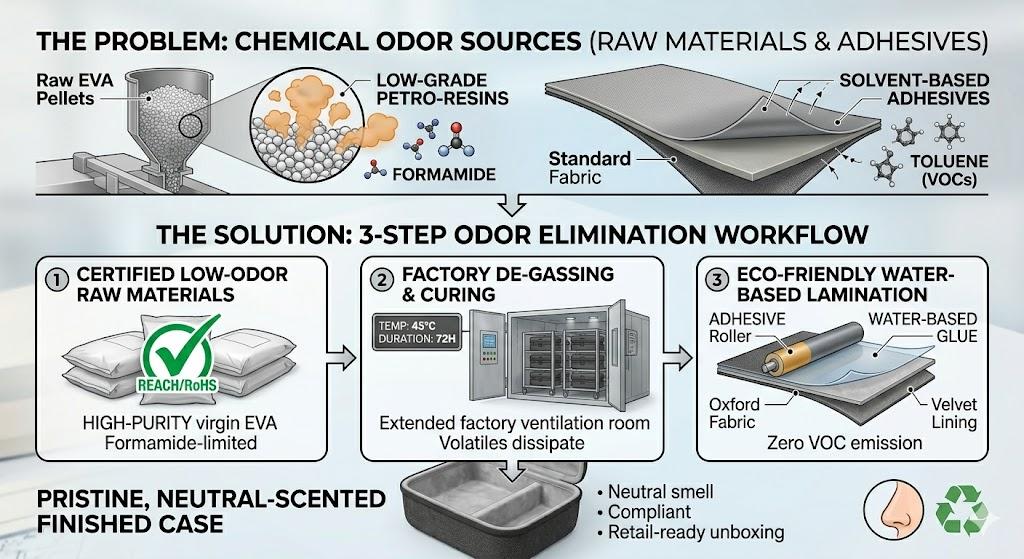
When global brands and procurement managers source custom EVA cases, a common and frustrating issue is discovering a pungent, vinegar-like "chemical smell" upon opening a fresh shipping container. For premium brands, this off-gassing odor can severely damage the consumer's unboxing experience and raise immediate compliance red flags.
Understanding where this odor comes from and how a high-quality manufacturing process prevents it is essential for delivering a retail-ready product.
Why Do New EVA Products Smell?
The typical "EVA odor" is not actually from the EVA resin itself. Instead, it is caused by two main factors during standard, low-cost production:
-
Formamide Residue: Formamide is a common chemical blowing agent used during the raw foam expansion process. If the foam is not properly treated, trace amounts remain trapped in the material's microcells.
For a broader material-safety explanation, review whether EVA foam is toxic before interpreting odor or residue findings.
-
Solvent-Based Adhesives: Traditional factories often use cheap, toluene- or benzene-based solvent glues to laminate the exterior fabric to the inner EVA skeleton framework. These solvents continuously emit volatile organic compounds (VOCs).
3 Pillars of Factory Odor Elimination
A premium manufacturing process actively eliminates these chemical odors before the products ever leave the facility. Here is the strict three-step protocol required to guarantee a neutral-scented, high-quality finish:
[ Low-Odor EVA Material ] ➔ [ 48-72 Hours Oven De-gassing ] ➔ [ Eco-Friendly Water-Based Glue ] ➔ Pristine, Odorless Finish
1. Sourcing Certified, Low-Odor Raw Materials
The foundation of an odorless case begins with chemical compliance. Premium case manufacturers utilize high-purity, medical- or consumer-grade raw EVA resins. These materials feature low-formamide formulations that strictly adhere to international environmental and safety testing standards, including REACH, RoHS, and California Proposition 65.
2. Dedicated Factory De-gassing Protocols
After the internal EVA skeleton cores are thermoformed under high heat, they must not be packed immediately. Responsible factories transfer the molded components to a dedicated, heavily ventilated de-gassing room or curing oven for 48 to 72 hours. This controlled exposure allows any residual gases from the foaming process to dissipate naturally and completely.
3. Transitioning to Water-Based Glues
The most effective way to eliminate harsh chemical odors is to replace volatile solvent adhesives entirely. Premium production lines use eco-friendly, water-based glues during the multi-layer lamination process (bonding the outer fabric, the internal EVA framework, and the inner velvet lining together). Water-based adhesives provide a strong, permanent bond without releasing harmful VOCs or lingering toxic smells.
Conclusion
A premium custom case should protect your product, not compromise its presentation with a chemical odor. By partnering with a manufacturer that implements certified raw materials, extended factory de-gassing, and eco-friendly water-based lamination, you ensure your custom cases arrive safe, compliant, and pristine for your end-users.
For a case project with material, odor-control, and finishing requirements, review our custom EVA case development options before sample approval.