

A logo file is not enough to define bag logo placement. A mark that looks fine on a flat layout can end up close to a pocket, interrupted by a zipper path, or hidden when a strap is in use. Before a sample moves forward, the buyer and development team need to agree on the bag panel, the nearby construction, the material under review, the artwork version, and the decision that the sample is meant to confirm.
For a custom sewn bag, logo placement is a project input. It should be recorded early enough for the team to review it with the actual structure, rather than leaving it as a note on a generic artwork file.
Start with a logo-placement brief, not a generic artwork file
The first question is not simply "Where should the logo go?" It is "What should this logo location do on this bag?" A buyer may want the mark to be easy to find when the bag is displayed, more discreet during use, or tied to a particular component such as an exterior panel, an inner label, or a zipper pull. Those are different design choices.
A useful logo-placement brief identifies:
- the bag component and the intended panel;
- the artwork version and its orientation;
- the material and surface being considered;
- nearby seams, pockets, zippers, webbing, handles, or strap anchors;
- the logo method being reviewed, if one has been discussed;
- the sample or drawing where the decision will be checked.
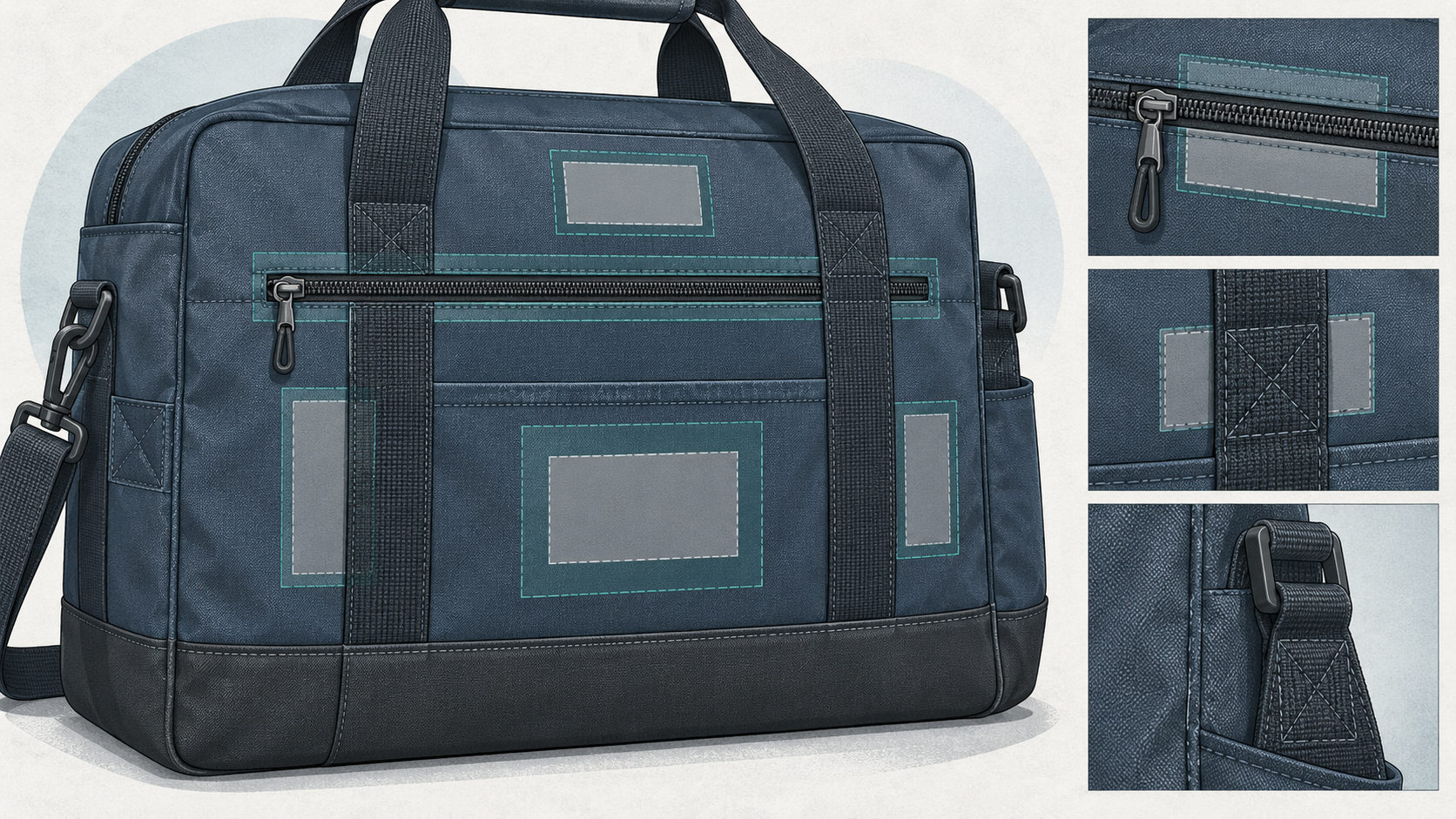
This level of detail gives sourcing, design, and sample-review teams the same reference. It also makes later revisions easier to trace when the bag structure changes.
Choose a bag panel with the construction in view
A logo position should be reviewed on the actual bag layout, not only on a front-view mockup. The visible surface may change once a pocket is added, a zipper line is routed, a side panel is folded, or a handle attachment is placed. A location can still be possible, but the project team needs to decide whether the surrounding construction supports the intended result.
Mark seams, pockets, zipper paths, and strap anchors before selecting a location
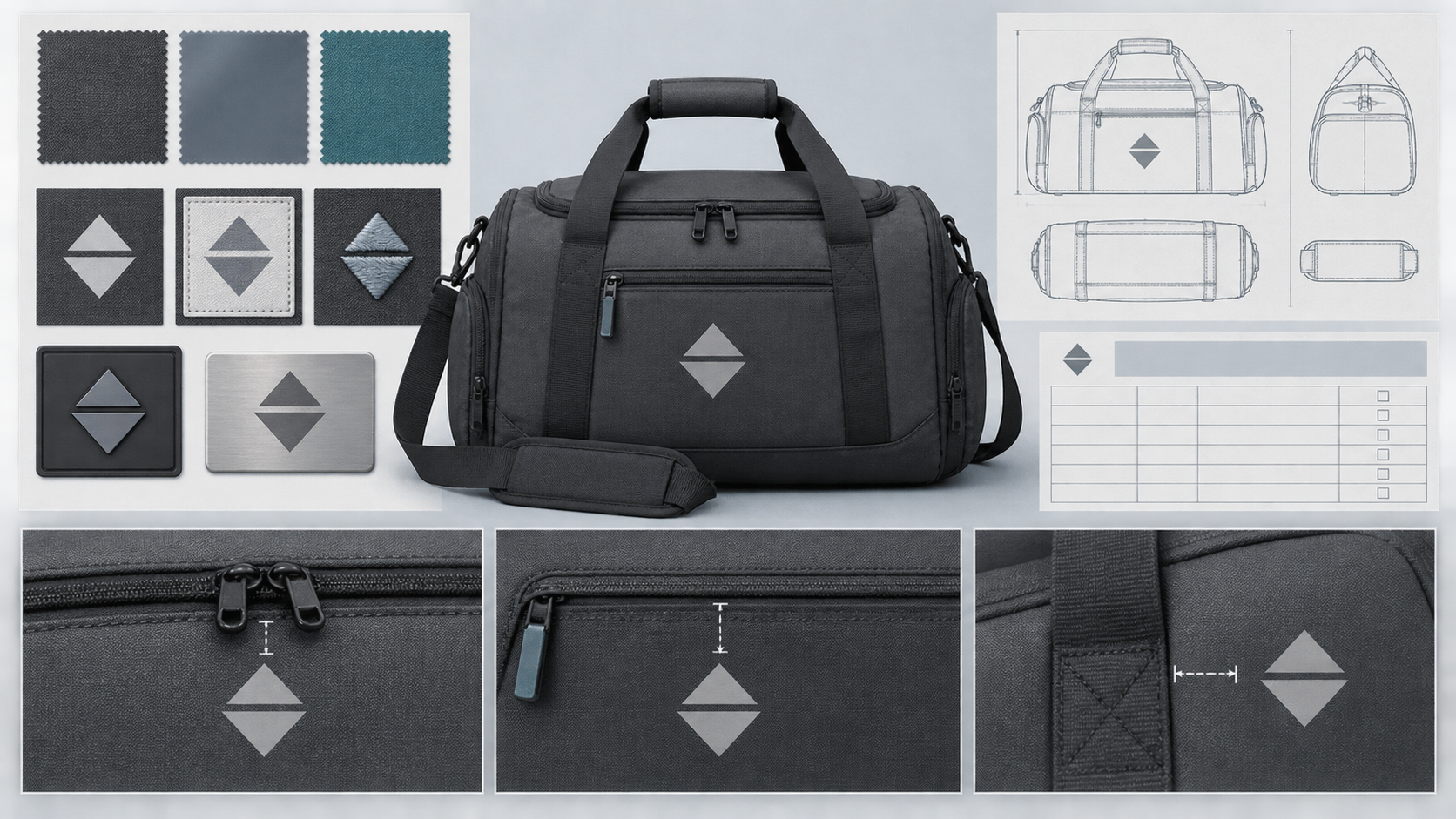
Seams, pockets, zipper paths, and strap anchors are not interchangeable details. Each one changes the usable context of a panel. Mark them on the working drawing or sample so the logo decision is reviewed with the bag structure that will actually be made.
For example, an exterior panel may be the intended branding area, while an internal pocket or handle connection needs space on the same part of the bag. There is no universal placement rule. The project team needs a clear decision about which feature has priority and how that choice will be shown in the sample.
Match the location to how the bag will be seen and used
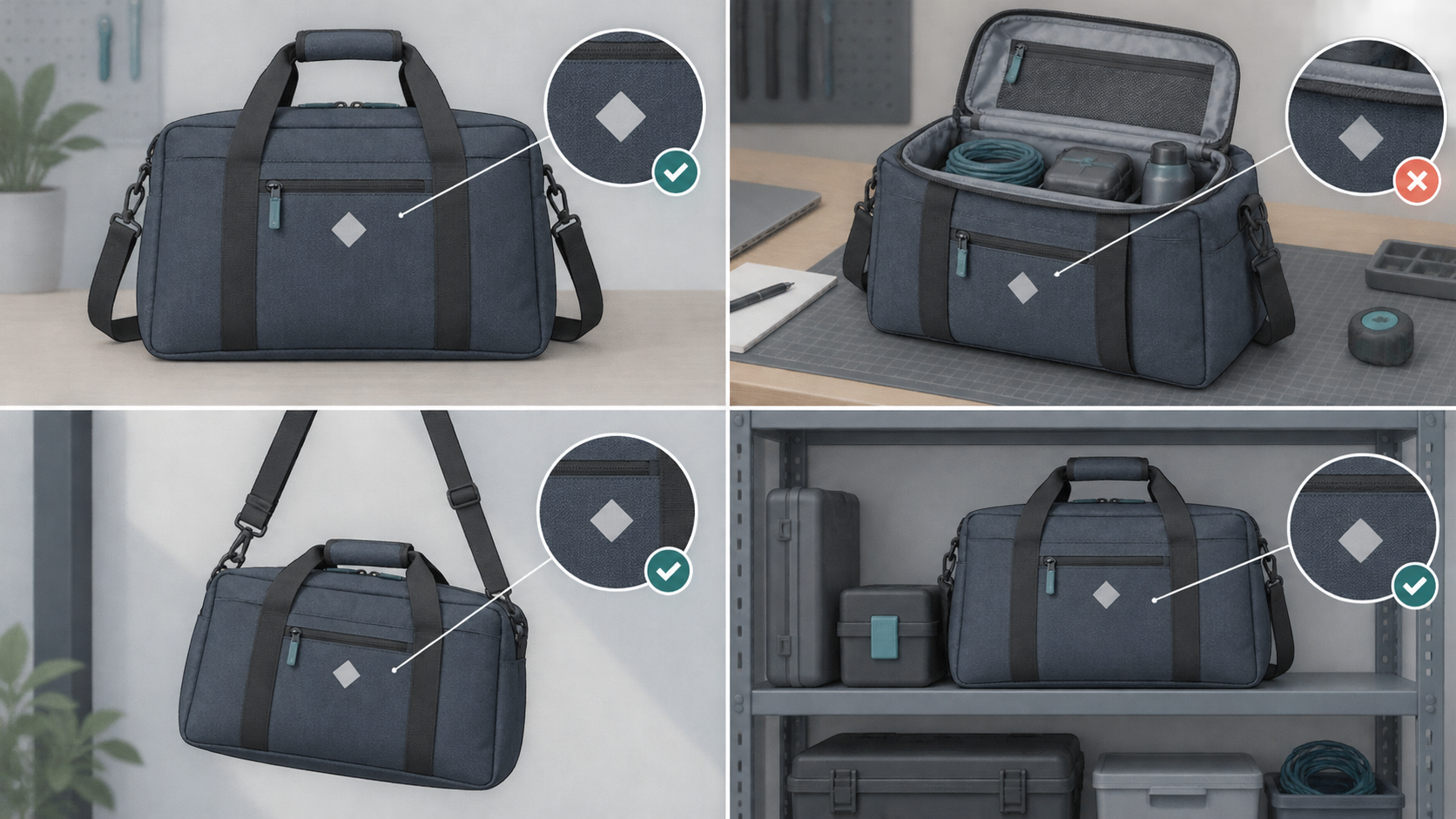
Buyers should describe the use context before choosing a logo position. A bag used for presentation may need a different visual priority from one that is usually carried, opened on a work surface, or stored with other equipment. The same bag can also have more than one relevant view: closed, open, carried, and displayed.
Instead of asking a supplier to choose a "best" location, provide the context that can guide a project discussion:
- When should the logo be visible?
- Which side of the bag is expected to face the user or audience?
- Does the position need to stay clear of a functional component?
- Is the brand mark the main exterior feature, or one part of a broader layout?
These questions keep the decision tied to the product rather than to a generic bag image. They also prevent a brand requirement from being separated from the way the bag is opened, carried, and organized.
Confirm material and logo method as one project decision
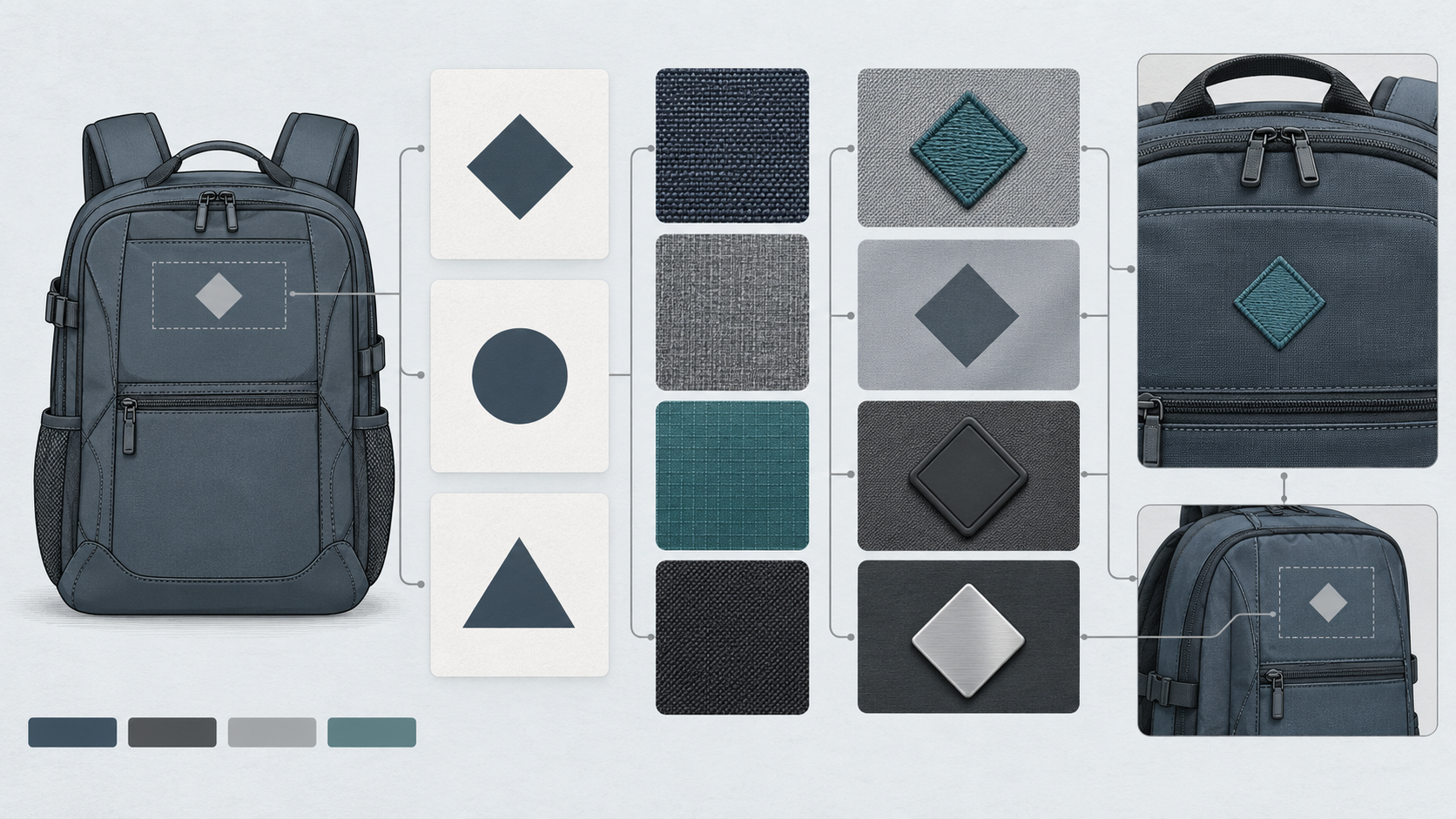
Logo placement and logo method affect one another. A smooth PU panel, woven fabric, embroidered label, metal plate, or badge can call for different review questions. Pengtour's current customization references include options such as silk screen printing, heat transfer printing, embossing or debossing, rubber badges, metal plates, embroidery, and woven labels. They are possible options, not a fixed menu for every bag.
The right method depends on the selected material, surface texture, artwork, product positioning, quantity, manufacturing process, and project requirements. A buyer can narrow the discussion by providing the logo file, a preferred visual direction, the intended material, and the part of the bag where the mark is expected to appear. The final combination should be confirmed through the approved development and sample process.
Put logo placement into the tech pack and sample review
A logo location should appear where the rest of the product decisions are documented. Add it to the drawing, annotation, or requirement record used for the project. A bag tech pack gives the team a place to connect artwork direction with the bag panel and construction notes.
Sample review is the next check. A custom bag sample approval checklist can help the buyer keep logo placement separate from, but connected to, the rest of the sample decision. Later bag quality control reviews the finished bag against agreed project requirements. It does not replace the earlier decision about where the logo belongs.
When the placement has changed during development, record the updated reference rather than relying on an earlier artwork attachment. That gives the next reviewer a clear answer to what was accepted and what still needs confirmation.
A pre-sample checklist for logo placement
Use this checklist before asking for a sample review:
- Identify the exact bag panel and orientation.
- Mark nearby seams, pockets, zipper paths, handles, webbing, and strap anchors.
- Confirm the material and surface being reviewed.
- Attach the current logo artwork and version reference.
- State the logo method or note that it remains to be confirmed.
- Describe the view or use context that matters for the location.
- Name the sample, drawing, or record that will show the decision.
- Record the reviewer and any remaining open question.
Use this as a design-input checklist. It does not guarantee that one logo position or method will suit every bag.
How Pengtour can support a branded custom-bag project
For eligible custom sewn-bag projects, Pengtour can review logo requirements alongside the intended material, structure, quantity, and sample inputs. The suitable position and logo method depend on the project, so they should be confirmed through the approved development and sample process.
Buyers planning a custom project can review Functional Bags before sharing the bag structure, artwork, preferred material, and sample requirements. A quote request can then start a project discussion with those inputs in place.
FAQ
Where should a logo go on a bag?
Choose the location after reviewing the intended panel with the bag's actual construction. The project record should identify the panel, orientation, nearby seams or components, material, and sample where the decision will be checked. There is no single position that suits every bag.
What makes a bag panel usable for a logo?
A usable panel is one the project team can review with its material, surface, and surrounding construction in view. A panel may need to accommodate pockets, seams, zippers, handles, or straps, so the decision should be made on the working layout or sample rather than a generic flat image.
Should logo placement be approved before a bag sample is signed off?
Yes, treat logo placement as one of the items reviewed during development and sampling. It is separate from the full sample-approval decision, but it should be recorded clearly enough that the buyer and development team can confirm what they are reviewing.