


When choosing a custom EVA storage box manufacturer, you shouldn't just look at product displays or low quotes. For headphones, cameras, and other consumer electronics, the storage box may look good, but the first problems users may notice are: for example, the product shifts in the tray, the zipper doesn't fit the item tightly, or the final product's color doesn't match the confirmed color.
Before approving the mold, confirm that the supplier can translate your product dimensions, protection requirements, internal layout, and color requirements into reusable housing specifications. For most B2B projects, the actual workflow is as follows: confirm 2D and 3D design inputs, review the proposed structure, produce samples, install physical products, resolve size or color changes, approve samples, and then begin production. A manufacturer may be suitable for producing one type of EVA housing but not another; therefore, please use project-specific evidence rather than general statements.
What should a custom EVA protective case manufacturer show before starting the mold?
Manufacturers are not required to promise that every phone case is waterproof, shockproof, meets medical standards, or is suitable for all markets. However, they need to explain how they will assess your requirements, what aspects can be verified at the sampling stage, and what evidence they can provide before making a production commitment.
| Assessment Area | What should I ask? | What should a useful answer look like? | Warning signs |
|---|---|---|---|
| Product compatibility | Product dimensions, weight, vulnerable points, cable or accessory requirements | Two-dimensional drawings or three-dimensional models indicating clearance, preservation, and entry points. | Quoted based on casing size only |
| EVA structure | Proposed solutions for EVA core material, outer layer material, lining, zipper and inserts | The choice of materials and structure is related to the actual application and the direction of opening. | "Standard EVA", without grade, structure or sample specifications. |
| Tools and methods | Which molds require new ones, which can use existing molds, and what are the approval procedures? | There is a clear distinction between the design confirmation, mold making, sample making, modification and production stages. | Tooling commitments can be made without drawings or samples. |
| Sample evidence | Physical samples, photos of the loaded product, dimensions, closure checks, and mutually agreed observations. | Evidence related to actual products or representative loads | Only empty product images |
| Color confirmation | Color reference for outer material, lining and inner tray | Under the agreed viewing conditions, the physical color chart or material sample shall be reviewed. | Colors are confirmed based solely on an uncalibrated screen image. |
| Quality control | How will the supplier inspect the agreed dimensions, workmanship, and packaging? | A project-specific inspection checklist, including photos or records from before shipment. | A general statement regarding the quality inspection to be conducted. |
| Production handover | Approved sample, version control, packaging and shipping requirements | The approved written version of the specification. | It is impossible to determine which version was approved. |
This form is for assessment purposes only and is not proof that a supplier holds specific certifications or meets specific testing standards. Please verify independently before adopting any certificates, test reports, regulatory statements, factory audits, or target market requirements.
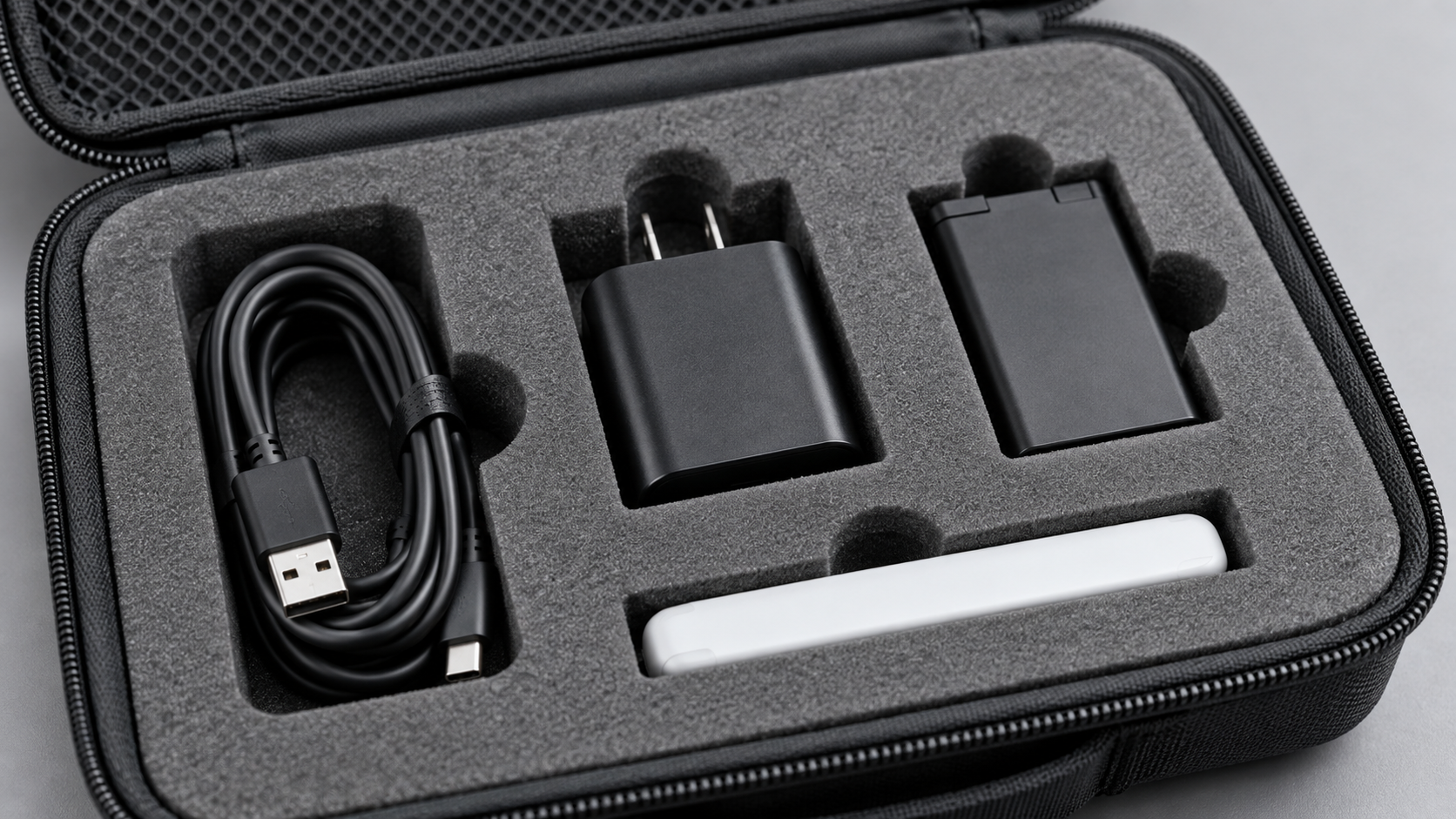
Step 1: Before comparing suppliers, clarify the needs of the case.
Supplier comparisons become unreliable when each factory has a different understanding of the same requirement. All candidate factories should be provided with the same initial briefing.
At least the following should be provided:
- The product's length, width, height, weight, and any fragile or protruding parts.
- The expected contents include cables, chargers, batteries, manuals, or accessories.
- Carrying and exposure conditions, such as office transport, retail packaging, field work, checked baggage, moisture, or repeated opening.
- The expected external dimensions or target size range.
- Required access methods: flip-top opening, top opening, storage bag, removable inner liner, or fixed compartment.
- Your brand, packaging, target market, order quantity, and required delivery date.
- Please provide any color reference information for the outer material, lining, or inner tray. Please specify whether the reference information is a physical color chart, standard color number, approved previous sample, or just a screen image.
To gain a clearer understanding of pricing, it is recommended to use a customized EVA protective case price list before requesting quotes from suppliers. Pricing is more comparable when all suppliers have access to information such as product details, layout, materials, and sample assumptions.
Step 2: Confirm the 2D drawings and 3D model before mold making.
For electronic product protective cases, drawings and models reveal the supplier's design assumptions. They should contain far more information than just the external length, width, and height. They can be used to examine the product's internal space, clearance around fragile areas, accessory locations, opening directions, zipper routing, and any cuts or fastening structures.
Before approving the design, please request the following information from the supplier:
- Reference product dimensions used in the layout.
- The cleanup plan developed for this product and its necessity.
- Inner trays or inserts used to hold products and accessories.
- Location of pressure-sensitive controls, lenses, ports, hinges, or cables.
- After the first sample, what design details can still be changed? Which changes will affect mold manufacturing?
If you are comparing multiple suppliers, provide them with the same product documentation or physical references. Otherwise, two 3D models based on different assumptions may look similar.
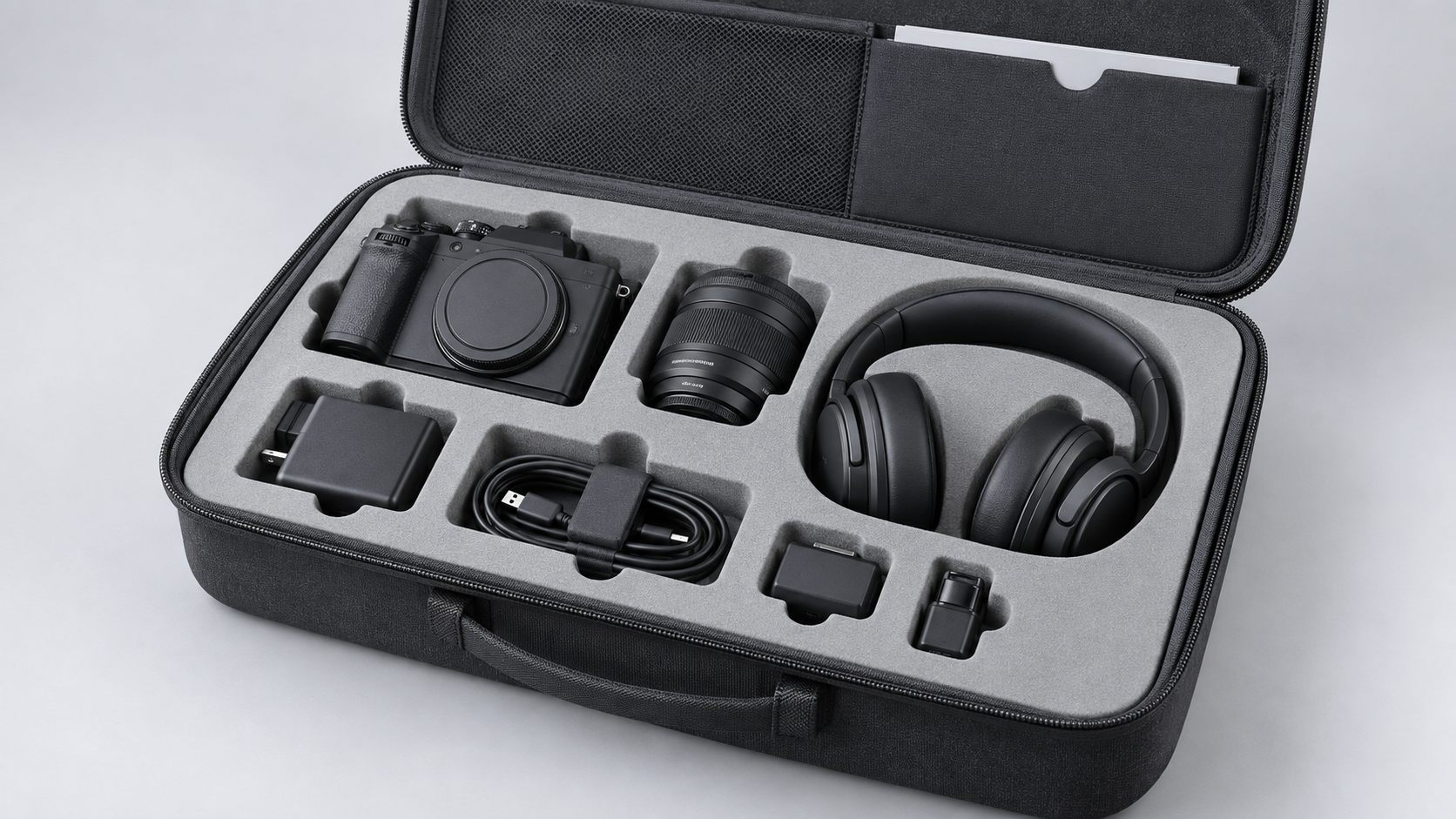
Step 3: Review the engineering response, not just the price.
An effective supplier response should explain its assumptions. For example, it should differentiate between product dimensions and required cavity dimensions, specify the locations where clearances need to be made, and explain whether inserts, zipper paths, or shell shapes will affect usability or protective performance.
Please have each supplier answer the same question:
- What case structure would you recommend? Why?
- Which dimensions are provisional before sampling and inspection?
- What holds the product in place when the packaging box is opened, moved, or inverted?
- Which functions require new molds or new blades?
- What information might change the quote, delivery time, or sample results?
- What evidence can be provided during the sample approval stage?
Here, manufacturers can demonstrate whether they view the finished enclosure as a holistic system, not just a shell. The EVA Enclosure Engineering Guidelines explain why the foam core, outer materials, closures, lining, and internal layout need to be considered holistically.
Step 4: Check if the example represents a real use case.
Do not approve empty custom EVA storage box samples. Always fill them with the actual product, accessories, and any representative packaging before determining their suitability. This is especially important because the inner tray shape is customized based on headphones, cameras, chargers, data cables, or other electronic components.
Please use the following example listing:
| Check | How to evaluate it | Records must be kept before approval. |
|---|---|---|
| fit | Place the product into the cavity, then close the packaging box normally. | Leave gaps in vulnerable areas, areas where the product moves, and areas where the inner tray cannot support the product. |
| reserve | Open, close, carry, and orient the loaded crate as intended. | Has the product or accessory shifted, rubbed, or fallen off? |
| right of use | Remove and return the product according to the expected user order. | Zipper blockage, overly tight opening, or improper cable routing |
| Surface and hardware | Check the seams, zipper smoothness, edge treatment, logo area, handles and shoulder straps. | Visible defects, stress points, and required changes |
| aspect | The agreed reference dimensions are measured using the same method. | Actual measured values, tolerances, and measurement points |
| Package | Check that the boxes and their packaging match the intended handling route. | Damage risk, labeling requirements and packaging assumptions |
If the project requires drop, compression, or immersion testing, please clearly define the test conditions, sample size, measurement methods, and pass/fail definitions before testing. Never rely solely on material descriptions to prove that the finished casing meets performance requirements. You can refer to the article " How to Pass Drop Tests on Electronic Product Casings" to develop a test plan for your specific project.
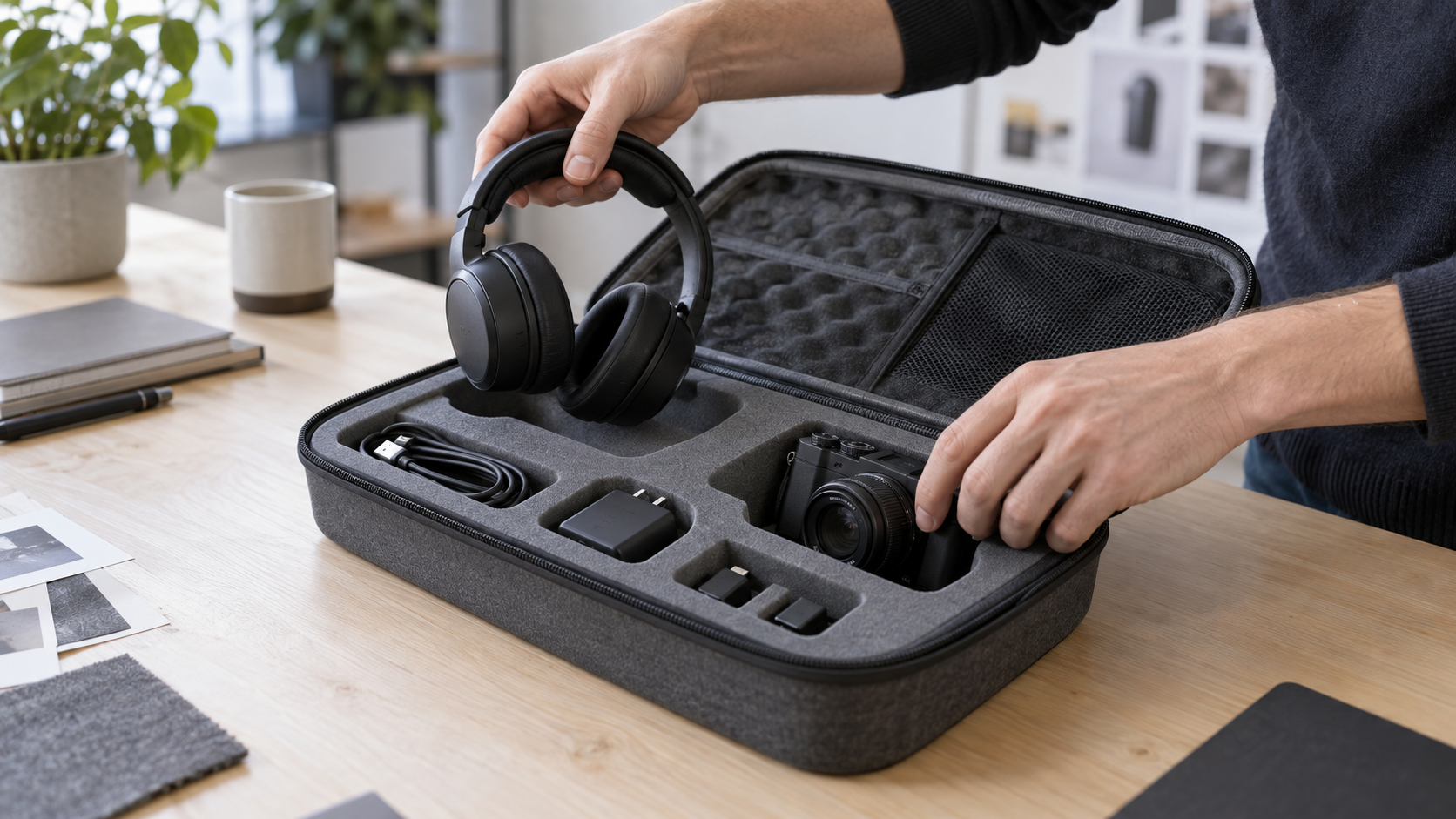
Step 5: Confirm the color using a physical object as a reference.
For consumer electronics, the color of the casing is by no means a trivial detail. Because the internal tray, lining, casing material, and labeling areas use different substrates and surface treatments, their colors can vary. Even colors that look correct in renderings or on screen may require multiple comparisons with actual products to achieve an acceptable result.
Please record the following before sample approval:
- Approved color reference values for each component.
- Whether it's a physical color chart, standard codes, or a retained approved sample.
- The surface and materials on which the color is applied.
- When the approval criteria are crucial to a project, those criteria are the review criteria upon which the approval is based.
- The revision date and approver for each color change.
Do not use screen images as final color proofs. To ensure color consistency, please use a physical color chart or actual sample.
Step 6: Separate substantive issues from closed claims.
EVA is just one component among many protective sleeve structures. The density and stiffness of the foam core, the outer material, the zippers, the stitching, the shape of the outer shell, and the design of the lining and inner lining all affect the final product.
Please have the manufacturer provide relevant documentation specifying which component is being discussed. For example:
- `EVA density`: A material property input that requires specifying units and context.
- "EVA Hardness": A separate material property input; it cannot be inferred from density alone.
- "Waterproof performance": This is a complex issue that depends on the openings, seams, zippers, and actual exposure conditions.
- "Shock protection": This is a complete systemic issue that requires agreement on load, orientation, testing methods, and acceptance criteria.
Using EVA foam density guidelines and EVA foam water resistance guidelines can make project briefings more specific. These resources are not a substitute for project testing or target market compliance reviews.
Step 7: Pre-production verification of quality control and version control
Approved samples should serve as the reference standard for controlled production, not just a photo in an email. Before production, confirm the approved version and what needs to be tested.
Your production handover form should include the following:
- Approved drawings, artworks, and material or color references.
- Product dimensions and measurement methods.
- Internal layout references and permitted product movement range (if applicable).
- Process requirements for seams, edges, zippers, signage application, hardware and packaging.
- Required inspection records, sample photos, or test evidence, including agreed pre-shipment quality control photos or reports.
- If materials, layout, tools, or packaging need to be changed, a change approval process is required.
A customized quality control checklist for bags helps translate broad expectations into observable inspection items. It should be tailored to specific circumstances, rather than being copied verbatim to every project.
Questions to ask before approving a tool
Use the following questions in the final supplier review meeting or in emails:
- Which cases have fixed dimensions and cavity sizes, and which still have provisional dimensions?
- What product samples, 2D drawings, or dimensional documents did the supplier use in developing the layout plan?
- What are the proposed methods for securing the products and accessories?
- What materials, hardware, logo design methods, packaging options, and color references are included in the quote?
- Which functions require specialized tools? What if the sample needs design changes?
- What will be measured or photographed during sample approval and pre-shipment inspection?
- Which production checks will be recorded? Who will approve deviations?
- What requirements necessitate independent testing, certification, or target market review?
- What evidence is required before production can begin?
When a manufacturer may not be suitable
Supplier comparisons should be suspended or expanded if candidate suppliers are unable to obtain actual product information, are unwilling to disclose pricing assumptions, cannot provide sample approval pathways, or make performance claims without testing conditions or sources.
This doesn't mean the supplier is unsuitable in all cases. It simply means the current evidence isn't sufficient to support the project. If product compatibility, tooling requirements, approval processes, or quality evidence remain unclear, even a lower quote could ultimately result in high costs.
Request a similar EVA case evaluation
To obtain a more effective evaluation, please provide product dimensions, weight, photos or drawings, a list of accessories, intended use, target quantity, color reference, and required supporting documentation. Based on this, Pengtu will assess whether we can develop 2D drawings, 3D models or renderings, EVA shell design schemes, internal layout, sample production process, and a quotation for this project.
Request a quote for a custom EVA protective case .
Frequently Asked Questions
How can we fairly compare custom EVA protective case manufacturers?
Provide each manufacturer with the same product description, quantity range, target market, sample requirements, and evidence requirements. Compare each manufacturer's assumptions, engineering response, sample plans, quality records, and prices.
Can the supplier's EVA protective case product catalog prove that it can meet my needs?
No. The product catalog may show relevant experience, but your project will still require review of product compatibility, internal layout, molds, sample acceptance, and production control.
Do I need to pay for the EVA shell mold before receiving the sample?
The correct procedures depend on the proposed construction plan and mold manufacturing route. Before approval, ensure that the supplier has documented the design assumptions, sample production process, expected evidence, modification procedures, and the scope of mold costs.
Can custom EVA protective case manufacturers guarantee waterproof or drop-proof performance?
Without clearly defined finished product casing structure, exposure or testing conditions, and acceptance criteria, testing cannot be conducted. Please request a project-specific testing plan and confirm whether independent testing or market research is required.