

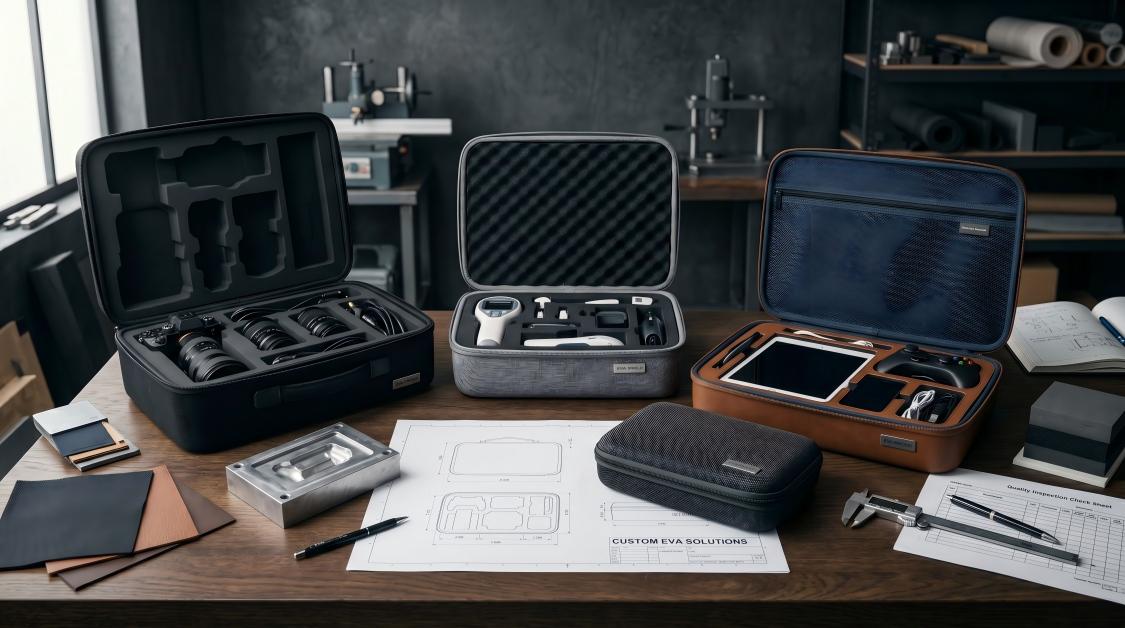
Designing the perfect protective packaging for sensitive electronics, medical devices, or professional equipment is a high-stakes engineering challenge. You need something lightweight yet incredibly durable, cost-effective yet premium in appearance. Enter the custom EVA protective case.
This guide is designed for product managers, sourcing engineers, and designers. We will walk you through the entire lifecycle of an EVA case—from selecting the right raw materials to understanding the structural design, tooling, and final performance testing.
What Is an EVA Protective Case?
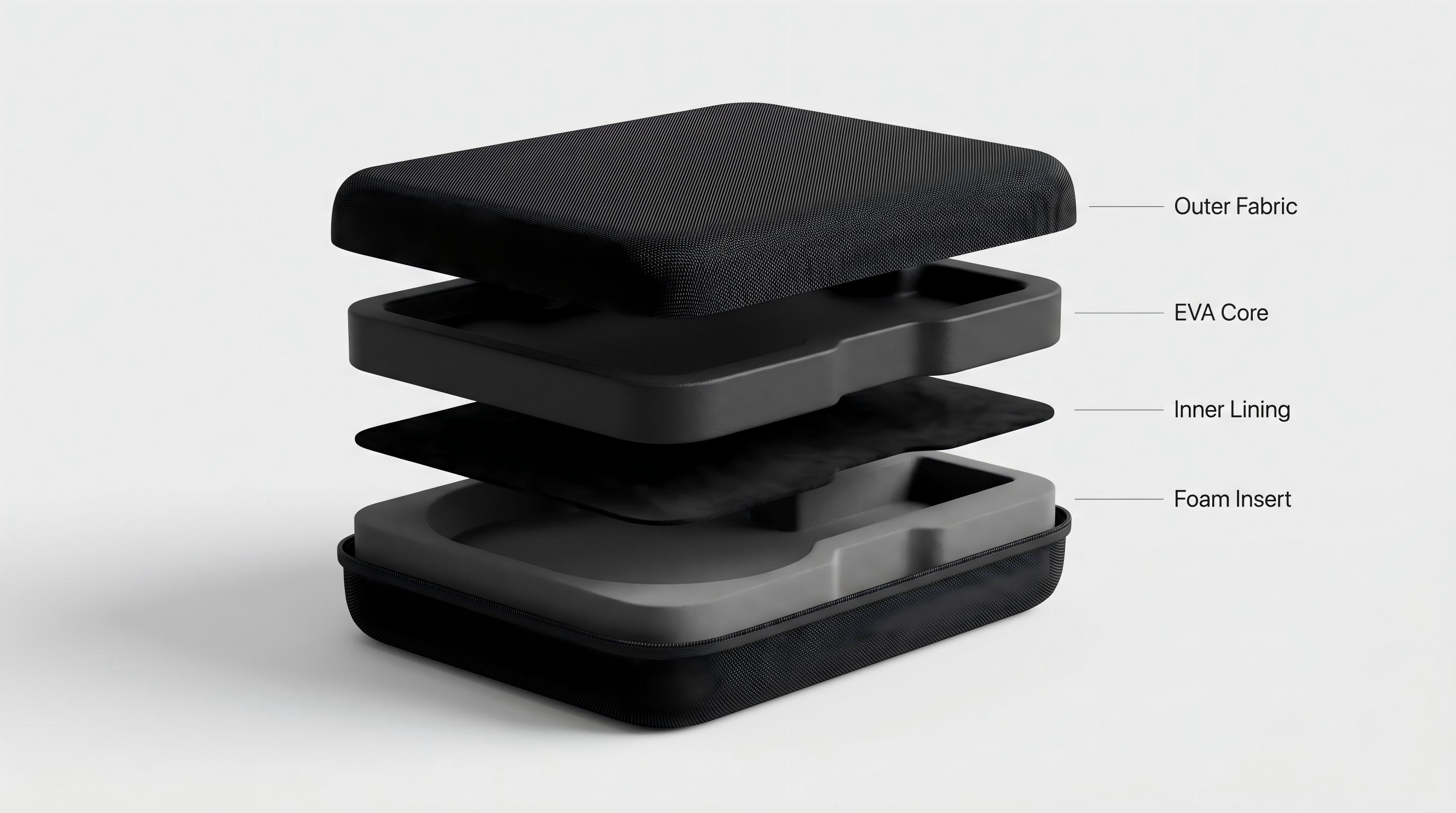
Ethylene-Vinyl Acetate (EVA) is a highly versatile copolymer renowned for its exceptional toughness, flexibility, and impact resistance. An EVA protective case is a semi-rigid enclosure manufactured by laminating fabrics (like Nylon or PU) onto EVA foam sheets, which are then thermoformed under high heat and pressure into specific shapes.
Unlike traditional soft bags that offer minimal crush protection, or heavy injection-molded hard cases, EVA cases provide the perfect "Goldilocks" solution: semi-rigid protection that is lightweight, highly customizable, and aesthetically pleasing.
Why EVA Cases Are Ideal for Equipment Protection
When evaluating protective packaging solutions, engineers must balance protection, weight, and tooling costs. EVA stands out for several reasons:
- Impact & Shock Absorption: The closed-cell structure of EVA foam dissipates kinetic energy efficiently, protecting delicate internal components from drops.
- Lightweight Durability: It offers structural rigidity comparable to some plastics but at a fraction of the weight.
- Water & Weather Resistance: EVA cases can be designed with water-resistant outer materials, zipper options, and seam structures when required. However, waterproof performance should be confirmed according to the agreed structure and testing requirements instead of assuming a fixed IP rating.
If you are currently debating between different packaging materials for your next project, read our comprehensive breakdown on EVA vs. Hard Plastic Cases: Which Is Better? to make an informed engineering decision
Understanding EVA Foam Material
The performance of your custom case dictates the type of EVA raw material you must select. Not all EVA foams are created equal.
For the distinction between EVA material properties and complete-case water resistance, see whether EVA foam itself is waterproof.
EVA Density and Hardness
For structural integrity, engineers look at two primary metrics: density (measured in kg/m³) and hardness (measured on the Shore C or Asker C scale). A higher density EVA will provide a stiffer outer shell, which is crucial for heavy equipment
Furthermore, the hardness of the EVA dictates the tactile feel and crush resistance. Learn how to specify this correctly in our EVA Hardness Guide.
For those who want to master every technical property of the material, including thermal stability and chemical resistance, bookmark our The Ultimate EVA Foam Material Guide.
Comprehensive EVA Case Design Guide
The exterior shape isn't just for aesthetics; embossed ribs and debossed channels significantly increase the structural rigidity of the case without adding weight. This is a critical principle in Shockproof Case Engineering.
Internal Insert Design
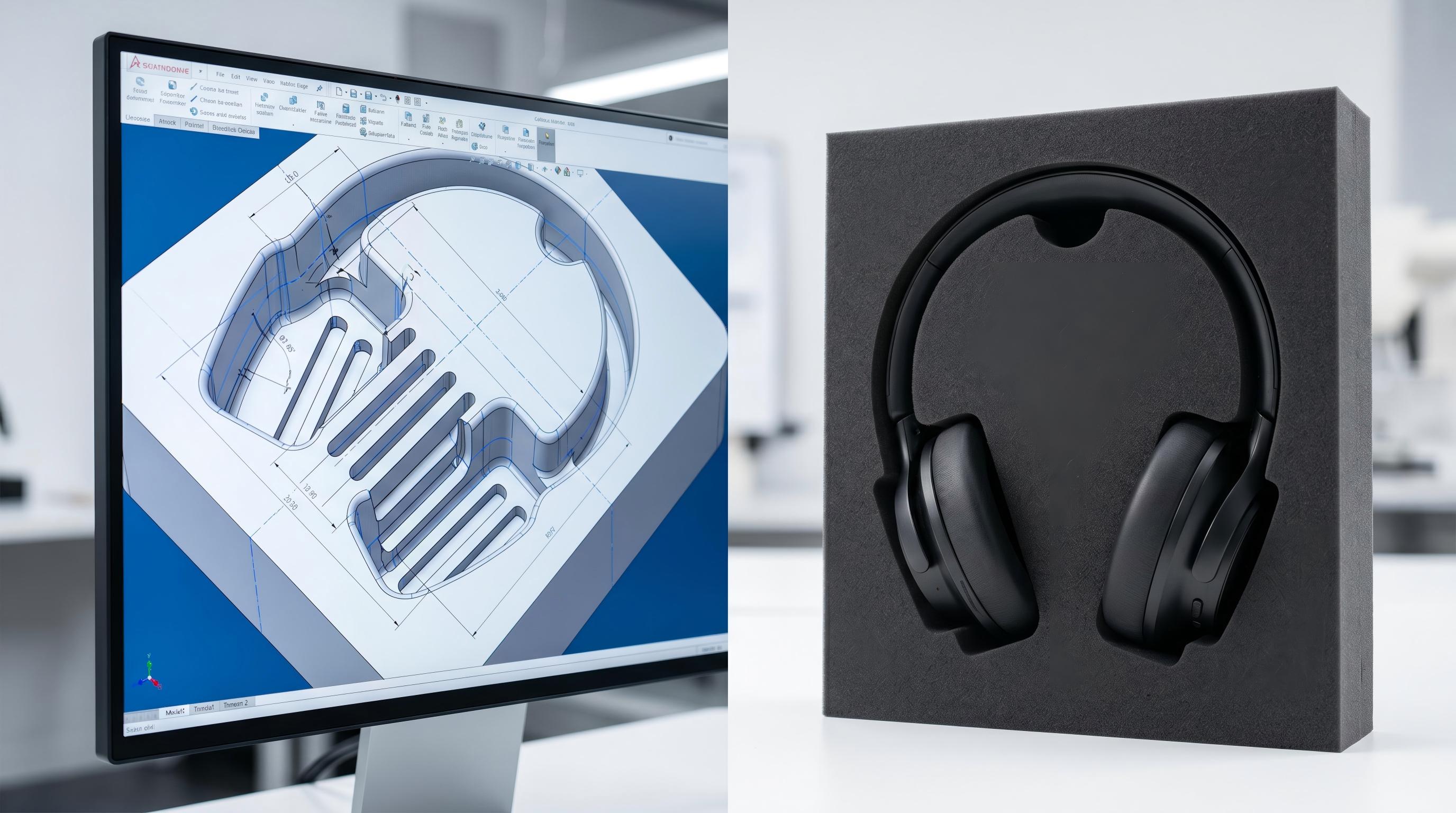
The internal insert (usually made of die-cut EVA or molded PU) is what cradles your product. The tolerance between the equipment and the foam insert must be tight enough to prevent shifting, but loose enough for easy extraction. Discover the best practices for interior layouts in our Custom EVA Foam Insert Design article.
The EVA Case Manufacturing Process
Understanding how these cases are made can help you optimize your design for manufacturability (DFM) and reduce costs. The process generally involves:
- Lamination: Bonding the exterior and interior fabrics to the EVA sheet.
- Thermoforming (Compression Molding): The laminated sheets are heated and pressed into aluminum molds. You can see this fascinating transformation step-by-step in our EVA Thermoforming Process overview.
- Die-Cutting & Sewing: Trimming excess material and stitching zippers, handles, and bindings.
By understanding these core manufacturing stages, you can better optimize your design for manufacturability, ensuring higher quality and cost-effective production without compromising on appearance or protection.
Performance Testing & Quality Control
For professional medical and electronic devices, "looks good" isn't enough. The case must pass rigorous Quality Control (QC) standards. Reputable manufacturers perform zipper fatigue tests, handle load-bearing tests, and environmental chamber testing (high heat/humidity).
Crucially, the case must protect the contents during a fall. Learn how to engineer your case to meet MIL-STD standards in our guide on How to Pass Drop Tests for Electronics Cases.
Industry Applications of EVA Cases
Because of their versatility, EVA cases are the standard across multiple high-value industries:
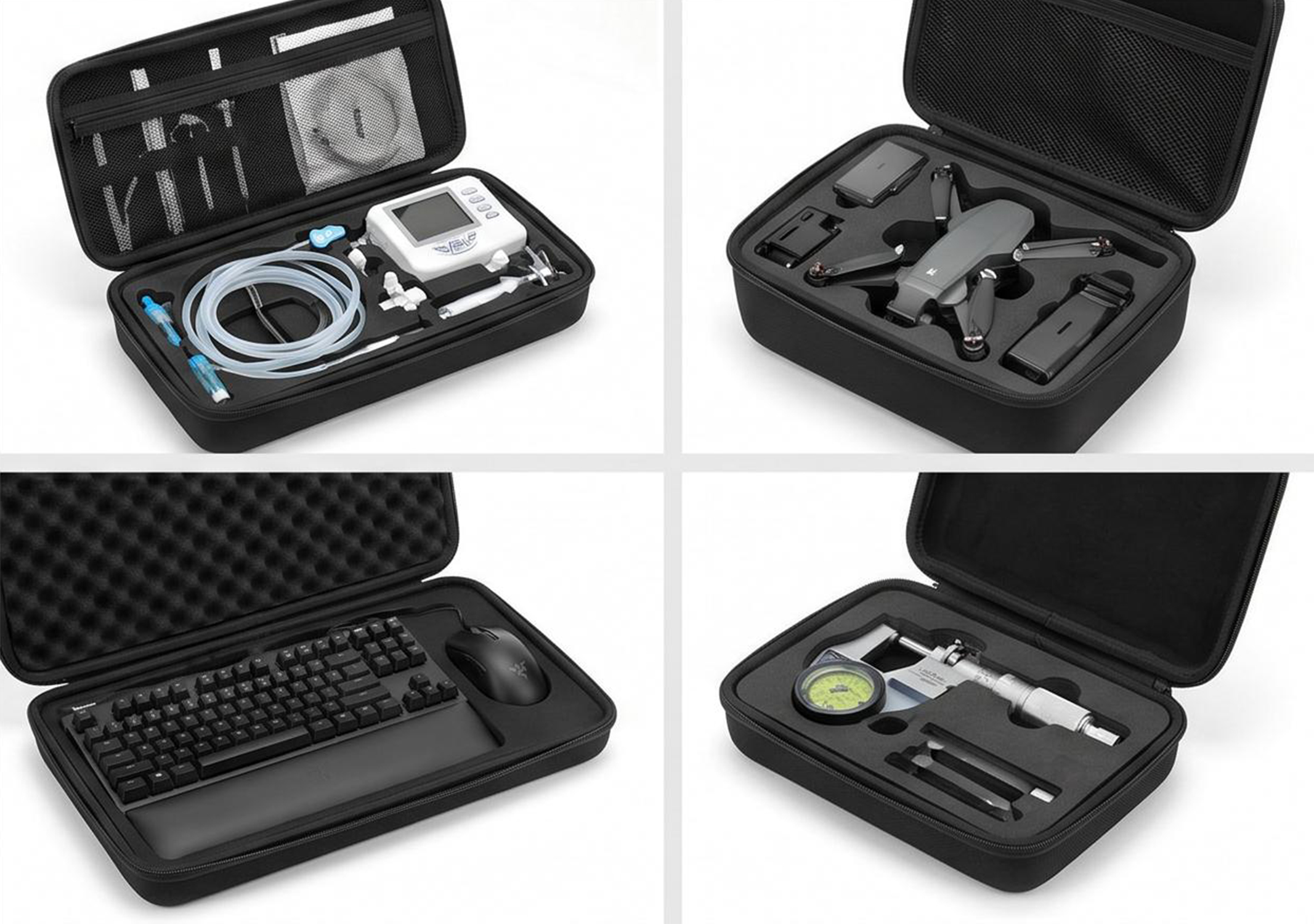
- Consumer Electronics: Drones, VR headsets, and cameras. (See our EVA Camera Case Guide).
- Medical & Healthcare: Blood pressure monitors, CPAP machines, and surgical tools. Cleanability and impact protection are paramount here. (Read the EVA Medical Device Case Design guide).
- Gaming & Audiophile: Mechanical keyboards, high-end headphones, gaming headsets, microphones, and related accessories. For related applications, explore our Mechanical Keyboard EVA Case Guide and Audio EVA Case Guide.
Cost Factors & Lead Times in Custom EVA Cases
The cost of a custom EVA case depends on more than its outside dimensions. Buyers should evaluate the full specification, including the shell size, EVA thickness, exterior material, lining, zipper, handle, logo method, inner insert, packaging, and order quantity.
Common cost factors include:
- case size and molded depth;
- EVA hardness and thickness;
- exterior material such as PU leather, Oxford fabric, polyester, or nylon;
- lining material such as velvet, polyester, or multispandex;
- foam insert structure and accessory compartments;
- zipper type, puller, handle, and edge binding;
- logo method such as screen printing, debossing, rubber patch, or metal badge;
- packaging format;
- sample revisions;
- material color and purchasing requirements.
For black or regular material options, the standard MOQ usually starts from 500 pcs. For custom colors or special materials, MOQ should be reviewed based on product size, material consumption, material purchasing requirements, and leftover material risk.
Sample development usually takes about 7–15 days depending on the structure, material, logo method, and approval requirements. Bulk production lead time should be confirmed after the final sample, order quantity, material availability, and packaging details are approved.
How to Choose the Right EVA Case Manufacturer
Choosing an EVA case manufacturer should not be based only on unit price. A reliable supplier should be able to review the product, recommend a suitable structure, prepare samples, control material consistency, and confirm quality before bulk production.
When evaluating a custom EVA case supplier, buyers should check:
- whether the supplier understands the product being protected;
- whether the case structure is designed around real dimensions or samples;
- whether material options are explained clearly;
- whether logo, zipper, lining, insert, and packaging details can be customized;
- whether a sample is provided before bulk production;
- whether the approved sample can be used as a production reference;
- whether inspection includes appearance, fit, zipper operation, logo position, and packaging;
- whether testing or third-party verification can be arranged when required.
Pengtour supports OEM and ODM custom EVA case projects by reviewing product requirements, material choices, structure, branding, sample approval, and bulk production details before manufacturing.
FAQ
Q1: What is the standard MOQ for custom EVA cases?
A: For black or regular material options, the standard MOQ usually starts from 500 pcs. For custom colors or special materials, MOQ should be reviewed based on case size, material consumption, material purchasing requirements, and leftover material risk. Buyers should confirm the exact MOQ during quotation because material selection, color, logo method, and packaging can all affect the final production plan.
Q2: How much does a custom EVA mold or tooling cost?
A: EVA tooling cost depends on the case size, molded depth, structure, number of mold parts, insert design, and surface details. Compared with plastic injection molding, EVA thermoforming tooling is often more flexible for custom protective cases, but the final mold cost should be quoted after the product dimensions, structure, and sample requirements are reviewed.
Q3: What is the typical lead time for a prototype/sample and mass production?
A: Speed to market is critical. Once the CAD drawings and fabric swatches are approved, creating a custom prototype takes about 7 to 10 days. For mass production, our standard lead time is typically 25 to 30 days after sample approval and deposit receipt, depending on the order volume and material availability.
Q4: Can you make the custom EVA case 100% waterproof?
A: While standard EVA cases are water-resistant, we can engineer cases to be highly waterproof (often reaching IP65 or IP67 equivalent standards). We achieve this by using waterproof PU outer fabrics, integrating waterproof zippers (like YKK AquaGuard), and heat-sealing or taping the seams during the manufacturing process.
Q5: Can environmental testing be arranged for custom EVA cases?
A: Environmental testing can be arranged or verified when required by the buyer or target market. The required test items should be confirmed before material approval. If further confirmation is needed, Pengtour can coordinate third-party laboratory testing for the selected material or finished sample according to the agreed test scope.
For an engineering project with defined test requirements, review our custom EVA case development options before confirming materials, structure, and sample scope.
Have a unique requirement not covered here?