

Introduction
You’ve already finalized the case dimensions, chosen the outer fabric, and approved the zipper. On paper, everything looks right. But when the first prototype comes back, the case feels either too soft to hold its shape or so rigid that it becomes difficult to form properly.
In most of these cases, the issue comes down to one thing: the EVA foam hardness was not specified clearly enough on the drawing.
In our main guide to EVA foam material, we explained that density is one of the key factors behind a case’s structure and weight. Hardness, however, affects how the material feels, how it resists compression, and how well it protects the contents inside. If this spec is off, the final case may look good on the outside but fail in real use.
This guide explains how EVA hardness is measured, why Shore C matters, and how to choose the right specification for your case.
Demystifying the Scale: Why Shore C Is the Standard for EVA Foam
One of the most common mistakes buyers make is borrowing specs from rubber or hard plastic products. Those materials are usually measured on the Shore A or Shore D scale. EVA foam, especially when used in protective cases, is different.
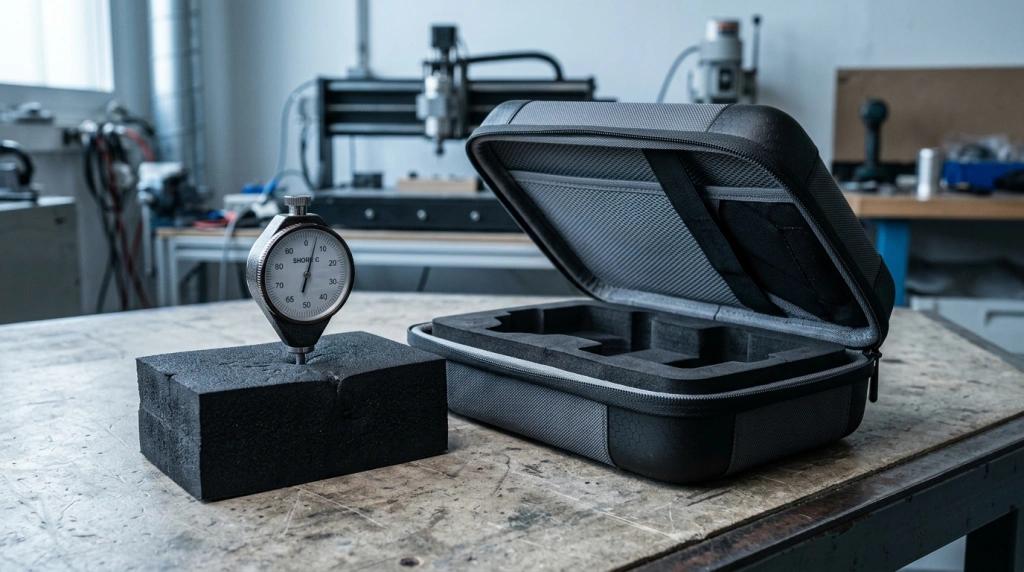
For this type of material, the most useful reference is the Shore C scale. In some Asian factories, you may also hear Asker C, which is commonly used in the same context for practical specification purposes.
The Shore C scale usually runs from 0 to 100:
- 30C–40C: very soft, easy to compress by hand
- 60C–70C: firm, stable, and suitable for most protective cases
- 80C and above: very rigid, with little surface give
When you talk to a supplier, always name the scale clearly. A note that says just “hardness 65” is too vague and can easily lead to confusion.
If you are sourcing a custom case, a proper spec should say something like:
EVA foam core hardness: 65C ±3, measured on Shore C scale
That small detail saves a lot of back-and-forth later.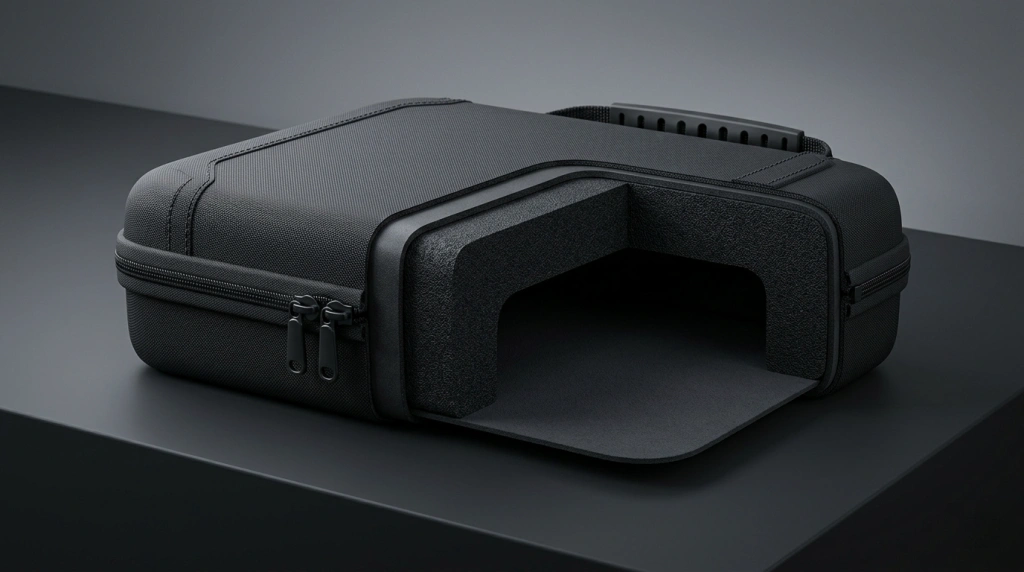
Hardness vs. Impact Protection
Hardness and shock absorption are related, but they are not the same thing.
A harder EVA foam core gives the case better surface rigidity and stronger resistance to puncture. It also helps the case hold its shape when stacked or compressed during shipping.
A softer foam core, on the other hand, compresses more easily and can absorb part of the impact energy. That makes it useful in cases where the main concern is vibration or sudden drops.
The trade-off is simple:
- Harder EVA = better shape retention and crush resistance
- Softer EVA = better energy absorption and a softer feel
For many sensitive products, the best solution is a balanced structure. A medium-hard EVA foam core can be used for the outer case body, while a softer internal insert protects the product itself.
That combination works well for items like:
- camera accessories
- testing instruments
- portable medical devices
- compact electronic kits
Manufacturing Limits: Why Very Hard EVA Can Be Hard to Thermoform
A hardness spec does not exist in isolation. It has to work with the actual molding process.
In EVA case manufacturing, the foam sheet is heated first, then pressed into a mold. If the material is too hard, it becomes more difficult to stretch evenly during forming. Deep cavities, sharp corners, and narrow transitions can all create weak points.
This is why very high hardness values are not always the best choice for complex case shapes.
If the design includes:
- deep compartments
- tight corner radii
- strong vertical walls
- detailed internal steps
then the factory may need to lower the hardness slightly or adjust the mold design to keep the material from thinning out too much.
In practice, it is often better to work with the factory early and balance:
- hardness
- foam thickness
- mold depth
- corner radius
A good hardness spec only works when the structure can actually be formed well.
Why Fabric Lamination Changes the Final Feel
This is another point that often causes confusion during sample approval.
When you touch a finished case, you are not touching the EVA foam directly. You are touching the outer fabric, the adhesive layer, and the foam together. That means the final feel can be different from the raw foam itself.
For example:
- a stiff fabric can make the same foam core feel firmer
- a softer stretch fabric can make it feel more flexible
- thicker lamination layers can also affect the perceived hardness
That is why you should never approve hardness based only on the finished laminated sample.
For engineering approval, always ask for an unlaminated raw foam sample. That gives your team a better way to check the real EVA core hardness before the surface material changes the feel.
Common EVA Hardness Ranges by Application
The right hardness depends on the product, the amount of protection needed, and how the case will be used.
Here is a simple reference range that works well for most B2B applications:
Soft cases and light accessories: 45C–55C
Best for:
- cables
- eyewear
- small accessories
This range gives a softer hand feel and works well when the case needs to compress slightly inside a backpack or carry bag.
Standard consumer electronics: 60C–65C
Best for:
- laptops
- headphones
- keyboards
- portable electronics
This is one of the most common ranges. It gives a good balance between shape retention and daily protection.
Medical and testing equipment: 70C–75C
Best for:
- meters
- monitors
- diagnostic tools
- precision instruments
This range is better when the case needs more rigidity and stronger protection around sensitive components.
Heavy-duty and industrial gear: 80C and above
Best for:
- power tools
- tactical equipment
- rugged storage cases
This range is used when maximum crush resistance matters more than softness or flexibility.
If you are not sure where your product fits, start with the middle range and adjust based on the actual sample and forming result.
How to Specify EVA Hardness in Your RFQ
If you want the factory to get it right, make the hardness requirement as clear as possible.
A weak spec looks like this:
- Hardness: 65
A proper spec looks like this:
- EVA foam core hardness: 65C ±3
- Scale: Shore C
- Sample approval required before mass production
- Hardness to be measured on raw unlaminated foam
If the product has different upper and lower sections, you can also specify them separately:
- Top lid: 70C ±3
- Bottom base: 60C ±3
That kind of detail helps the factory quote more accurately and reduces sample revisions later.
FAQ
Q1: What tolerance should I expect for EVA foam hardness?
In real production, an exact number is difficult to hold every time because foam is affected by temperature, humidity, and other process conditions.
For most professional manufacturers, a tolerance of ±3 to ±5 Shore C is normal. If you specify 65C, a result between 62C and 68C is generally acceptable, depending on your agreement with the supplier.
Q2: Can the top lid and bottom base have different hardness levels?
Yes. Since they are often formed separately, you can specify different hardness values for different sections of the case. This is common when the lid needs more protection and the base needs deeper cavities.
Q3: Does color affect EVA hardness?
Standard colors usually do not change hardness in any meaningful way. That said, some custom colors may require adjustments in the material formulation, so it is still best to confirm hardness on the final colored sample, not only on the white prototype.
Closing Note
EVA hardness may look like a small detail, but in custom case manufacturing, it has a big impact on how the product feels, forms, and performs.
If you are building a case for a sensitive product, do not treat hardness as a guess. Specify it clearly, confirm it on a raw foam sample, and make sure it works with the actual mold design.
For a broader overview of material selection, you can also refer to our guide on The Ultimate EVA Foam Material Guide.