

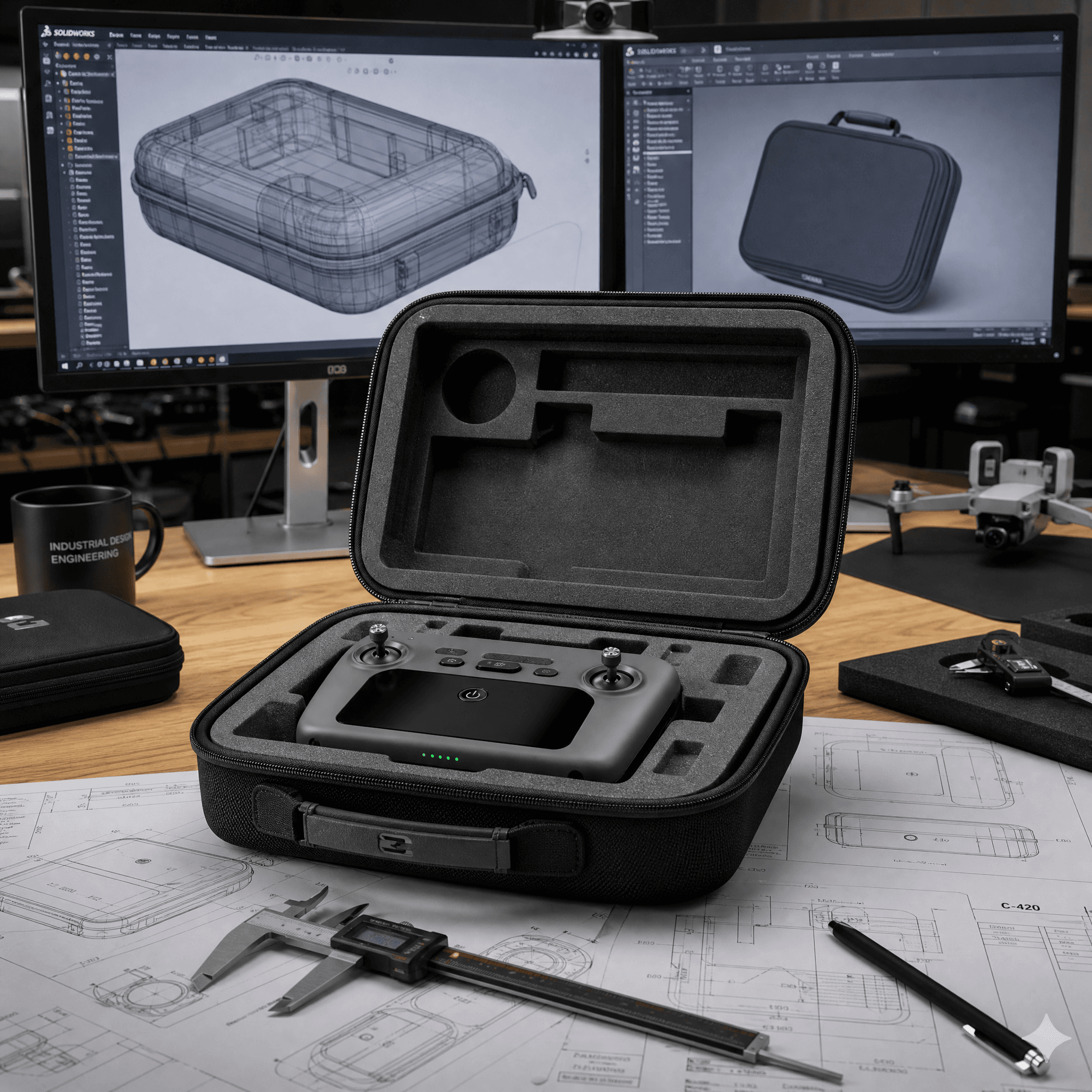
Whether you are launching a premium medical device, high-end headphones, or a delicate drone kit, standard packaging often falls short. A custom EVA (Ethylene-Vinyl Acetate) case offers the perfect blend of rigid structural protection, premium aesthetics, and shock absorption.
But how do you transition from a product concept to a mass-produced protective case? In this comprehensive guide, we break down the complete design workflow, engineering requirements, and manufacturing preparation for product managers and hardware designers.
1. What Information is Required to Develop a Custom EVA Case?
To get an accurate price quote and engineering evaluation from a custom EVA case manufacturer, you need to provide four core technical requirements:
-
Product 3D Models or Physical Samples: Providing 3D CAD files (such as
.STPor.STEPformats) of the items to be stored is the most critical requirement. Alternatively, shipping physical product samples to the manufacturer allows for manual custom-fit measurement. -
Protection & Performance Specifications: Clearly define your environmental needs. Does the case require IP-rated waterproofing, anti-static (ESD) properties, fire-retardant certification, or specific drop-test compliance?
-
Aesthetic & Material Preferences: Specify the outer laminating fabric (e.g., heavy-duty Oxford nylon, premium PU leather, or soft jersey fabric) and your preferred branding method (silkscreen printing, heat debossing, or a custom rubber/metal logo badge).
-
Target Order Volume (MOQ): Estimated production quantities directly determine the type of tooling used and how the initial mold costs are amortized.
2. How Does the Custom EVA Case Design Process Work?
The industrial development workflow of a custom EVA case typically follows five structured phases from concept to mass production:
Phase 1: Technical Requirement Alignment
The manufacturer and client align on interior component layouts, exterior dimensions, branding preferences, target weight, and budget constraints.
Phase 2: 3D CAD Structural Engineering
Industrial designers draft the 3D blueprints for both the compression-molded outer EVA shell and the custom-cut inner protective foam insert.
Phase 3: Rapid Prototyping & Fitment Testing
A physical prototype is produced using CNC milling, laser cutting, or quick-turn sample tooling. This sample is shipped to the client to verify actual fit, aesthetics, and material feel.
Phase 4: Production Tooling Development
Once the prototype receives formal sign-off, heavy-duty production molds (for thermoforming and interior die-cutting) are precision-machined.
Phase 5: Mass Production & Mass Assembly
The finalized factory workflow includes raw material lamination, heat-press thermoforming, edge trimming, precision stitching, zipper attachment, inner foam assembly, and 100% quality control inspection.
3. Can You Design an EVA Case Based on a 3D Model?
Yes, you can easily design a custom EVA case using 3D models. In fact, developing packaging directly from digital 3D CAD data is the most recommended and accurate method in modern manufacturing.
When you provide 3D files (.STEP, .IGS, or SolidWorks formats) of your hardware, packaging engineers use "reverse-engineered envelope design." This allows them to mathematically calculate exact foam compression rates, map out ideal structural clearance for finger grips, and run digital drop simulations. Designing with 3D models drastically eliminates human error, cuts down prototyping lead times, and prevents costly modifications to the hard steel production molds later on.
Blog Post 2: Custom EVA Tooling Guide: Mold Manufacturing, Costs, and Design Pitfalls
Meta Description: Master the EVA case manufacturing process. Learn how custom thermoforming molds are engineered, expected tooling timelines, and how to avoid costly design mistakes.
Introduction
In custom EVA case manufacturing, transitioning from an approved prototype to mass production requires dedicated hard tooling. For many hardware startups and sourcing managers, the mold-making phase feels like a black box.
Understanding how EVA thermoforming molds are manufactured, knowing realistic tooling timelines, and identifying common engineering mistakes can save your project thousands of dollars and weeks of delays. Let’s dive deep into the mechanics of EVA tooling.
How Are Custom EVA Case Molds Developed?
Custom EVA case molds are engineered using precision CNC machining combined with industrial surface treatments to facilitate the heat-compression thermoforming process.
-
3D Tooling Geometry: Engineers modify the approved case blueprint by calculating material shrinkage variables and integrating specific mechanical features like air escape vents and parting lines.
-
CNC Precision Carving: Production molds are carved out of solid blocks of cast aluminum alloy, aviation-grade aluminum, or structural steel using multi-axis CNC milling machines.
-
Industrial Surface Finishes: The finished metal mold undergoes industrial sandblasting or is coated with a premium Teflon (PTFE) non-stick layer. This surface treatment prevents the heated EVA material from adhering to the metal core and imparts the desired exterior texture—such as a sleek matte finish or fine grain pattern—to the outer shell.