
定制 EVA 耳机盒的 PU 皮革与牛津布

blog avatar

作者:

pengtour

已发布
Jul 13 2026
  • 材料与技术
  • 伊娃·凯斯

跟着我们

pu-leather-vs-oxford-fabric-eva-headphone-cases

答案摘要:
PU 皮革通常适合需要光滑、精致且面向零售的外观的定制 EVA 耳机盒,而牛津布通常更适合经常携带、旅行使用和注重磨损的项目。 PU 皮革更容易擦拭干净,但对划痕、折痕和模压弯曲区域更敏感。牛津布通常更耐磨,与橡胶贴片或丝网印刷配合得很好。最终选择应通过材料样本和成品样品来确认,而不仅仅是材料名称或 Pantone 颜色参考。

关键要点

  • PU皮革和牛津布为外表面材料; EVA 仍然是耳机盒的主要结构层。
  • PU 皮革通常具有更光滑、更精致的外观,但它对弯曲成型区域周围的划痕、折痕、皱纹和拉伸痕迹更敏感。
  • 牛津面料通常更适合旅行、频繁搬运和耐磨的耳机盒项目。
  • PU 皮革通常更适合压纹、压花和金属徽章,而牛津布通常适合缝制橡胶贴片和丝网印刷。
  • 黑色 PU 皮革和黑色牛津布通常从 500 件起订量起,而定制颜色需要基于项目的起订量审核,因为材料采购和剩余材料风险可能不同。

PU 皮革和牛津布有什么区别?

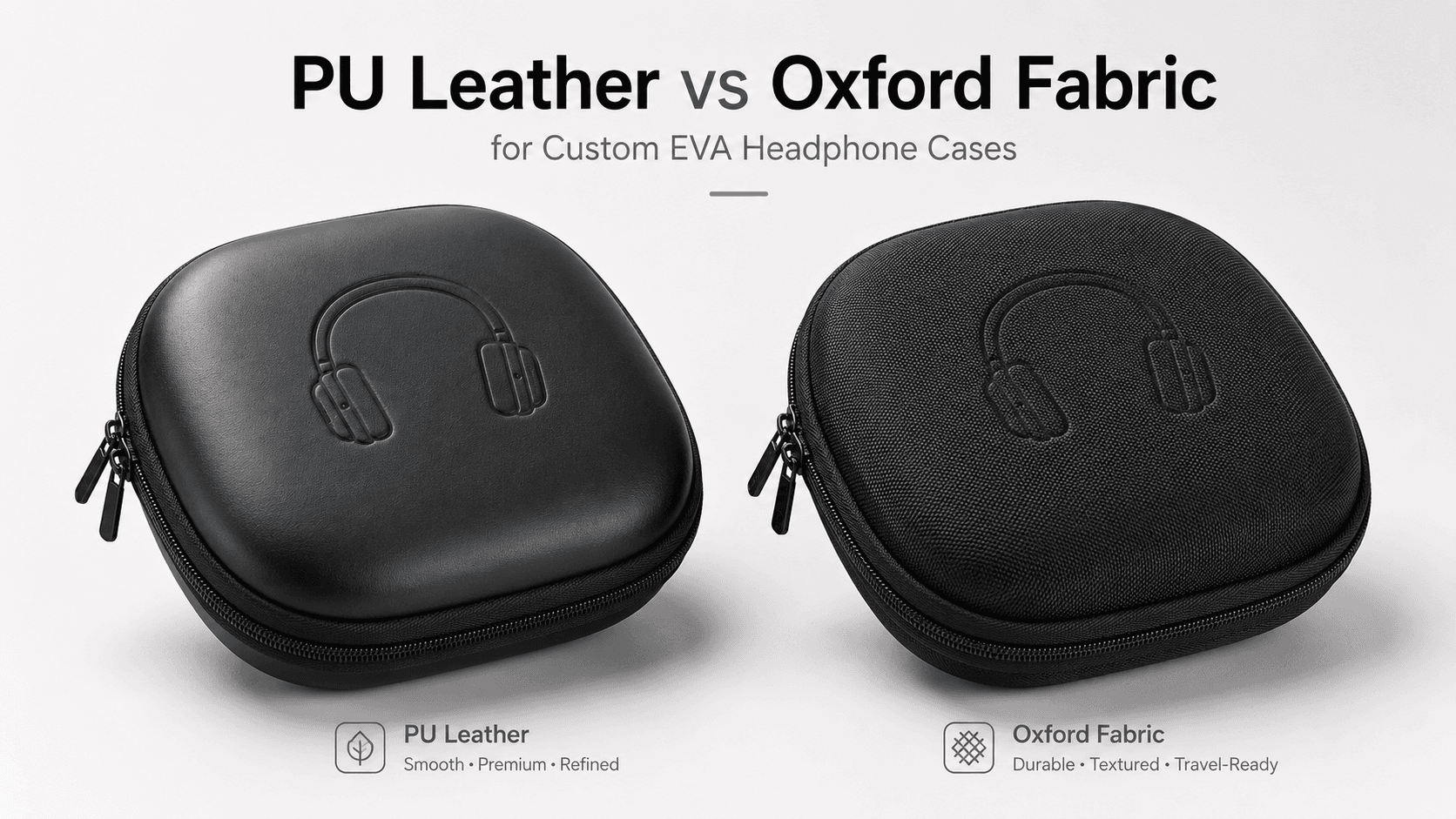
当买家比较定制 EVA 耳机盒的 PU 皮革和牛津面料时,他们通常会比较外表面材料,而不是保护结构本身。在大多数模压 EVA 耳机盒中,EVA 形成半刚性结构外壳,而外部材料则层压或粘合到外部,以形成最终的外观、纹理和品牌表面。

这种区别很重要,因为相同的 EVA 外壳结构在覆盖 PU 皮革、牛津织物、聚酯、尼龙或其他外部材料时感觉会非常不同。外观材料影响机箱的视觉风格、表面手感、标识方法、清洁方法、颜色结果、取样风险,有时甚至影响实际最小起订量。

什么是 PU 皮革?

PU 皮革是一种类似合成皮革的材料,当买家想要更光滑、更干净或更精致的表面时,通常会使用这种材料。根据所选材料,它可能具有光滑、哑光、光泽、粒状或压花饰面。

对于定制 EVA 耳机盒,当产品需要更具零售导向的外观、更简洁的品牌展示或适合凹凸、浮雕或金属品牌的表面时,通常会选择 PU 皮革。

但是,PU 皮革不是一种单一材料。不同的PU材料可能会有所不同:

  • 表面纹理;
  • 厚度;
  • 支撑材料;
  • 灵活性;
  • 光泽度;
  • 划痕敏感度;
  • 成型行为;
  • 颜色可用性。

因此,买家不应仅仅通过说“使用 PU”来批准项目。批量生产前应检查准确的PU样品、色卡、表面纹理和成品箱样品。

什么是牛津布?

牛津布是一种机织纺织材料,通常由涤纶或尼龙纱线制成。它通常具有可见的织物纹理,常被选择用于旅行、户外、运动或实用的存储产品。

对于耳机盒,当买家需要时,通常会考虑牛津面料:

  • 面料质感更强;
  • 更实用的日常使用外观;
  • 更好的耐磨性能;
  • 橡胶贴片品牌;
  • 丝网印刷;
  • 更加实用或以旅行为导向的产品风格。

牛津面料还可以具有不同的旦数、涂层、纹理和背衬结构。优质牛津面料可能看起来更干净,而较重的牛津面料可能看起来更坚固、更实用。

对于更广泛的缝制功能性包袋项目,牛津布包袋指南解释了如何在样品审核和报价之前比较 600D、900D 和 1680D 材料方向。

PU涂层牛津布和PU皮革一样吗?

没有。这是造成混乱的常见原因。

PU 皮革和 PU 涂层牛津布不是同一种东西。 PU革是指类似皮革的表面材料。 PU涂层牛津布仍然是机织牛津布,但涂有PU涂层以改善某些表面性能。

对于询价沟通,买家应明确说明他们是否想要:

PU 皮革外层

或者:

牛津布外层,PU 涂层

这两个选项的外观、折叠、成型、印刷和价格可能有所不同。

材料选择只是完整的一部分定制EVA耳机盒 OEM 设计要求,其中还包括尺寸、内部布局、品牌、样品审批和包装。


PU 皮革与牛津面料一览

合适的材料取决于买家的产品定位、目标用途、徽标流程、颜色要求和预算。下表给出了 OEM 耳机盒项目的实际比较。

该表不应被理解为绝对规则。高级牛津面料可能比基本 PU 材料更昂贵且视觉效果更强。优质 PU 皮革的性能优于低档纺织表面。买家应将实际材料样品与成品箱样品进行比较,然后再做出最终决定。


哪种材料可以打造更优质的耳机盒?

许多买家自动认为 PU 皮革看起来比牛津面料更优质。在很多耳机盒项目中,PU皮革确实可以打造出更光滑、更干净、更精致的外观。它通常非常适合需要适合零售或城市产品风格的外壳的音频品牌。

PU 皮革外观可支持:

  • 更光滑的表面;
  • 更加可控的视觉效果;
  • 凹印或浮雕品牌;
  • 金属徽标牌;
  • 更精致的产品展示;
  • 搭配天鹅绒或超细纤维衬里。

这使得 PU 皮革适合作为品牌配件、优质产品捆绑包或升级存储解决方案出售的耳机盒。

然而,优质的外观并非仅由 PU 皮革打造。最终结果还取决于 EVA 外壳形状、拉链质量、缝线、徽标放置、衬里材料、配色、包装和样品整理。

默认情况下,牛津面料不应被视为低端选项。优质的牛津面料可以打造坚固、耐用且实用的外观。对于旅行耳机盒、游戏耳机盒、儿童耳机盒以及户外音响配件,牛津布可能比 PU 皮革更贴合产品形象。

牛津面料可以通信:

  • 耐用性;
  • 实用性;
  • 运动风格;
  • 户外功能;
  • 旅行准备情况;
  • 经常使用的可靠性。
  • 因此,更好的问题不是“哪种材料更优质?”但是:

    哪种材料符合耳机品牌、产品用途、标志风格、目标价格和买家期望?

    对于商务风格的耳机盒,PU 皮革可能更合适。对于旅行或运动风格的耳机盒,牛津面料可能是更好的搭配。


    PU 皮革和牛津布在模压 EVA 外壳上的表现如何?

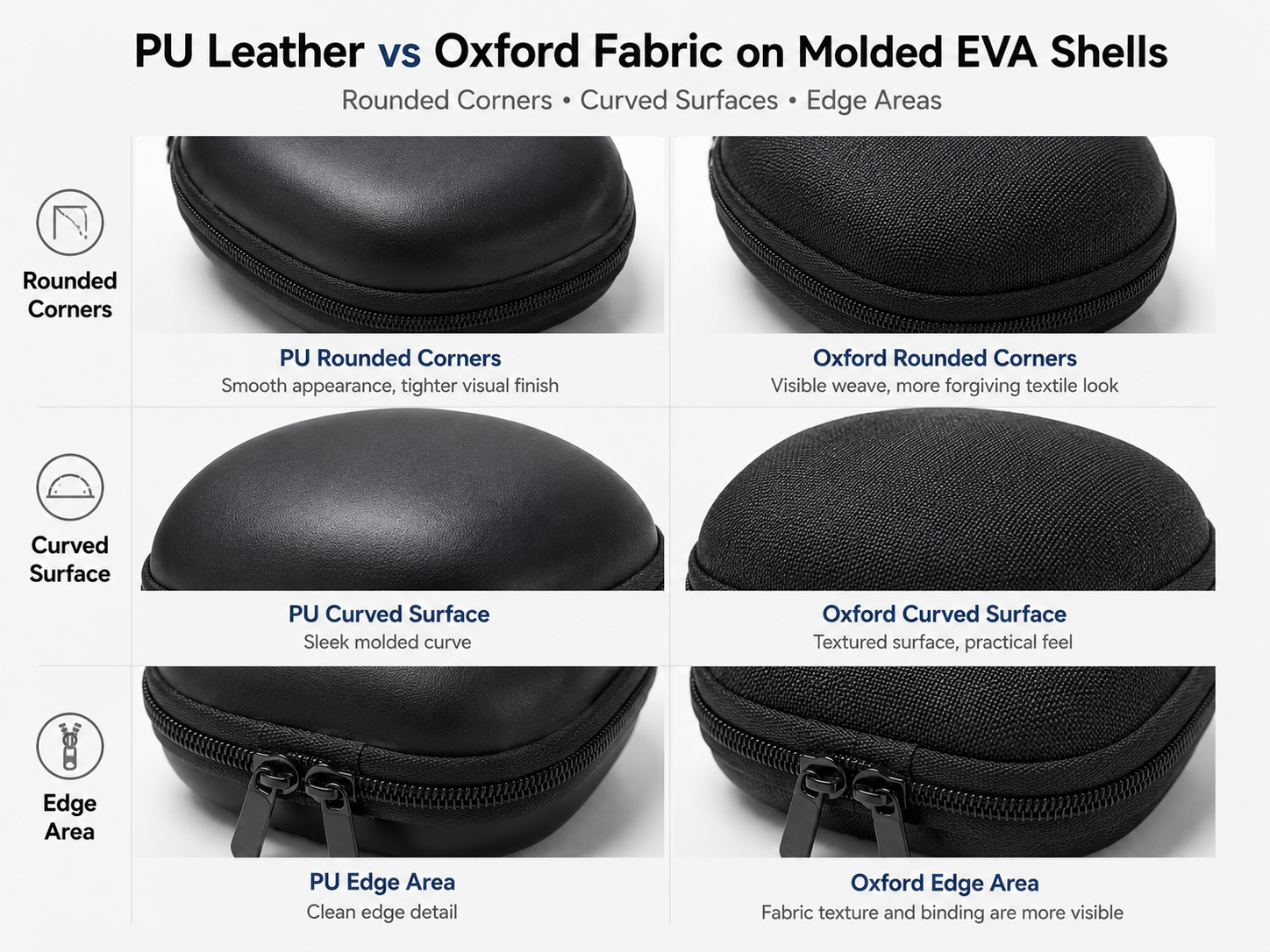
    定制 EVA 耳机盒不是扁平产品。它通常包括圆角、弧形外壳、拉链边缘、铰链区域和模制深度。因此,外部材料必须在应用于成品表壳后进行判断,而不仅仅是作为平面样本。

    根据鹏途的生产经验,在弯曲、深度模压或边缘区域,PU 皮革通常比牛津布更敏感。如果PU材料、背衬、厚度、加热条件和成型深度不匹配,可能会出现皱纹、拉伸痕或不平整的表面。

    这并不意味着 PU 皮革不适合 EVA 耳机盒。这意味着项目团队必须注意:

    • 案例高度;
    • 外壳深度;
    • 圆角半径;
    • PU 厚度;
    • 支持灵活性;
    • 热成型条件;
    • 边缘整理;
    • 成型压力;
    • 已完成示例外观。

    牛津面料通常具有更宽容的纺织外观,因为其编织纹理可以在视觉上吸收微小的表面变化。对于实用的耳机盒来说,这可能是一个优势。但牛津面料仍然面临着自己的挑战,特别是在裁剪、磨损、涂层行为、缝合和边缘装订方面。

    建模后的材质更改也应谨慎对待。如果一个箱子最初是用牛津布开发的,后来改成PU皮革,那么最终的外观可能会不一样。从 PU 皮革切换到牛津面料时也是如此。新材料可能会影响成型表面、边缘精加工、标识方法和最终样品批准。

    因此,买家应尽可能在最终样品批准之前确认外部材料。

    pu-leather-vs-oxford-fabric-molded-eva-shell.jpg


    哪种材料更适合日常搬运和旅行?

    对于经常放在背包、行李、书包或旅行包中携带的耳机盒,日常处理性能很重要。保护壳可能会与其他物品摩擦、反复放入和取出、或接触手油、灰尘和表面摩擦。

    根据鹏途的实际材质经验,牛津面料一般更适合频繁携带和耐磨的使用。它通常被选用于旅行型或功能性耳机盒,因为编织表面可以更好地适应重复处理条件。

    牛津布常用于项目需要时:

    • 经常旅行使用;
    • 背包或行李寄存处;
    • 更坚固的表面样式;
    • 运动或户外定位;
    • 橡胶贴片品牌;
    • 实用的日常处理。

    PU 皮革则相反,由于其表面更光滑,通常更容易擦拭干净。这对于零售耳机盒、办公配件或需要干净视觉外观的产品非常有用。

    但是,PU 皮革可能对以下因素更敏感:

    • 划痕;
    • 折痕;
    • 压力标记;
    • 尖锐物体接触;
    • 表面折叠;
    • 长期视觉磨损。

    对于某些光滑或平坦的 PU 表面尤其如此。有纹理的 PU 的视觉效果可能比非常光滑的 PU 更好,因为纹理有助于减少微小表面痕迹的可见度。

    最安全的 B2B 措辞不是“牛津总是更强”或“PU 总是更容易维护”。更准确的结论是:

    牛津面料一般更适合经常携带和耐磨的项目,而PU皮革通常更容易擦拭干净,但需要更多注意划痕、折痕和表面痕迹。

    如果买方需要量化磨损比较,供需双方应在生产前商定具体的测试方法。诸如ISO 12947-2之类的纺织品磨损方法可以作为讨论的参考,但不应假设它除非包含在项目规范中。


    哪种材料与不同的徽标方法配合使用效果更好?

    徽标方法是选择 PU 皮革或牛津面料的最重要原因之一。相同的徽标艺术品可能看起来非常不同,具体取决于它是应用于光滑的 PU 表面还是编织的牛津织物表面。

    比较点 PU 皮革 牛津面料
    表面外观 光滑、精致、仿皮革 梭织、纹理、实用
    通用定位 零售、城市、高端、商业 旅行、运动、户外、频繁使用
    主要结构 EVA 外部覆盖 EVA 外部覆盖
    成型曲线行为 对皱纹、妊娠纹和凹凸区域更敏感 通常更能容忍织物风格的表面外观
    注重磨损使用 很大程度上取决于 PU 等级和表面光洁度 一般比较适合经常携带
    清洁 通常更容易擦除 取决于织物质地和涂层
    划痕/折痕风险 在某些表面上更明显 不太可能出现皮革般的折痕
    徽标兼容性 凹凸、压花、金属徽章 橡胶贴片、丝网印刷、编织标签
    颜色批准 PU色卡及成品样品 牛津布色卡及成品小样
    合适的方向 精致的品牌展示 实用旅行和日常存储
    最终批准 完成的案例示例 完成的案例示例

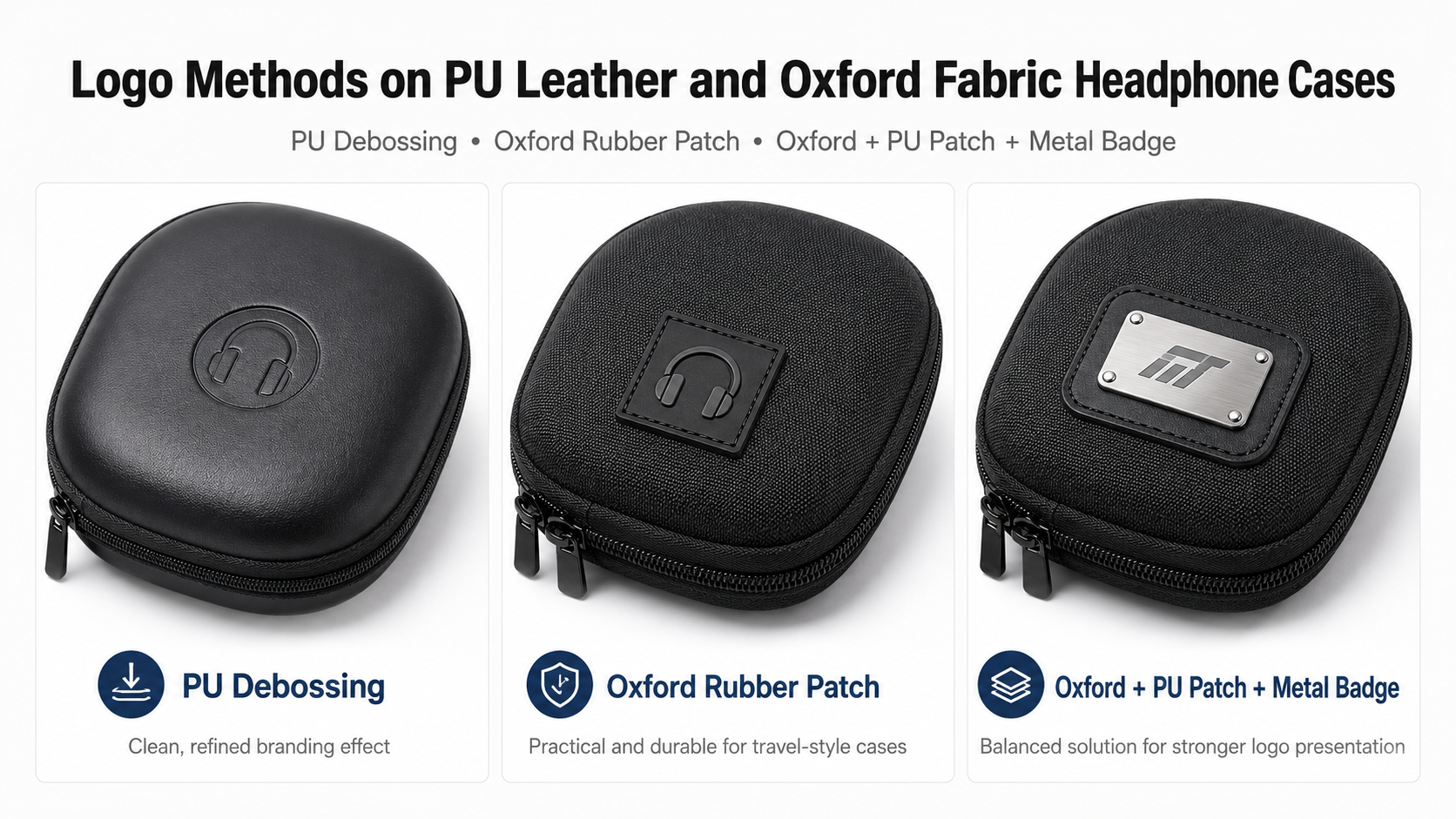
    在鹏途的标志选择体验中,PU皮一般比较适合压纹、压花、金属徽章。当织物质地不太粗糙时,牛津织物通常与缝制橡胶贴片和丝网印刷配合得很好。

    常见的平衡解决方案是:

    牛津面料主体 + PU 徽标贴片 + 金属徽章或印刷徽标

    这种组合保留了实用的纺织品表面,同时创建了更强大的徽标区域。

    比较橡胶贴片、丝网印刷、凹凸、浮雕、金属徽章和其他品牌选项的买家可以查看完整的自定义 EVA 案例徽标选项指南。headphone-case-logo-methods-pu-oxford.jpg


    颜色和表面纹理如何影响最终结果?

    颜色认可是 PU 皮革和牛津面料之间的另一个重要区别。相同的颜色参考在光滑的 PU 表面和编织牛津表面上看起来可能有所不同,因为表面纹理、光泽、反射和涂层都会影响最终的视觉结果。

    例如,深色在 PU 皮革上看起来可能更深,因为其表面更光滑。明亮的颜色在牛津织物上可能看起来更有质感或稍微柔和,因为编织表面改变了光的反射方式。即使买家提供相同的初始颜色参考,哑光 PU、光面 PU、涂层牛津布和无涂层牛津布也可能显示不同的视觉效果。

    鹏途使用单独的PU皮革和牛津布色卡。当买家仅提供 Pantone 参考时,团队通常会将其与最接近的可用 PU 或牛津色样本进行匹配。 Pantone 编号被视为初始颜色方向,而不是保证最终材料看起来完全相同。https://www.pantone.com/color-systems/for-textiles

    实用的颜色确认流程是:

    Pantone reference
    → closest PU or Oxford material swatch
    → buyer confirmation
    → finished case sample approval
    → bulk production reference

    Pantone can help communicate the initial color direction, but material texture, coating, gloss, and lighting may change the final appearance. For custom EVA headphone cases, final color approval should be based on the selected material swatch and the finished physical sample. A screen image, product photo, or Pantone number alone is not enough for production approval.


    How Do Material Choices Affect MOQ and Quotation?

    Material selection can affect the quotation and MOQ of a custom EVA headphone case project. This is especially important when buyers request special colors or non-standard material finishes.

    For black PU leather or black Oxford fabric, the standard MOQ usually starts from 500 pcs. Black is a regular material color and can often be shared across different projects. This means a single order does not always need to consume an entire batch of black material.

    For other colors, MOQ needs to be reviewed based on product size, material consumption, dyeing or purchasing requirements, and whether the remaining material can be used for future orders.

    Pengtour’s material purchasing logic can be understood this way:

    徽标方法 PU 皮革 牛津面料 实用建议
    橡胶补丁 中到高兼容性;可以缝合,并且可以根据材料和结构使用其他固定方法进行评估 高兼容性;通常缝在边缘 通常适合旅行、户外、运动和功能性保护壳
    丝网印刷 可以,但需要适当的油墨和附着力测试 适合面料质地不太粗的情况 适用于简单的徽标、口号和成本控制的品牌推广
    压纹/压花 一般适用;可以创造出更清晰的皮革般的品牌效果 通常不适合持久的凸起或凹陷纹理 通常首选 PU 皮革
    金属徽章 通常适合采用适当的固定结构 需要支持;直接安装在柔软的织物上可能不稳定 牛津鞋身+PU贴片+金属徽章可以是一个平衡的解决方案
    编织标签 可能,但可能并不总是符合精致的 PU 风格 与织物表面更自然兼容 适合轻便、休闲或运动风格的保护壳

    This is why buyers should avoid assuming that every color has the same MOQ as black. Black is easier to absorb across multiple projects because many buyers can use it. A custom blue, orange, green, pink, or other special color may be difficult to reuse if the current order does not consume the full purchased or dyed material batch.

    For quotation, buyers should provide:

    • target exterior material;
    • color reference;
    • case size;
    • estimated quantity;
    • number of colors;
    • logo method;
    • packaging requirements;
    • expected future repeat order possibility.

    This helps the factory evaluate not only the unit price, but also material purchasing, cutting efficiency, leftover material risk, and production planning.


    Which Material Fits Different Headphone Case Applications?

    The best exterior material depends on the headphone type, use scenario, and market positioning. The table below gives practical selection directions for OEM projects.

    Material / Color Situation MOQ or Purchasing Logic
    Black PU leather Standard MOQ usually starts from 500 pcs
    Black Oxford fabric Standard MOQ usually starts from 500 pcs
    PU leather material purchasing Often reviewed around 300 yards, depending on supplier and material type
    Oxford fabric material purchasing Often reviewed around 500 yards, depending on fabric type and purchasing conditions
    Custom colors MOQ depends on case size, material usage, dyeing or purchasing requirements
    Small-size cases in custom colors May require higher practical quantity because each unit consumes less material
    Leftover custom color material May be difficult to use for other customers

    These recommendations should be treated as general direction, not fixed rules. A project may choose PU leather for travel use if the buyer values appearance more than abrasion-conscious performance. Another project may choose Oxford fabric for a premium case if the brand wants a technical or outdoor style.

    The correct material should match the actual product, buyer budget, use environment, and sample result.


    What Should Buyers Confirm During Sampling?

    Material swatches are useful for early selection, but the finished physical sample is the most important approval reference. A swatch does not show how the material behaves after molding, cutting, bonding, stitching, logo application, and final assembly.

    During sample review, buyers should check:

    1. approved material name and material code;
    2. PU or Oxford color swatch;
    3. surface texture;
    4. curved areas and rounded corners;
    5. wrinkles, stretch marks, or uneven surface areas;
    6. edge finishing;
    7. zipper alignment;
    8. logo position and fixing method;
    9. screen print adhesion if printing is used;
    10. support structure if a metal badge is used;
    11. visible scratches, creases, or pressure marks;
    12. finished case color under normal lighting;
    13. interior lining and exterior material combination;
    14. packaging appearance.

    If the buyer changes the exterior material after sample approval, the sample should be reviewed again. A switch from Oxford fabric to PU leather, or from PU leather to Oxford fabric, can affect appearance, logo method, MOQ, and production planning.

    For projects with environmental compliance requirements, buyers should confirm the required test items before material approval. Pengtour can review the selected material and support third-party laboratory testing when further confirmation is needed.

    Buyers can also review Pengtour’s EVA case customization options before finalizing materials, colors, structure, and branding.


    PU Leather or Oxford Fabric—How Should OEM Buyers Decide?

    A buyer should not choose the exterior material only by looking at a product photo. The decision should be based on product positioning, real use, branding, color, MOQ, and sample performance.

    Choose PU Leather When:

    PU leather may be more suitable when the project requires:

    • a smooth or refined exterior;
    • premium retail presentation;
    • business or urban product style;
    • debossed or embossed branding;
    • metal badge branding;
    • easier surface wiping;
    • a cleaner match with velvet or microfiber lining.

    However, buyers should pay more attention to scratches, creases, curved molded areas, and pressure marks during sample review.

    Choose Oxford Fabric When:

    Oxford fabric may be more suitable when the project requires:

    • frequent travel use;
    • stronger abrasion-conscious performance;
    • backpack or luggage storage;
    • sports or outdoor style;
    • rubber patch branding;
    • screen printing;
    • visible textile texture;
    • functional or cost-conscious positioning.

    However, buyers should still confirm fabric grade, texture, coating, color, and logo result on the finished sample.

    Do Not Decide by Material Name Alone

    The material name is only the starting point. Buyers should also confirm:

    • material grade;
    • thickness;
    • backing;
    • Oxford denier;
    • coating;
    • case size;
    • molded depth;
    • logo method;
    • color availability;
    • MOQ;
    • target price;
    • finished sample result.

    For OEM projects, the best material is the one that fits the product’s use, brand style, and production requirements, not the one that sounds more premium in isolation.


    How Pengtour Confirms Materials for Custom Headphone Cases

    Material confirmation for a custom headphone case should be handled as part of the full development process. Pengtour usually reviews material, structure, color, logo, and sample result together instead of treating them as separate decisions.

    Step 1: Review the Product Positioning

    The team first reviews the headphone type, target market, use scenario, and expected product style. A premium retail headphone case may require a different material direction from a children’s headphone case or travel headset case.

    Step 2: Recommend PU or Oxford Options

    Based on the buyer’s needs, Pengtour can recommend PU leather, Oxford fabric, or another exterior material. The recommendation considers appearance, durability expectations, logo method, color, MOQ, and target price.

    Step 3: Match the Color Reference

    If the buyer provides a Pantone reference, the team checks the closest available PU or Oxford color card. For custom colors, MOQ and material purchasing requirements need to be reviewed before confirmation.

    Step 4: Confirm the Logo Process

    The logo method is matched with the exterior material. PU leather may be considered for debossing, embossing, or metal badges. Oxford fabric may be better for sewn rubber patches, screen printing, or woven labels.

    Step 5: Develop the Finished Sample

    A finished sample is developed to check the molded surface, curved areas, edge finishing, zipper alignment, logo result, and overall appearance.

    Step 6: Lock the Production Reference

    Before bulk production, the approved sample, material swatch, color reference, logo file, packaging method, and quantity should be recorded as the production reference.

    Brands developing a custom EVA headphone case can compare exterior materials according to appearance, travel use, logo method, and target price.


    Frequently Asked Questions

    Is PU leather better than Oxford fabric for headphone cases?

    Not always. PU leather is often better for smooth appearance, refined branding, debossing, embossing, and metal badges. Oxford fabric is generally more suitable for frequent carrying, travel use, abrasion-conscious applications, rubber patches, and screen printing. The better choice depends on the project’s use, brand style, color, MOQ, and finished sample result.

    Is Oxford fabric always more abrasion-resistant than PU leather?

    Oxford fabric is generally more suitable for abrasion-conscious and frequent-carrying applications, but it should not be treated as automatically superior in every case. Actual performance depends on fabric grade, denier, coating, backing, use environment, and test method.

    Can Oxford fabric have a PU coating?

    Yes. Oxford fabric can have a PU coating, but PU-coated Oxford fabric is still different from PU leather. PU-coated Oxford remains a woven textile with coating, while PU leather is a leather-like surface material. Buyers should clearly specify the material type when requesting a quote.

    Which material is easier to clean?

    PU leather is usually easier to wipe because it has a smoother surface. However, it may also be more sensitive to scratches, creases, and pressure marks. Oxford fabric may be more abrasion-conscious, but stains can be harder to remove if they enter the fabric texture or coating surface.

    Which material is better for embossed logos?

    PU leather is generally more suitable for debossing or embossing because its surface can form a clearer recessed or raised branding effect. Oxford fabric is usually not suitable for long-lasting embossed or debossed logo effects because it is a woven textile.

    Is a Pantone number enough to approve the material color?

    No. A Pantone number can provide an initial color direction, but final approval should be based on the corresponding PU or Oxford material swatch and the finished case sample. Surface texture, gloss, coating, and lighting can all change the final appearance.

    Does material choice affect the MOQ of custom headphone cases?

    Yes. Black PU leather and black Oxford fabric usually start from 500 pcs because black is a regular color that can be shared across different projects. Custom colors may require project-based MOQ review because dyeing or material purchasing quantities, case size, and leftover material risk can affect the minimum practical production quantity.

    Do PU leather and Oxford fabric need environmental testing?

    It depends on the buyer’s target market and compliance requirements. If environmental testing is required, the test items should be confirmed before material approval. Pengtour can review the selected material and coordinate third-party laboratory testing when further confirmation is needed.


    Prepare Your Headphone Case Material Specification

    PU leather and Oxford fabric can both be used for custom EVA headphone cases, but they serve different project goals. PU leather is often selected for smoother, more refined, and brand-oriented headphone cases. Oxford fabric is generally more suitable for travel, frequent handling, abrasion-conscious use, and practical product positioning.

    The final decision should not be made from the material name alone. Buyers should confirm the material swatch, surface texture, color, logo method, molded sample, MOQ, and production reference before bulk manufacturing.

    To start a material review, share your headphone dimensions, preferred exterior material, color reference, logo artwork, estimated quantity, and packaging requirements to request a formal factory quote.


    Related Reading

    1. Custom EVA Headphone Case OEM: Design Requirements for Audio Brands
    2. Custom EVA Case Logo Options: The Ultimate B2B Sourcing Guide to the 8 Best Techniques
    3. Audio EVA Cases for Headphones, Microphones, and Accessories
    Application More Common Direction Reason
    Premium retail headphones PU leather Smooth appearance, refined branding, debossing or metal logo compatibility
    Travel headphone cases Oxford fabric More suitable for frequent carrying and abrasion-conscious use
    Gaming headset cases Oxford fabric or PU leather Oxford supports sporty style; PU supports a cleaner premium style
    Children’s headphone cases Oxford fabric Practical, colorful, and suitable for frequent handling
    Office headset cases PU leather or fine Oxford fabric Depends on whether the buyer wants business style or practical durability
    Professional monitoring headphones Depends on positioning Large size, protection, and brand image should be considered together
    Promotional headphone cases Oxford fabric Often easier to combine with screen printing and cost-controlled branding
    Lifestyle audio accessories PU leather Can create a more refined appearance for retail display
    blog avatar

    Pengtour

    OEM/ODM 定制 EVA 包盒与缝制包袋制造商

    为消费电子、医疗设备、旅行、运动、户外和生活方式品牌提供定制模压 EVA 包盒和缝制包袋。快速打样 | 低 MOQ 100 件起 | OEM/ODM 设计支持

      有想法或经验想分享?我们很乐意聆听您的声音!

      获取免费报价

      精选博客